
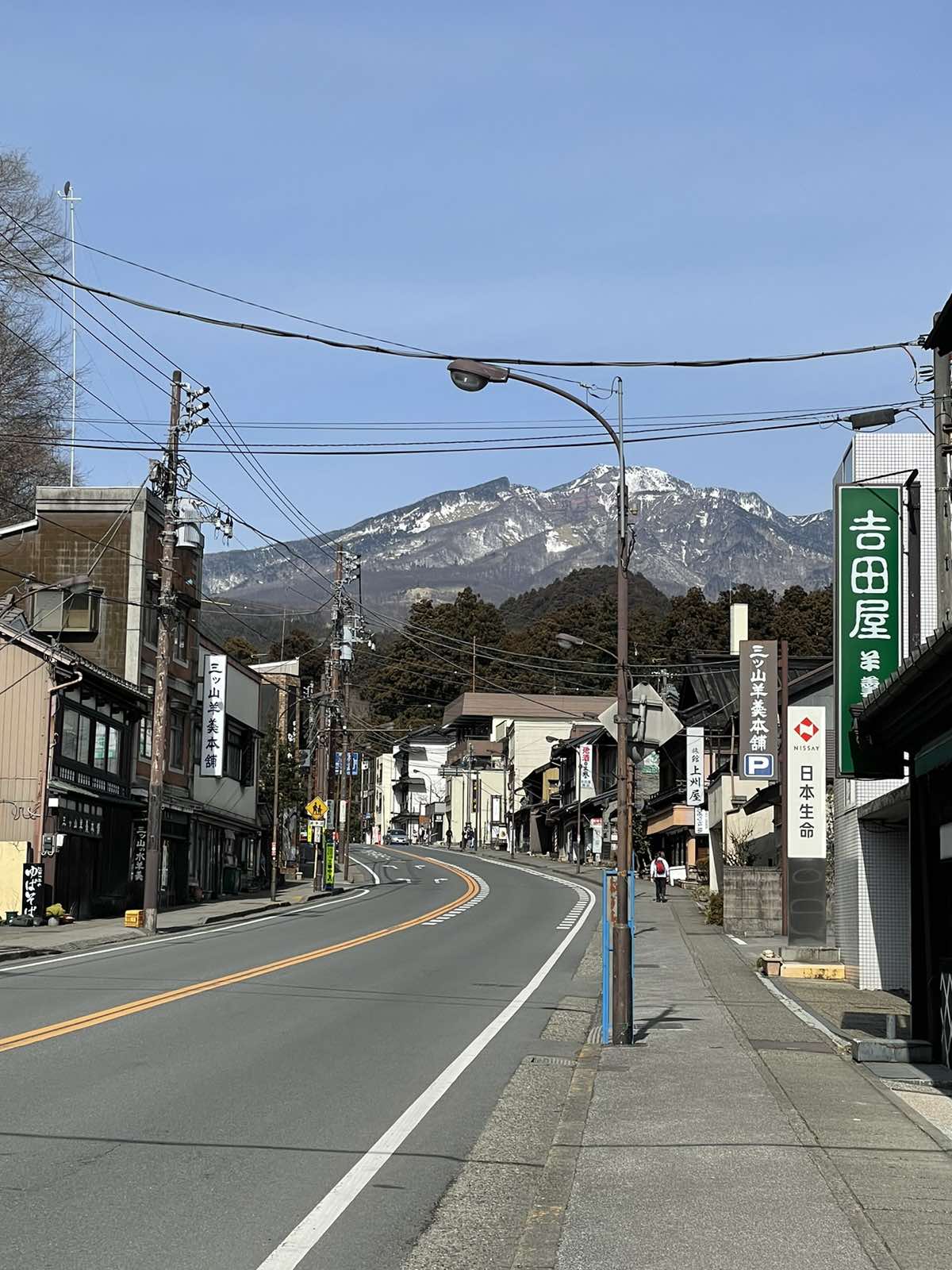
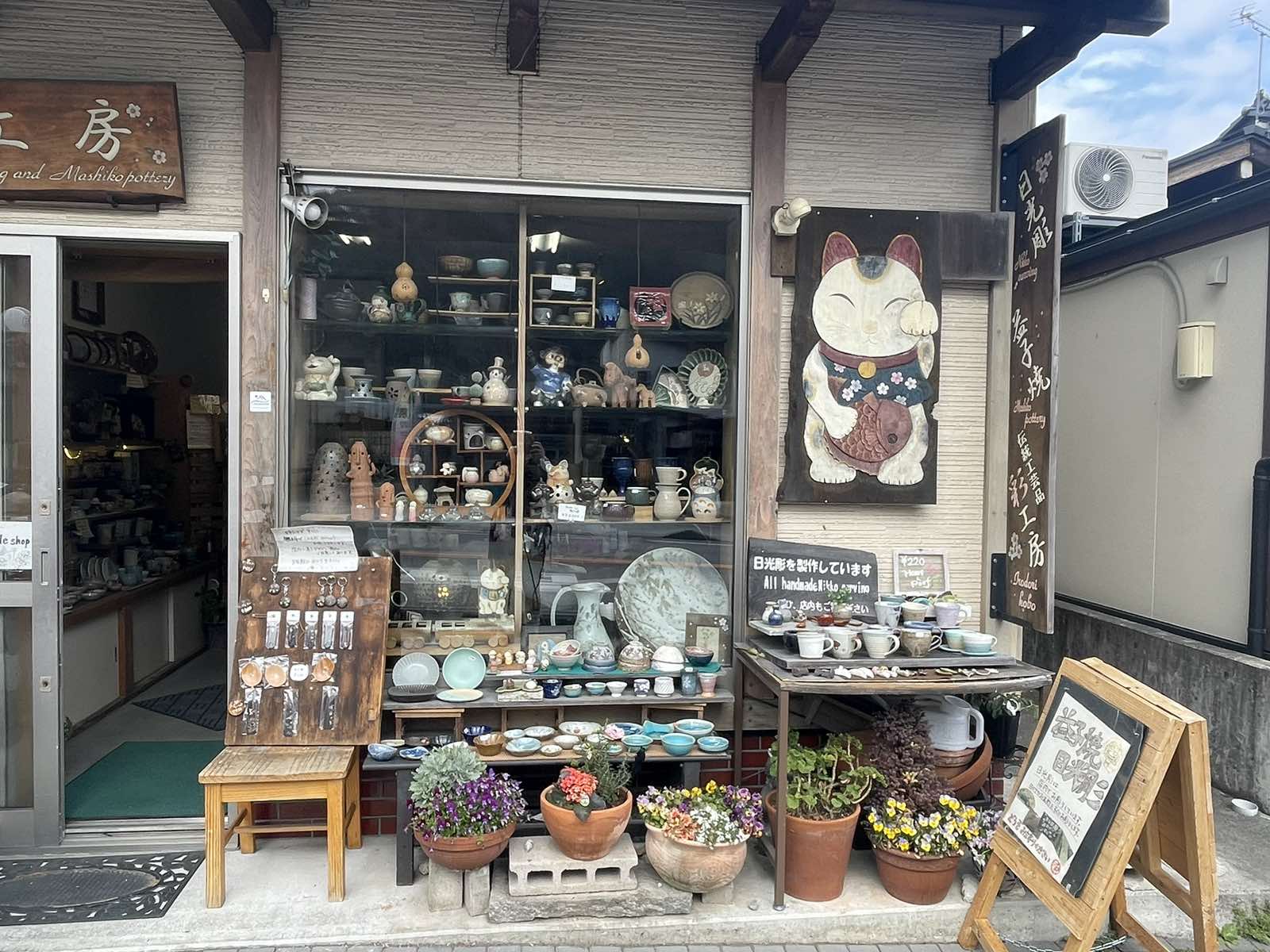
The bus dropped me off at a tourist area, and I started my way along the cafes, handmade shops and small hotels. The small street looked even tinier with the gorgeous snow-capped mountains rising above. With the flowery roads, cute small houses and lots of colorful shop windows, the view was almost doll-like.
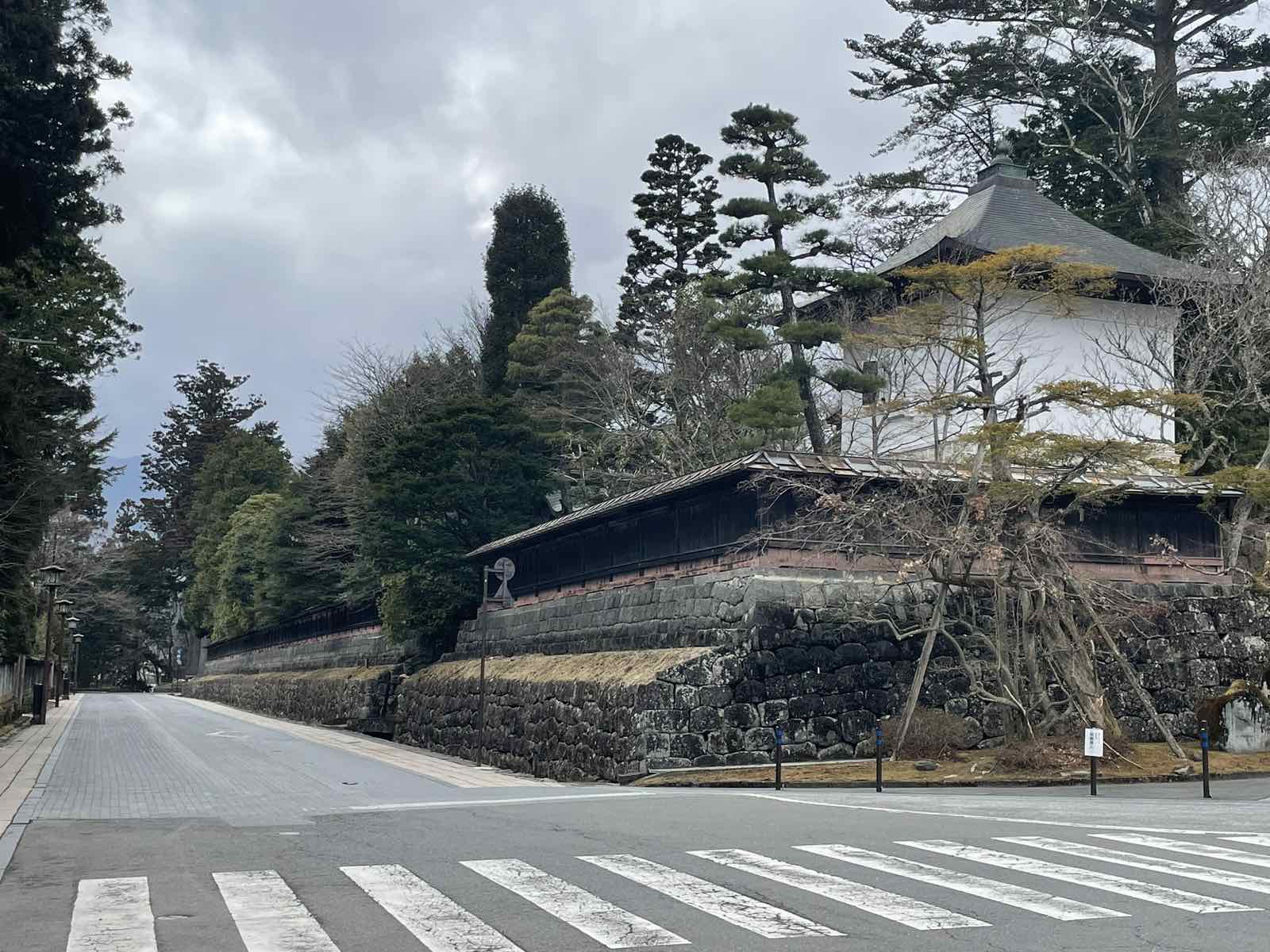
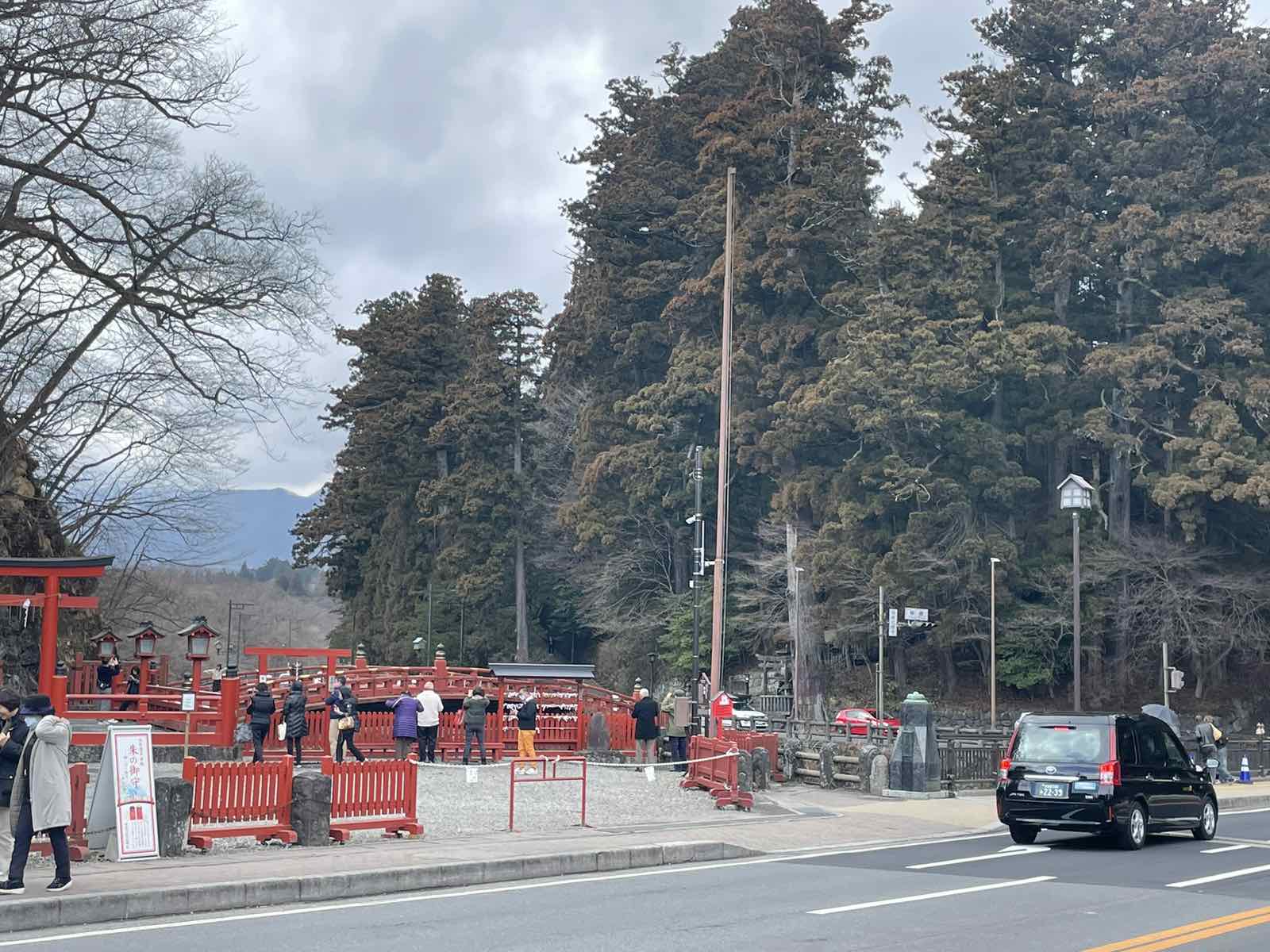
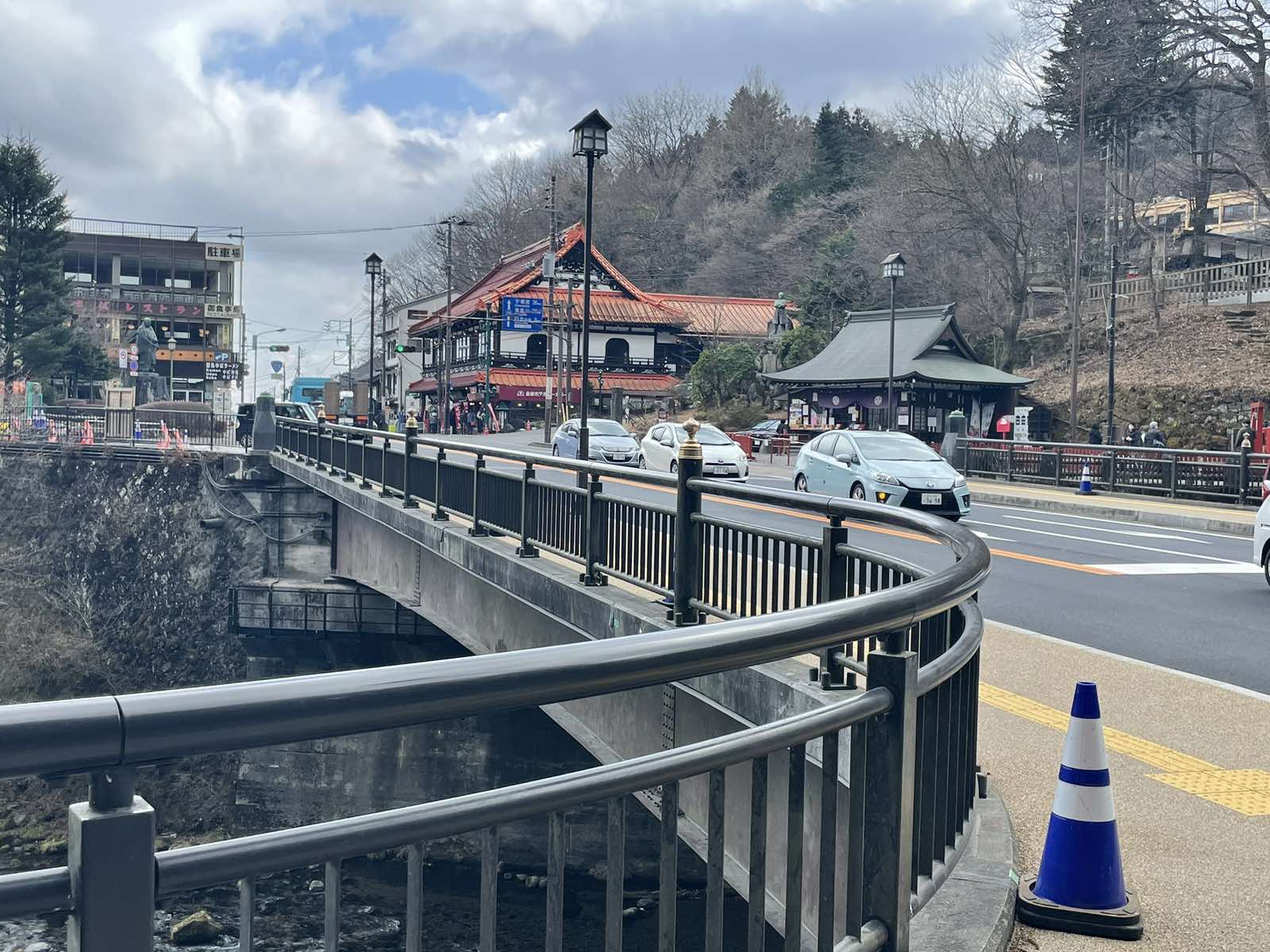
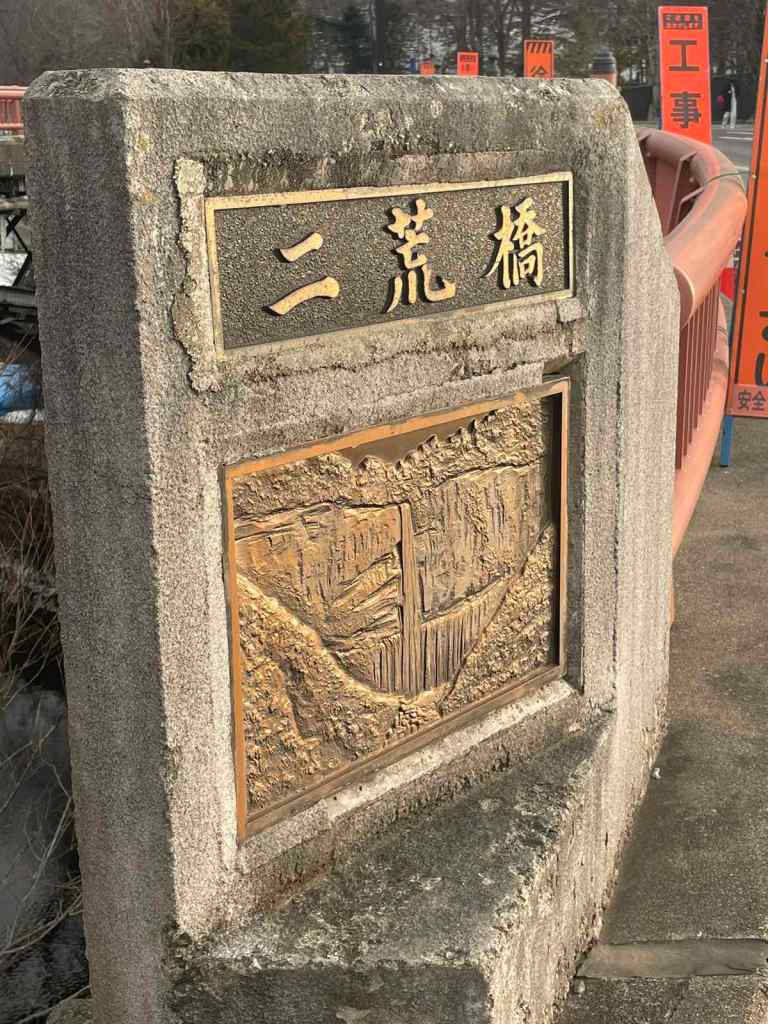
A beautiful carved bridge connected the Nikko forest and the town, rising high over the wide but shallow river. The forest was right underneath the mountain, so I was constantly travelling up through pine trees and small bushes. There was almost no grass – just the pine needles which lay the forest floor.
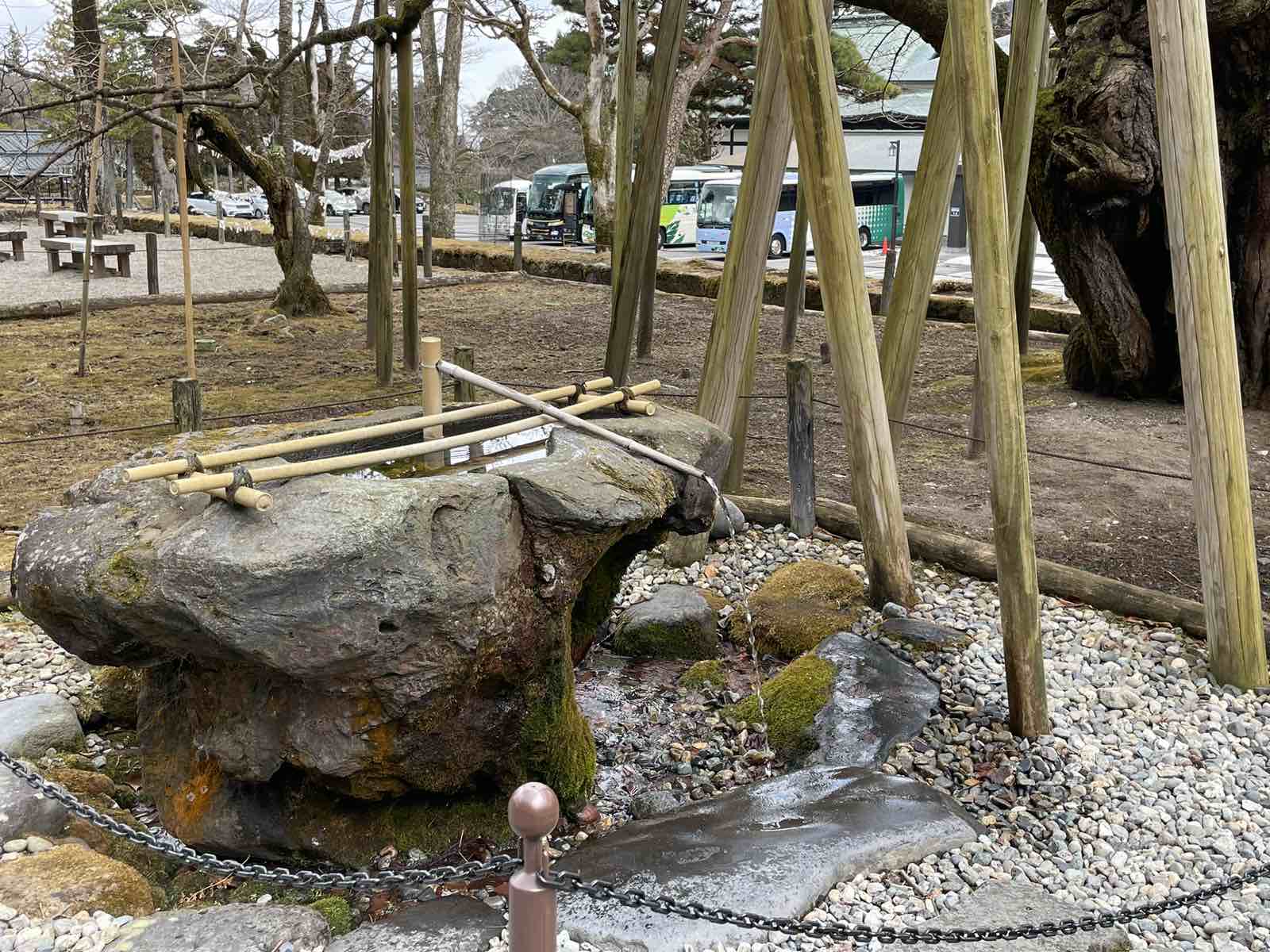
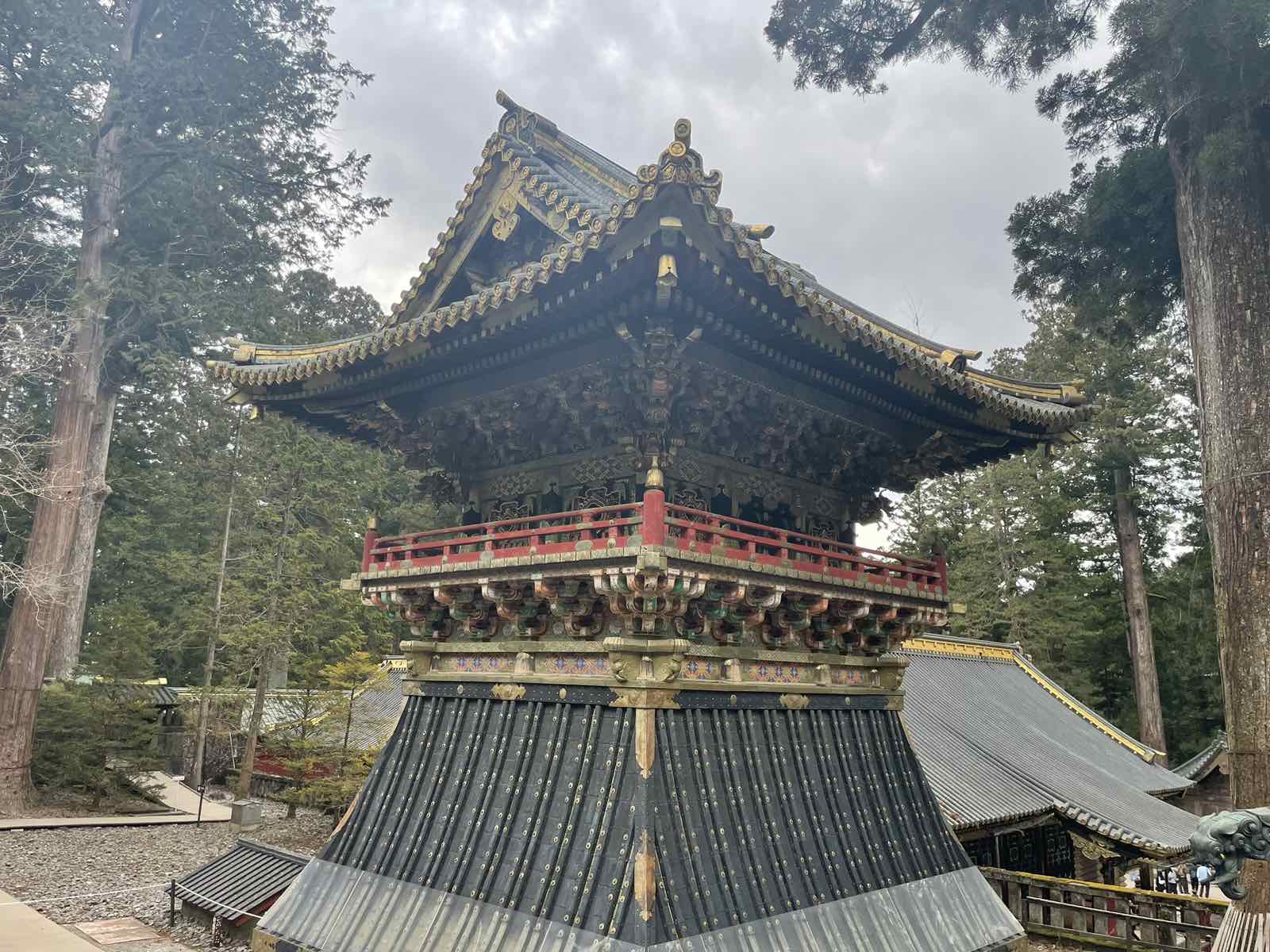
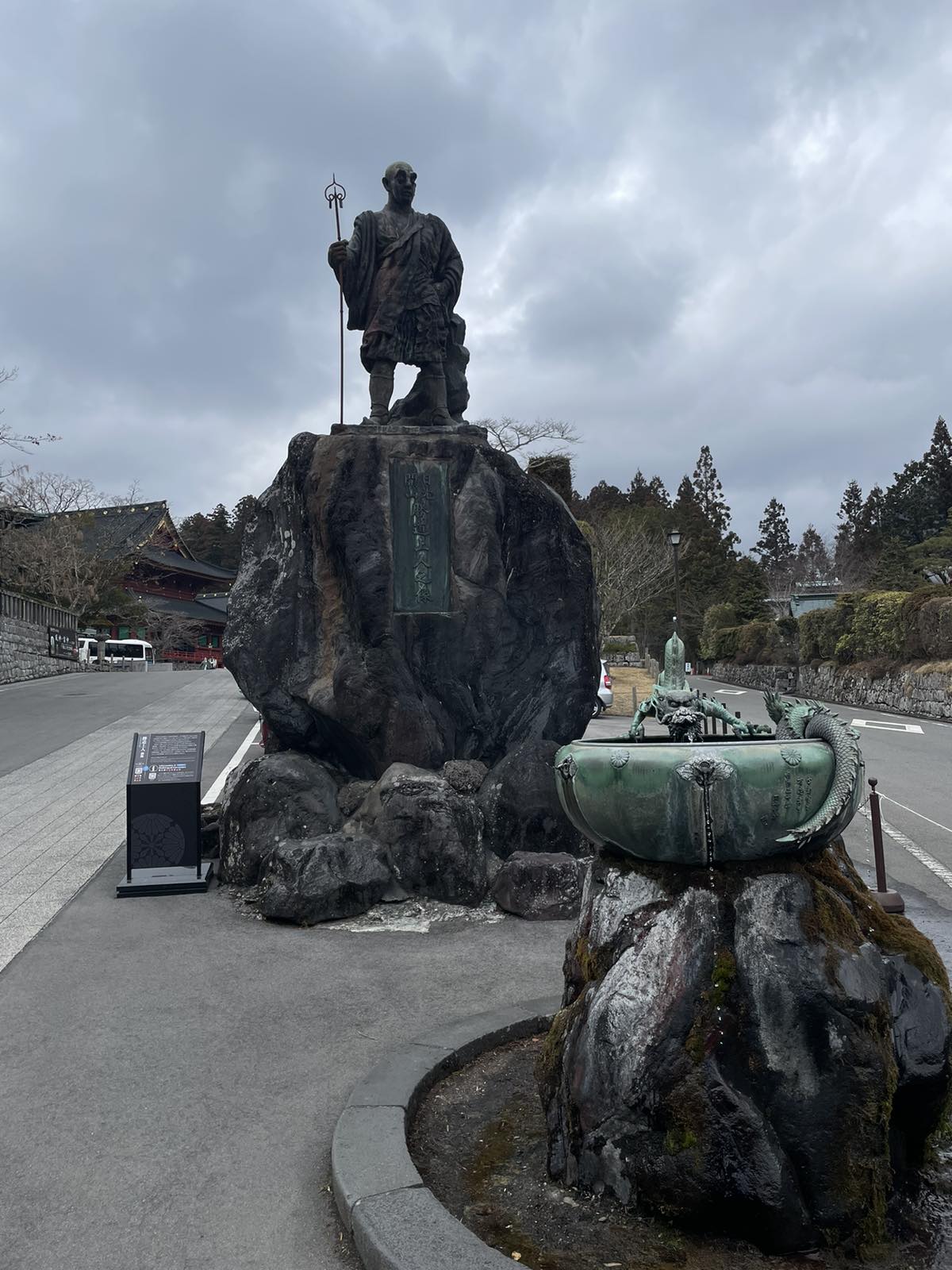
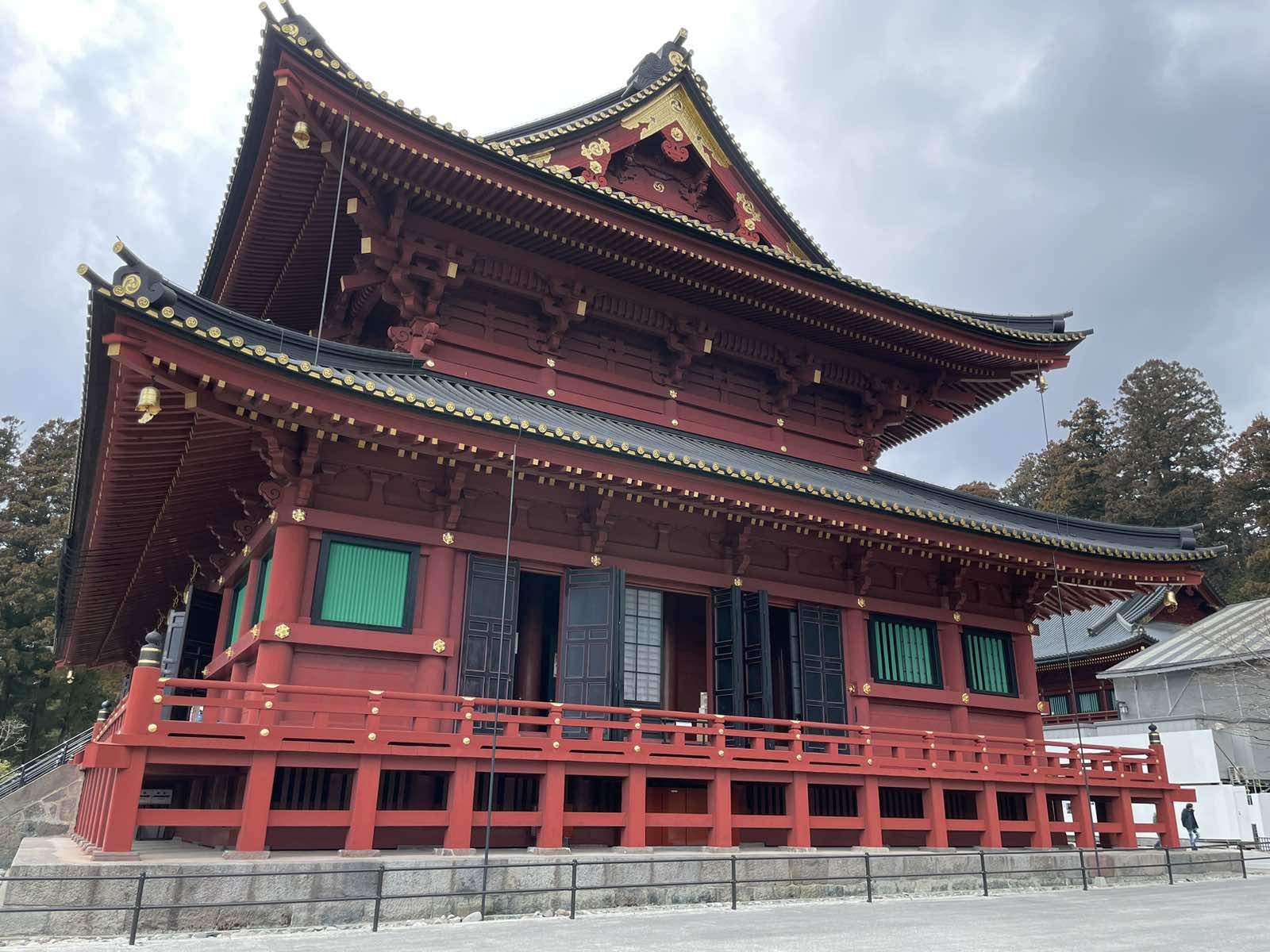
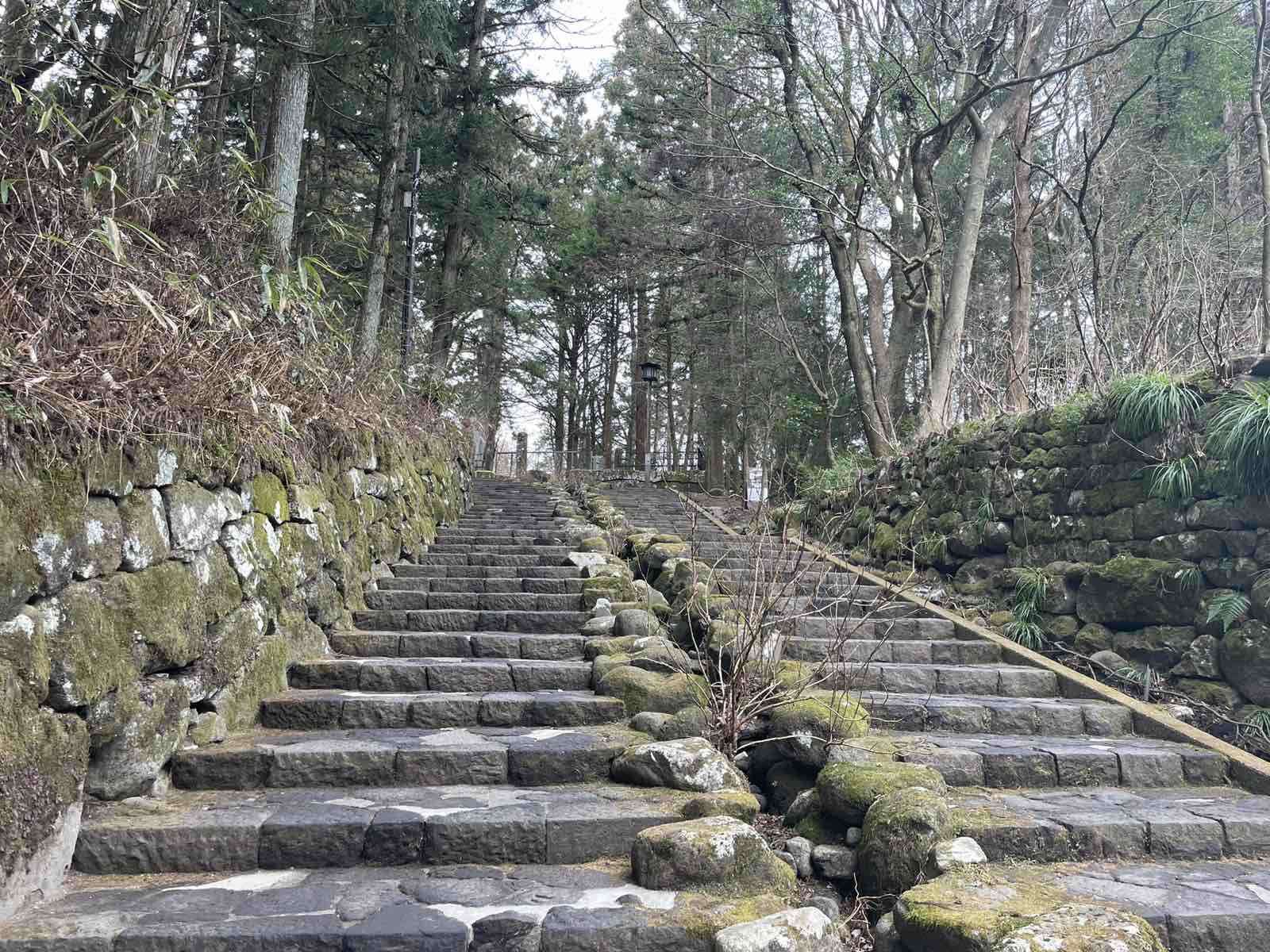
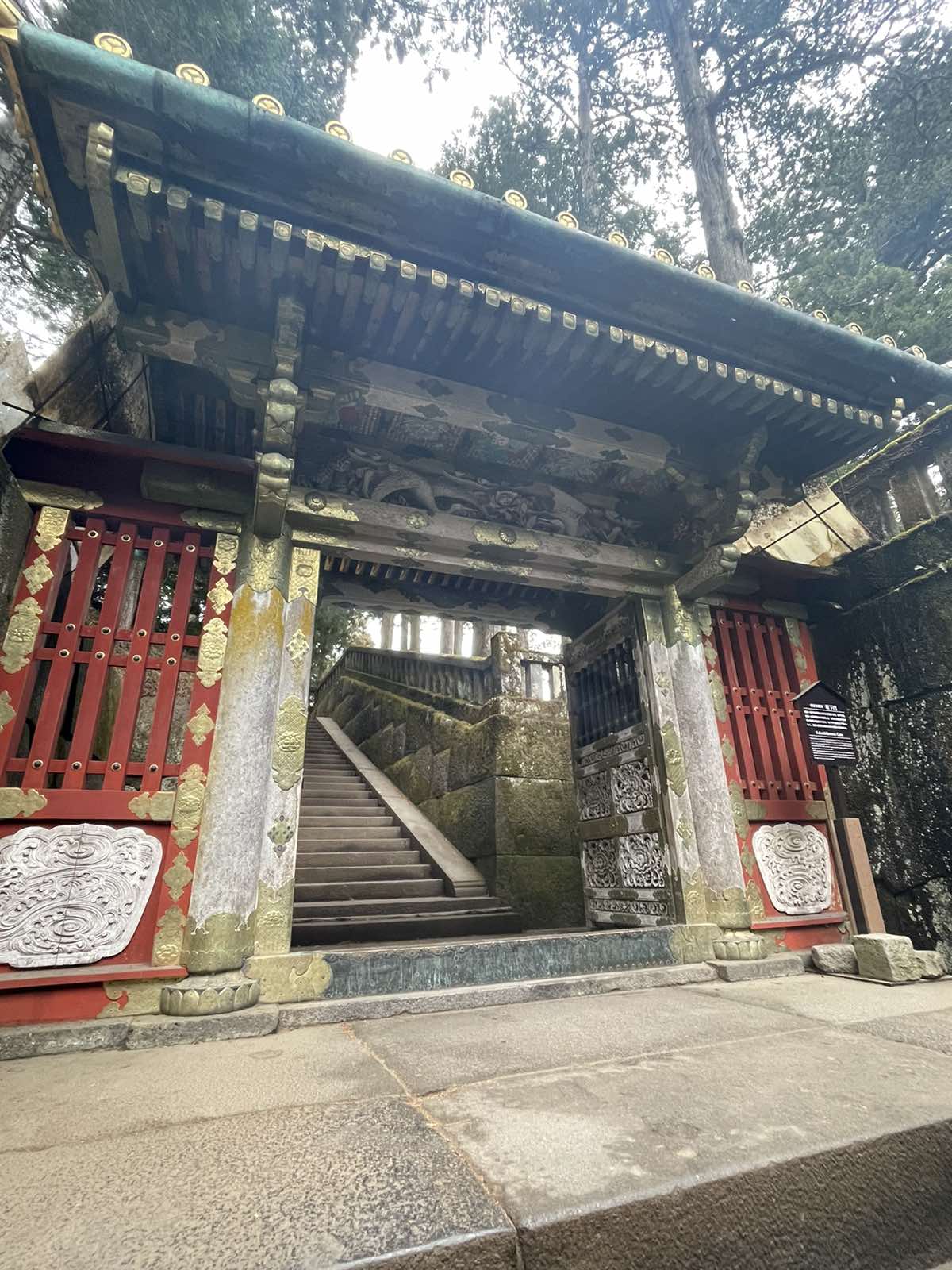
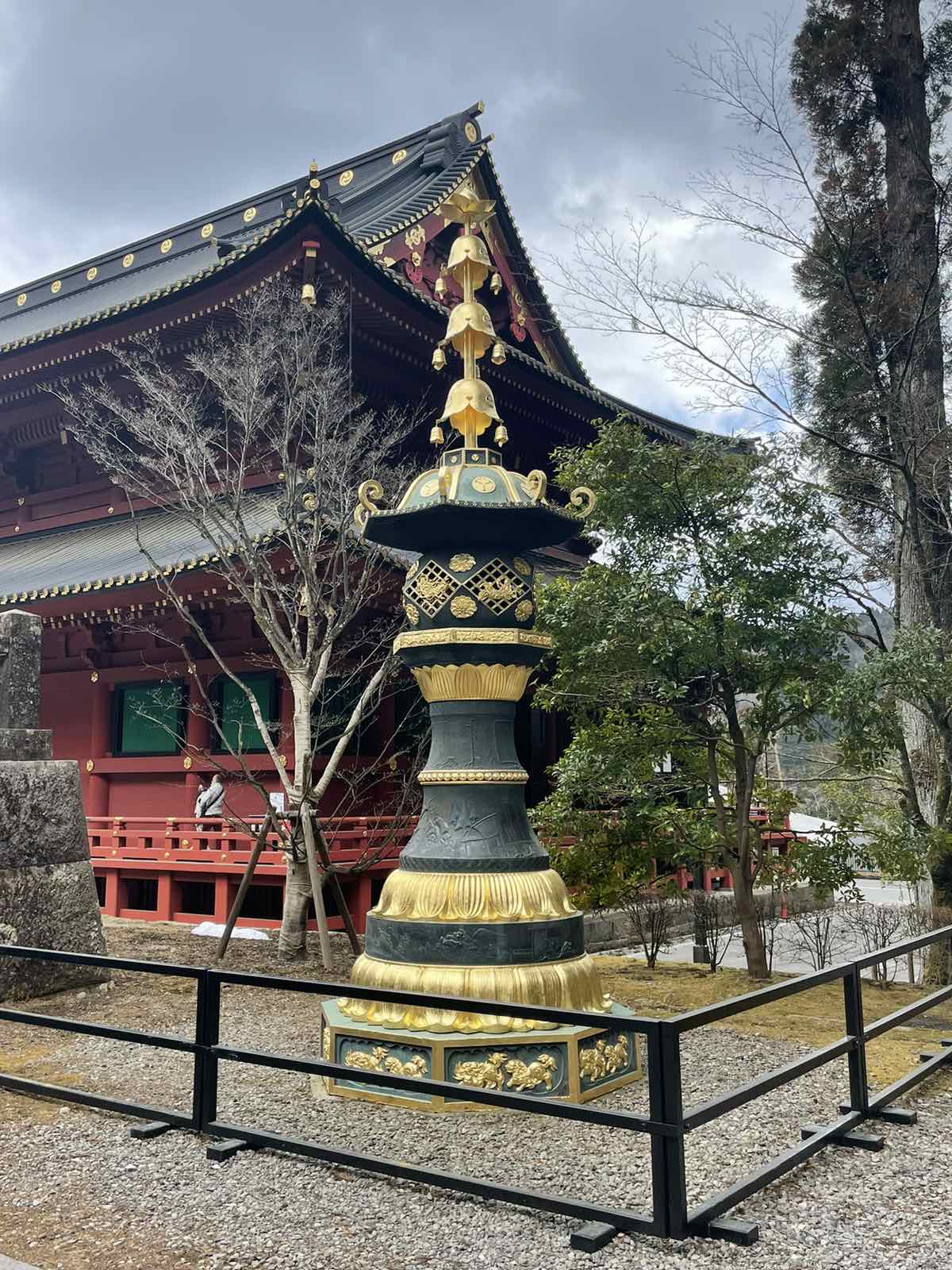
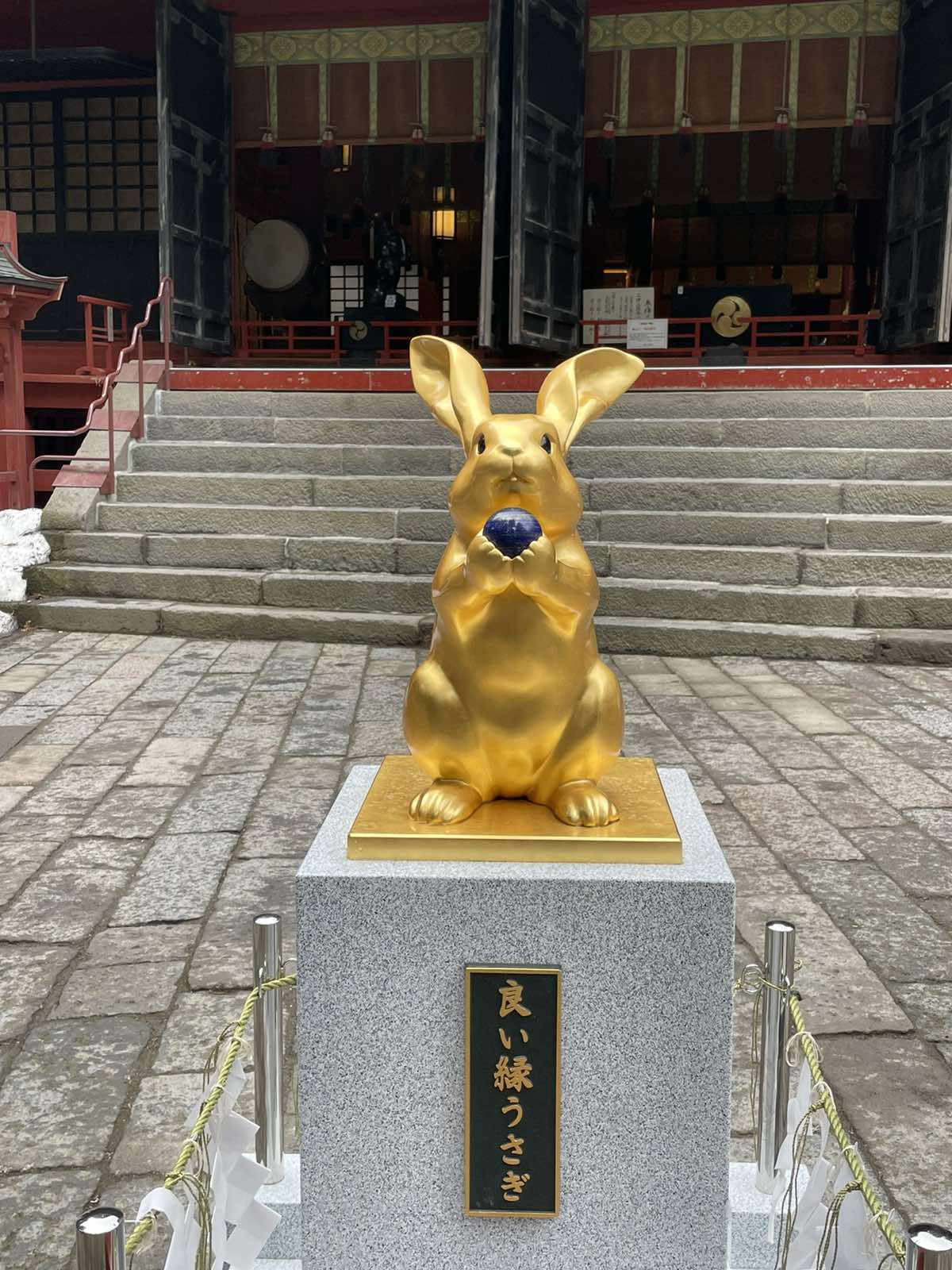
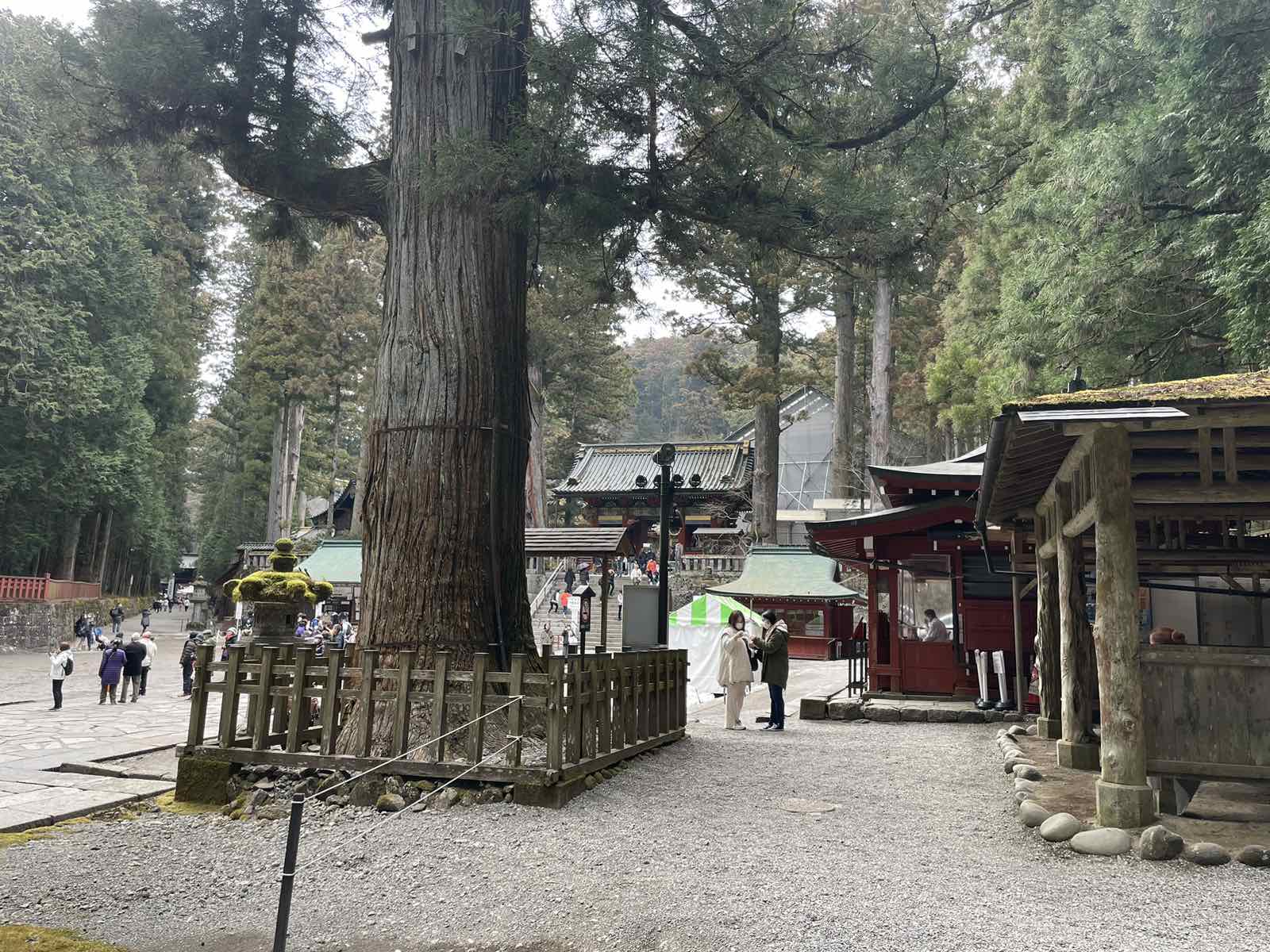
I first came to a complex of two temples, and thought these were Nikko. However, they looked nothing like one on the pictures from tours, and there was nowhere to obtain a map. I encountered some Caucasian-looking tourists, and we quickly established that it was still quite a bit of a walk to the shrine.
Reminds me of my Jigokudani journey 🙂
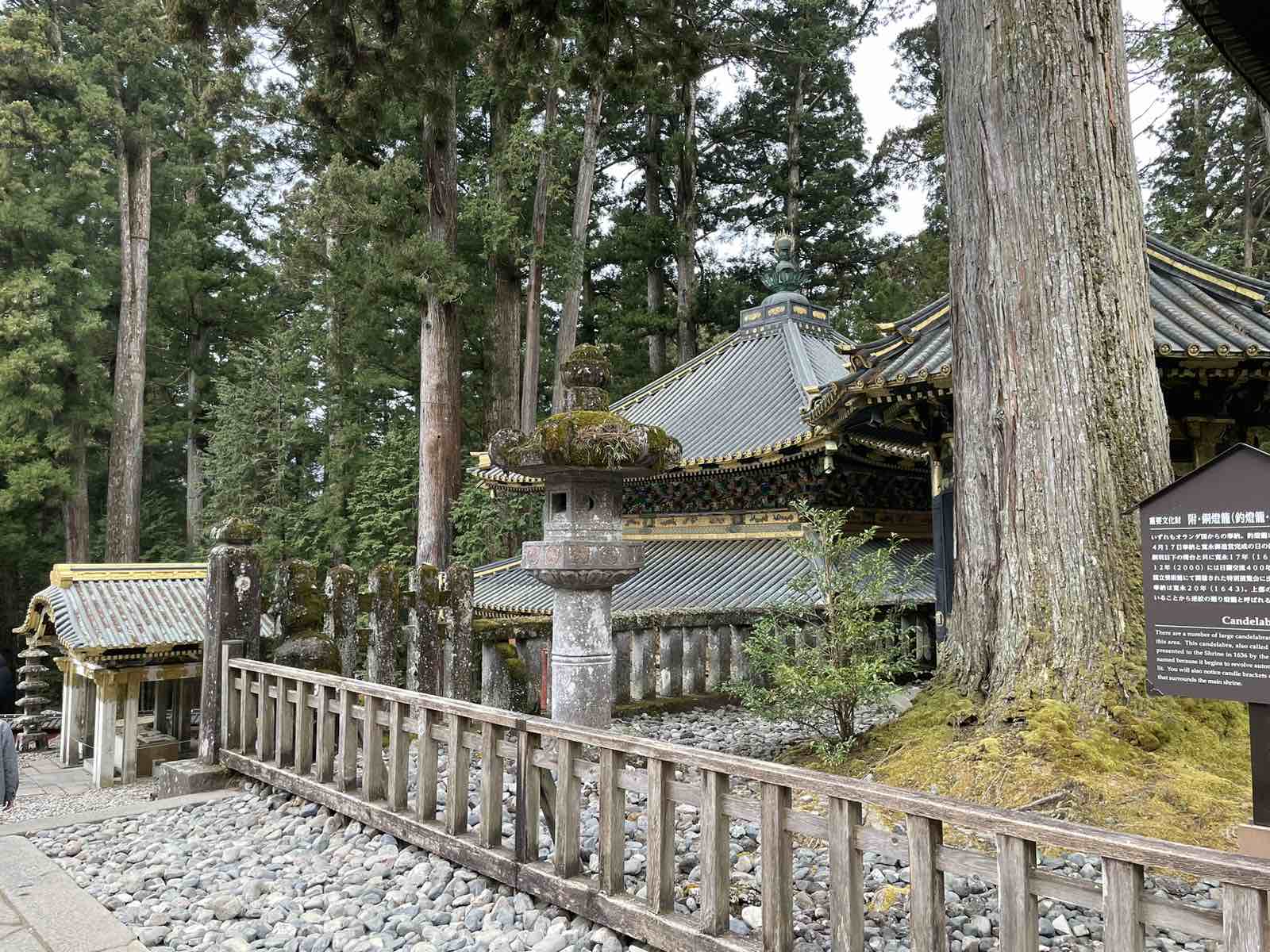
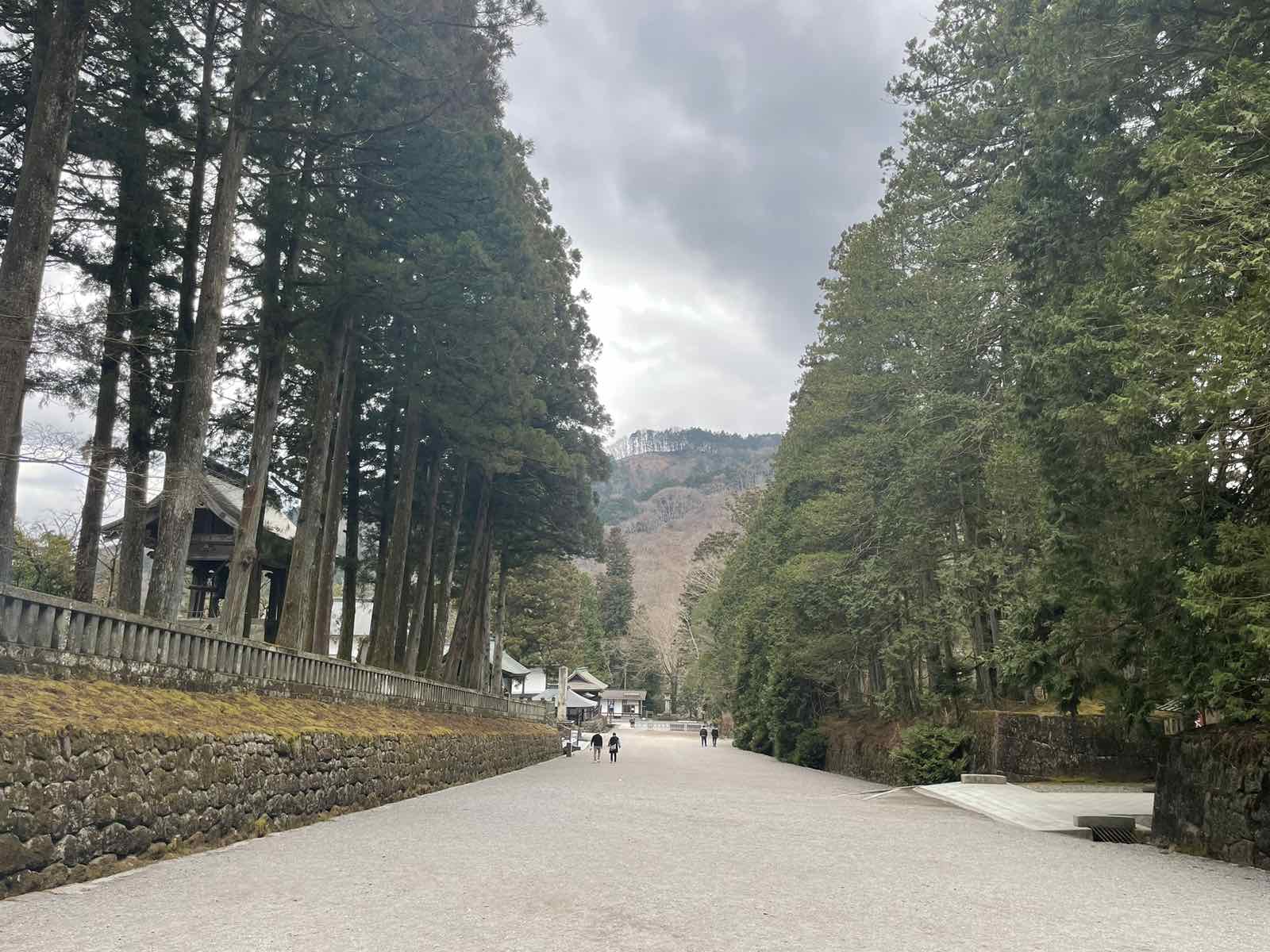
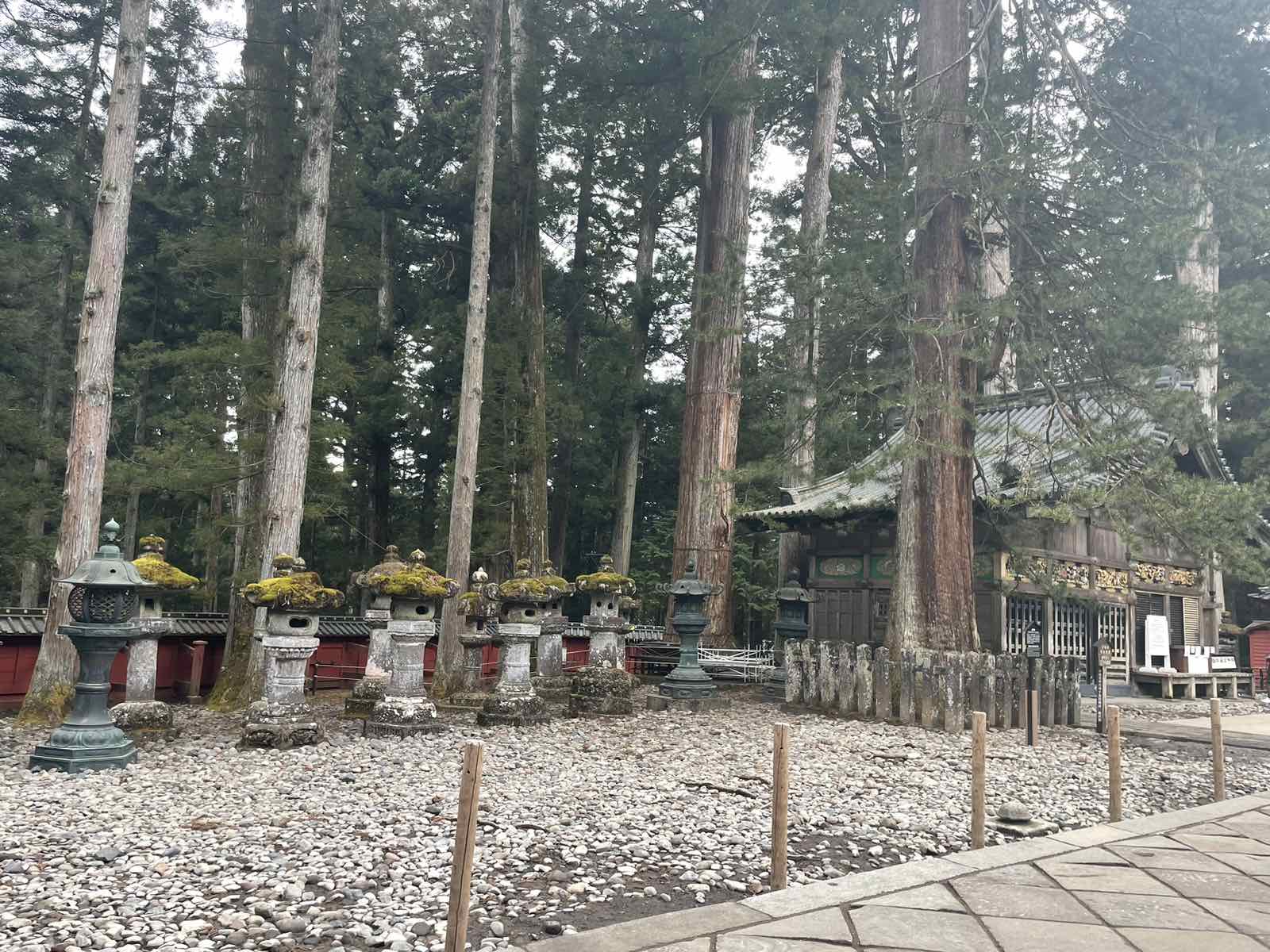
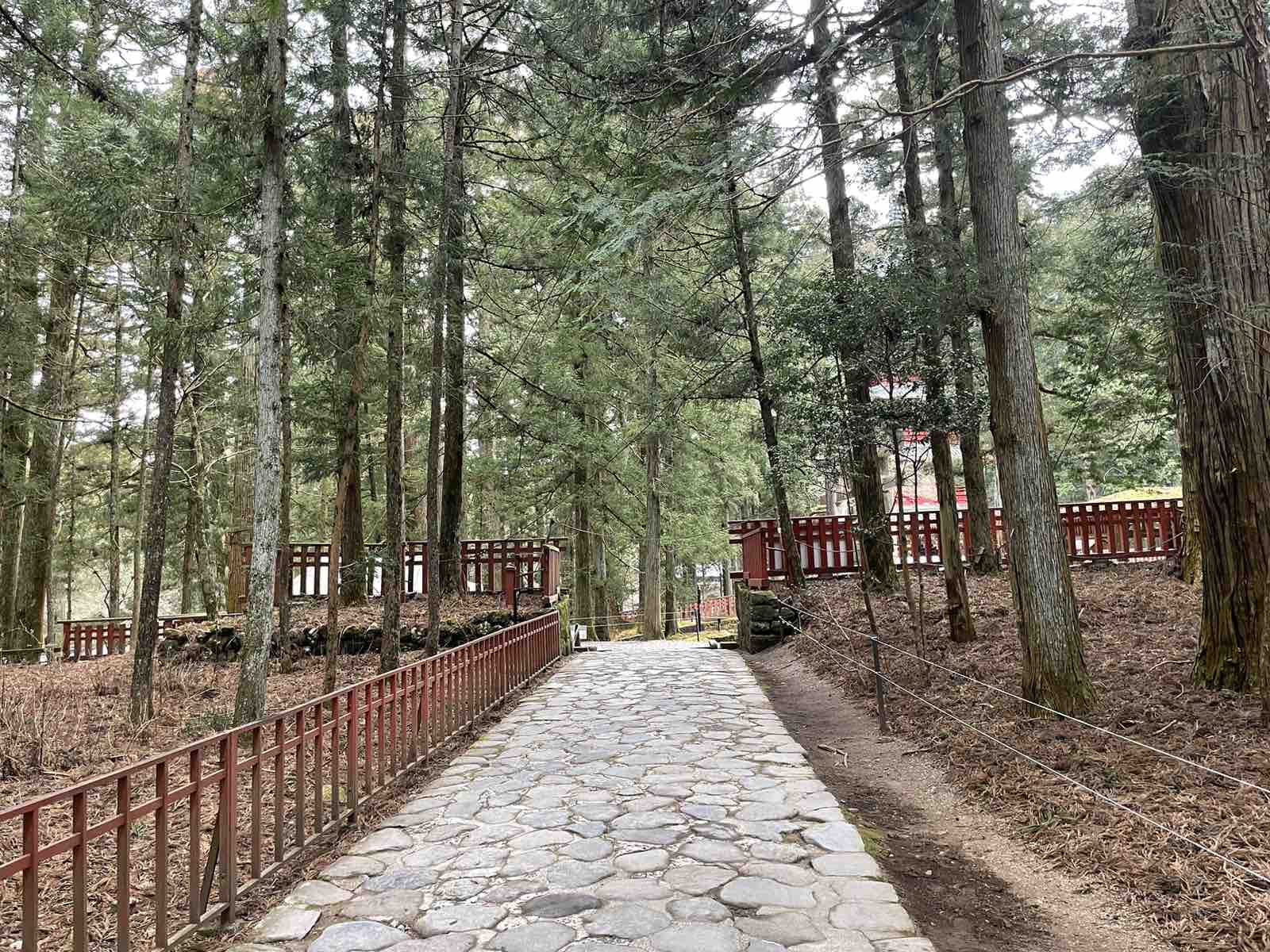
I did a walk inside the temples for a fair amount of 800 yen. They did not allow to take pictures, otherwise this post would stop right here, and the rest would be just a photo gallery.
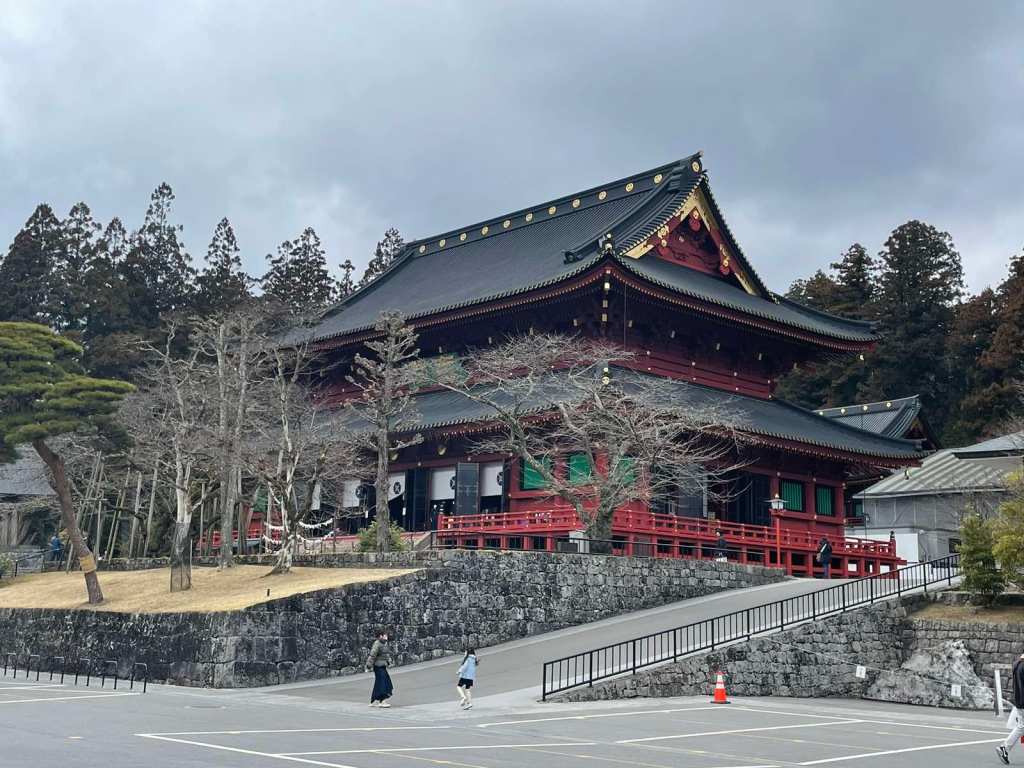
Of course, these shrines were much more humble in comparison to Nikko, but Nikko is a special one exception. While simplicity is valued as a way of the shrine decoration, Nikko would outcompete any Barocco-styled European buildings.
I walked, and walked, and walked, until the forest uncovered an entrance between two gates, and very beautiful golden-green rooftops behind it.
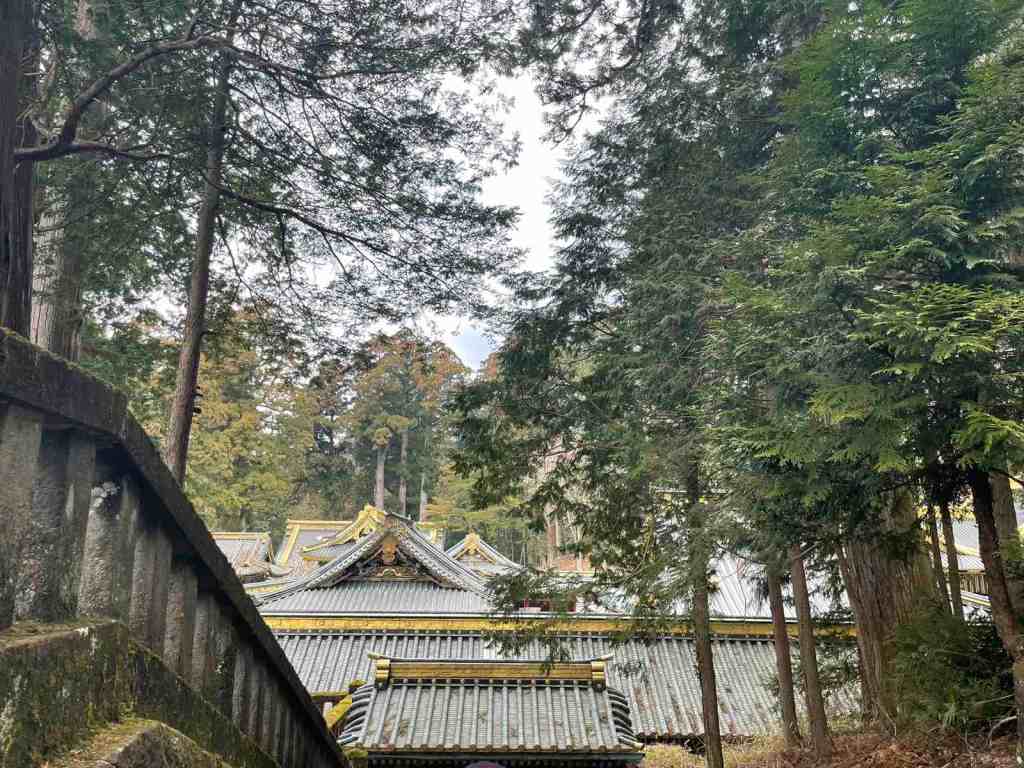
I rented a small audio tour with headphones from a nearby man. Basically, I got a map, headphones, and a pointer, which I would press onto a map, and it would start reading a story into my ears.
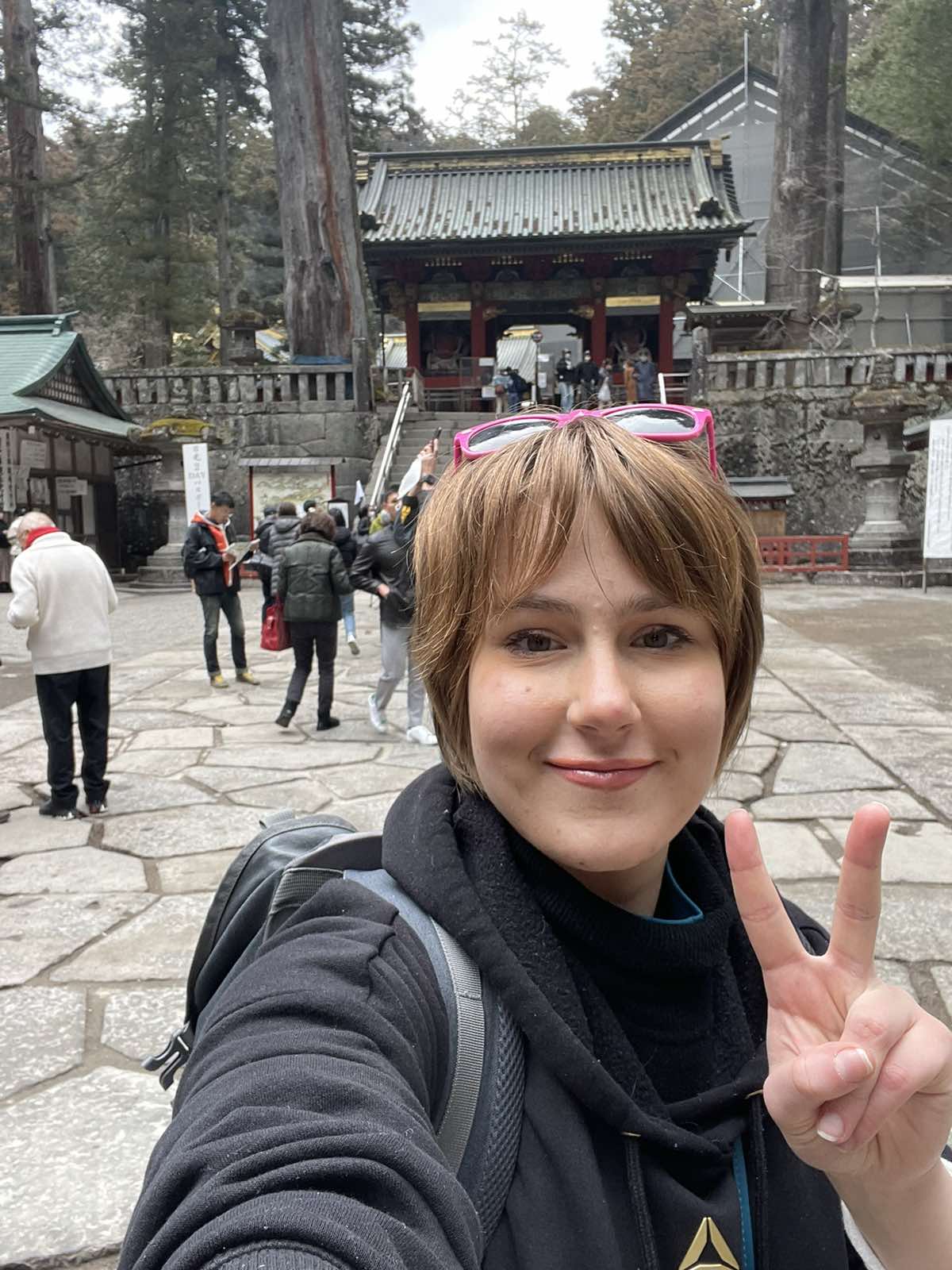
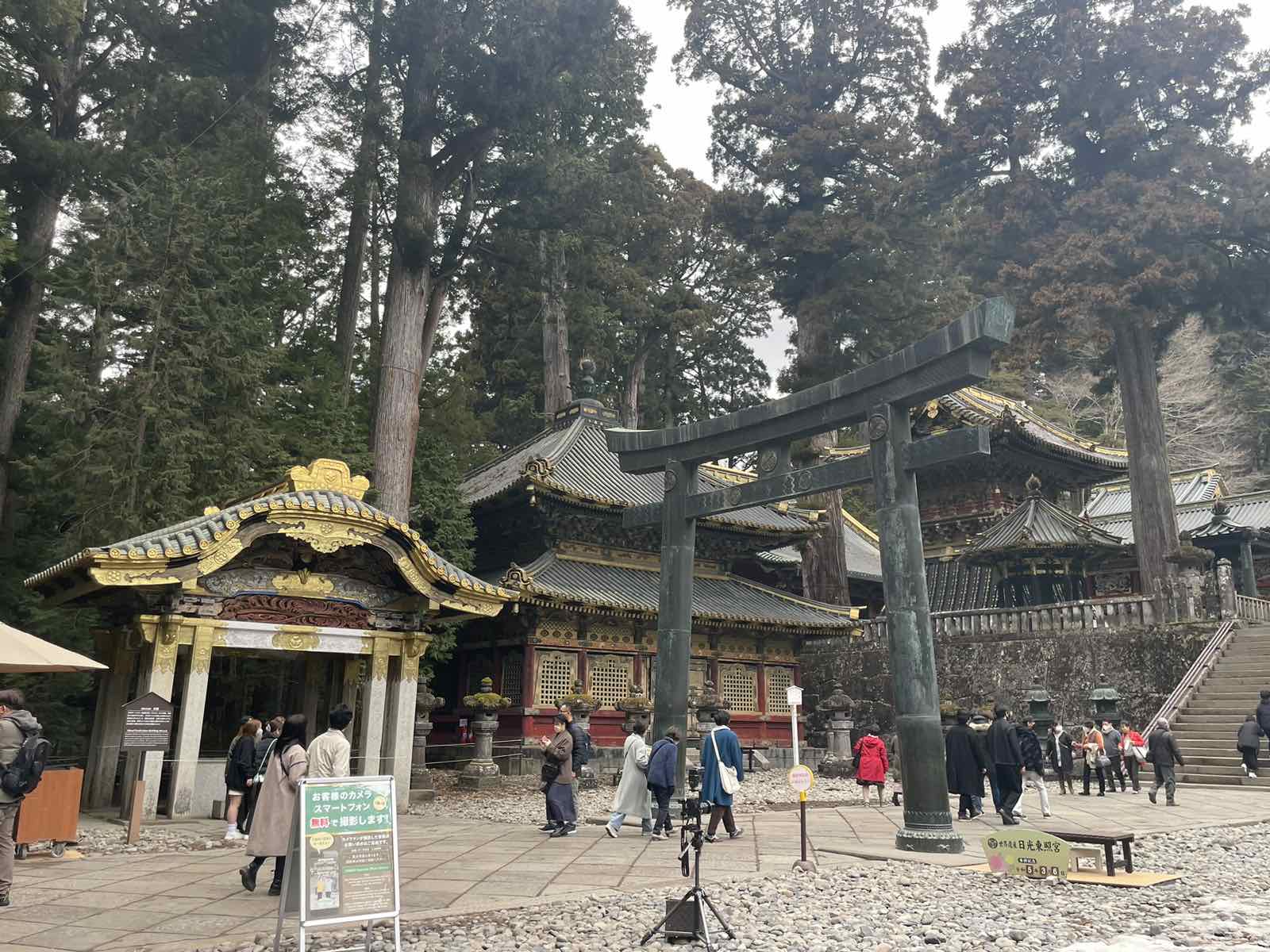

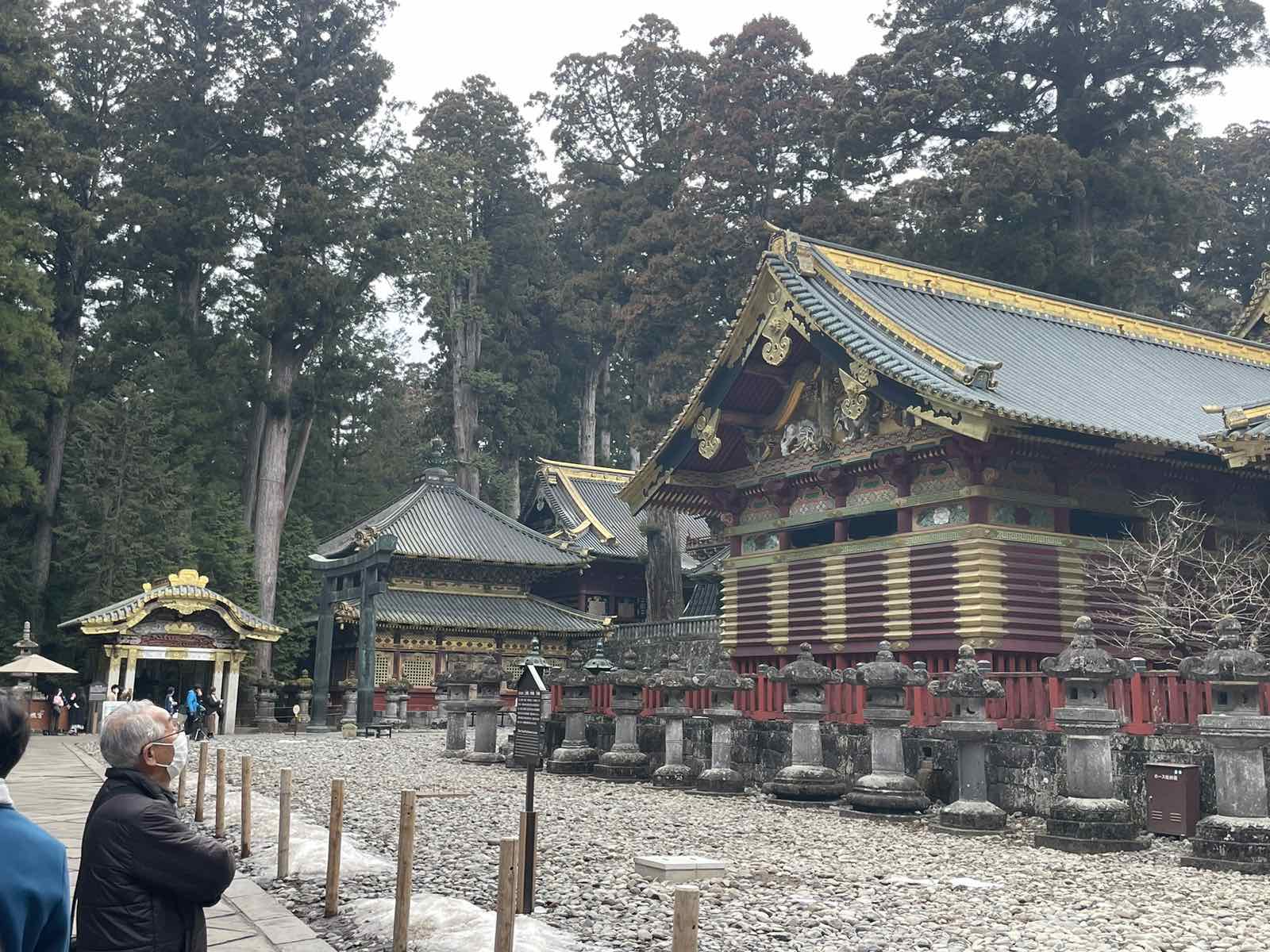
The complex consists of almost a dozen temples dedicated to Tokugawa Ieyasu, whose descendants ruled Japan for over 250 years (a so called Tokugawa Shogunate). His tomb required another long walk along the steep staircase up the mountain from the place where I was. It was never opened since his death in 1616.
I selected the first building on my map and turned on the audio tour.
The shrine is not monogamous, as there are both Shinto and Buddhist elements:
One of the storehouses on my way featured the famous monkeys, who are not hearing, seeing, or saying anything evil. In fact, there were more than just three of them (around 10) and they symbolize the different stages of the human life:
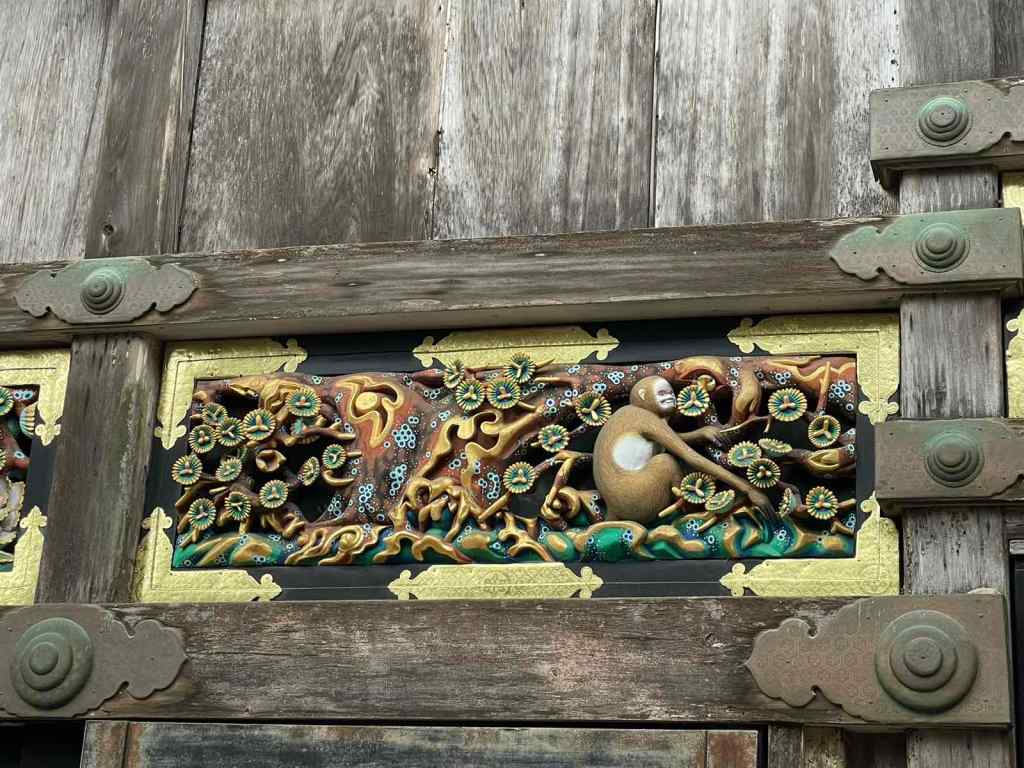
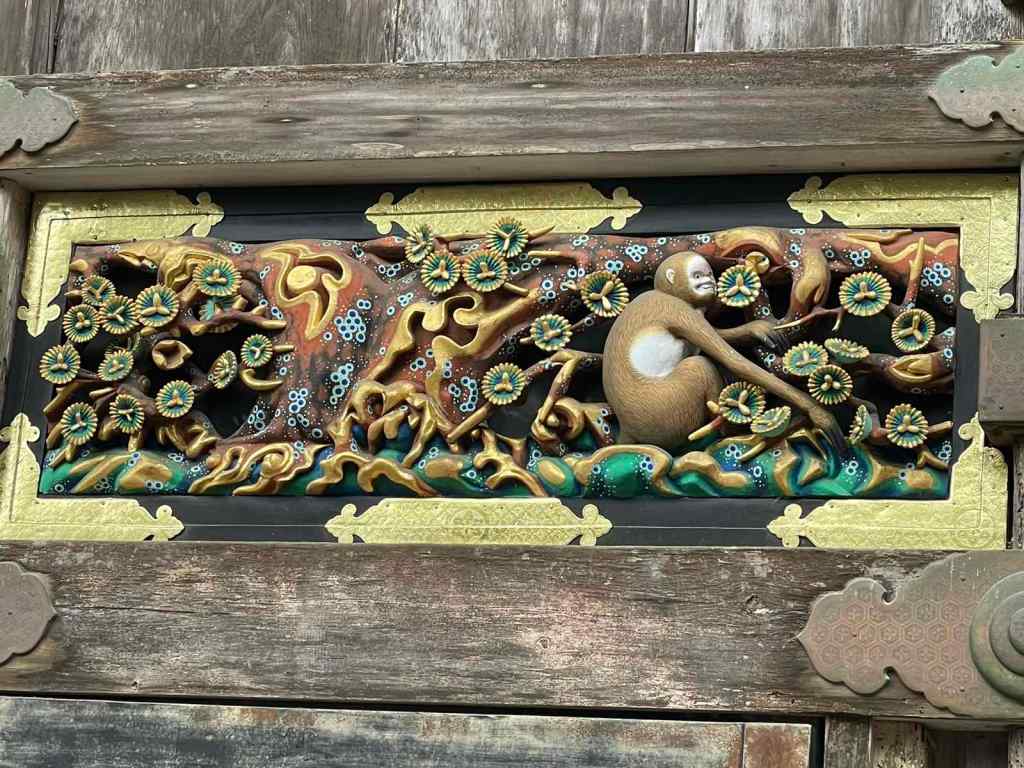
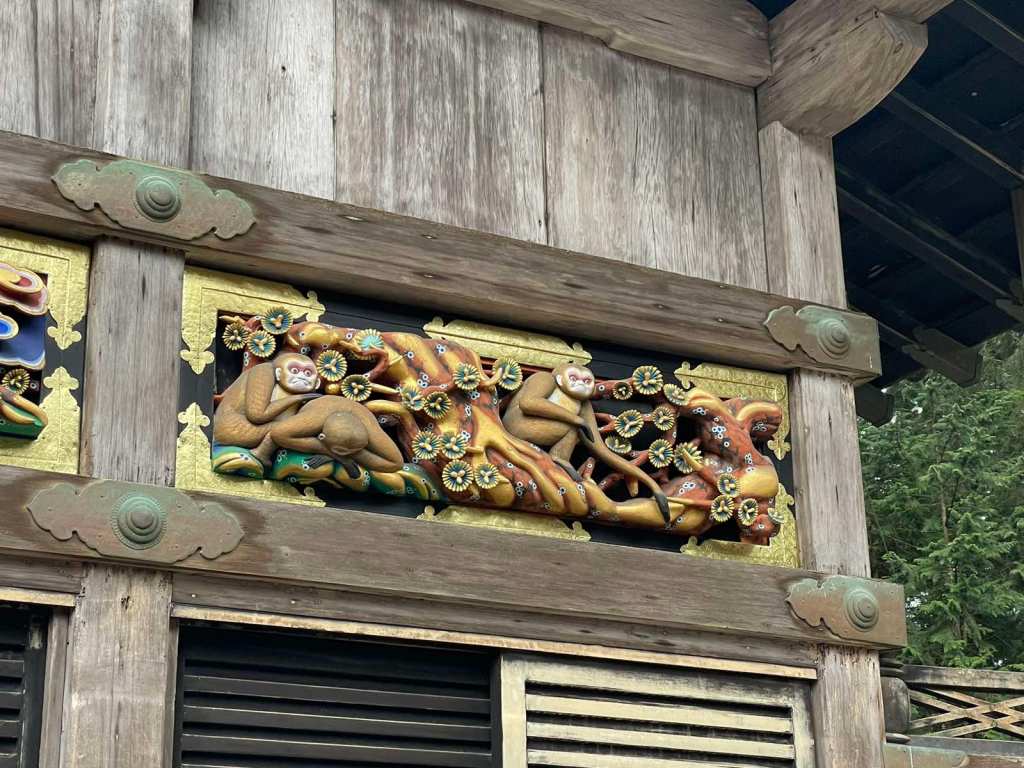
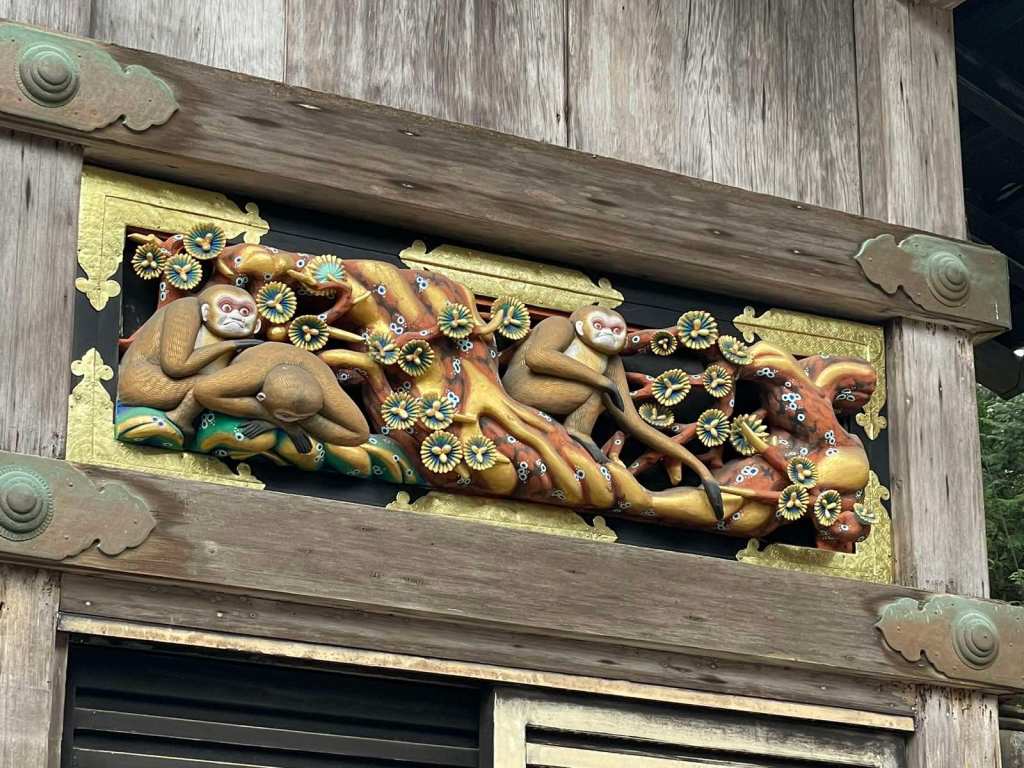
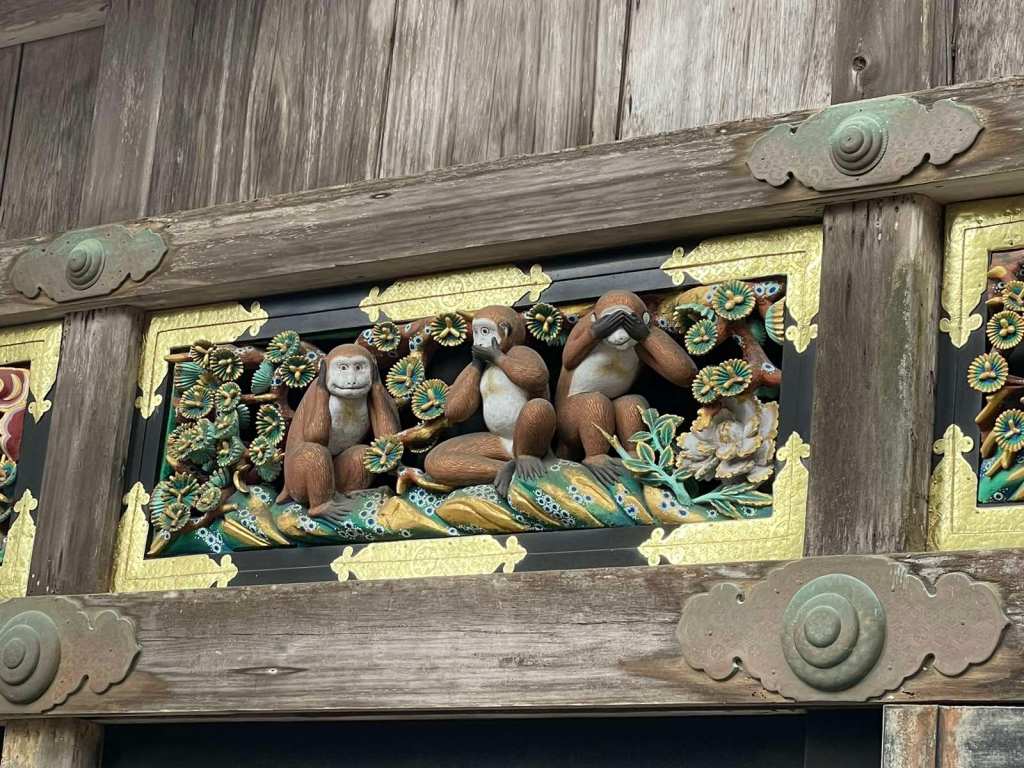
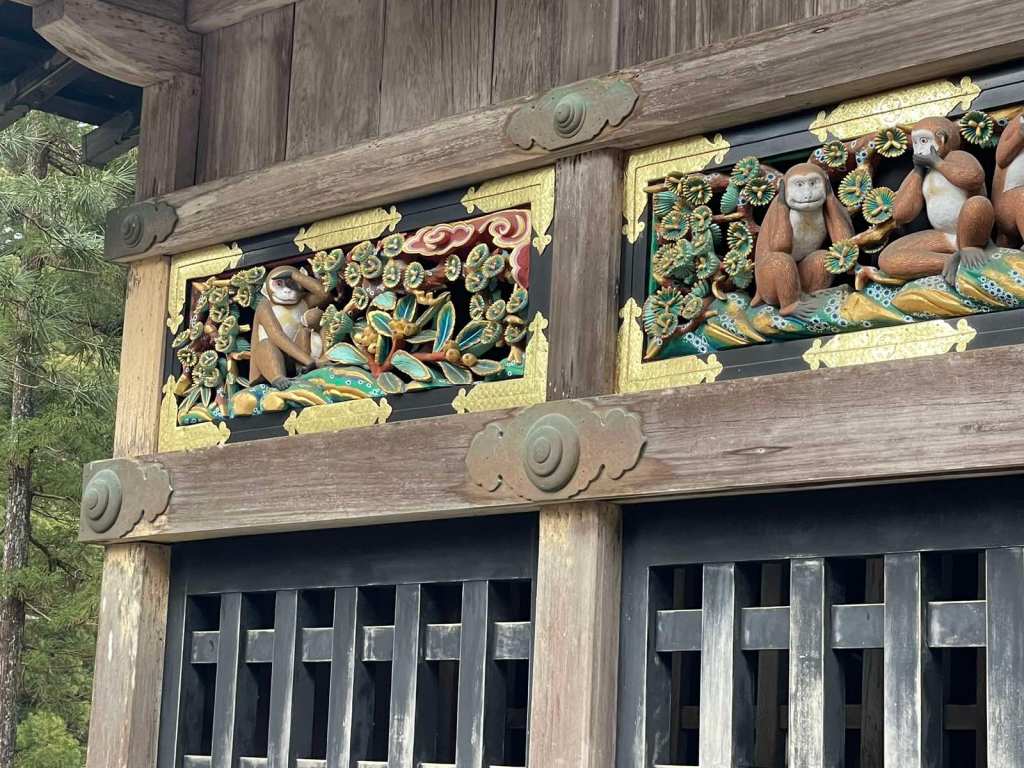
Another storehouse had a carving of Sozonozo elephants, which came quite close to what elephants should look like (at least schematically) as the author has never seen an elephant in his life.
The Yomeimon Gate leads visitors to the actual shrines of the complex. It is highly carved, with tiny details which can only be noticed after a careful investigation. Once you think you have identified the tiniest element of decor, your brain identifies new, even tinier ones. I intentionally looked at the carvings, then looked away, then turned back to notice more figurines. At he interior side you could notice the carvings going in an upside down manner – that was done on purpose to avoid the masterpiece being perfect and presumably destroyed by gods (fair enough, to be honest).
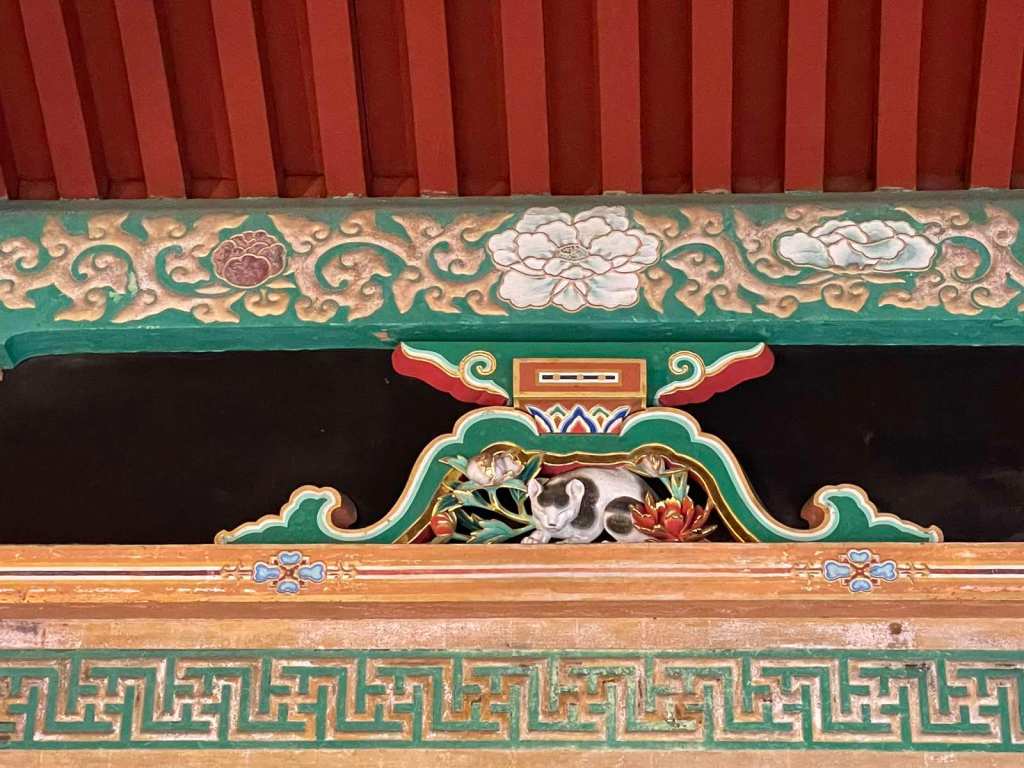
One of the shrines had an arch that led to the interior outdoor space. The arch was decorated by a sleeping cat (Nemurineko), with closed eyes but paws held tight and head looking straight. The cat symbolized country, which is in peace but is ready to fight and defend if needed.
Only after passing the complex, you saw a flight of stairs leading to Tokugawa’s mausoleum. Once I find the pictures of the tomb, I will add them here. Until then, stay tuned – going over 5000 photos is no easy task 🙂
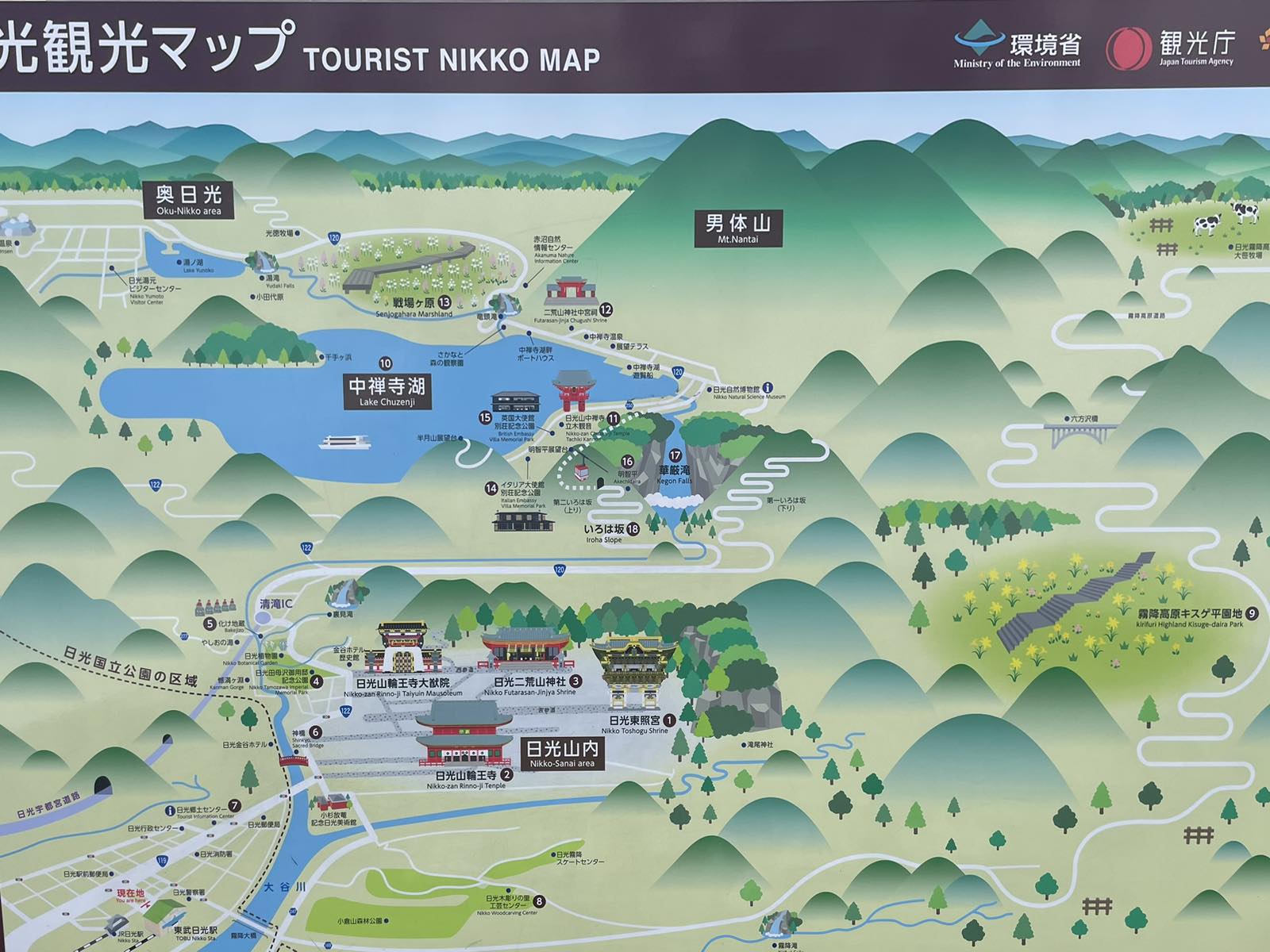
My trip was not done at Nikko. It was still a couple of hours till sunset, and I love extreme, so I decided to take bus up the neighbor mountain peak to visit Kegon Falls.
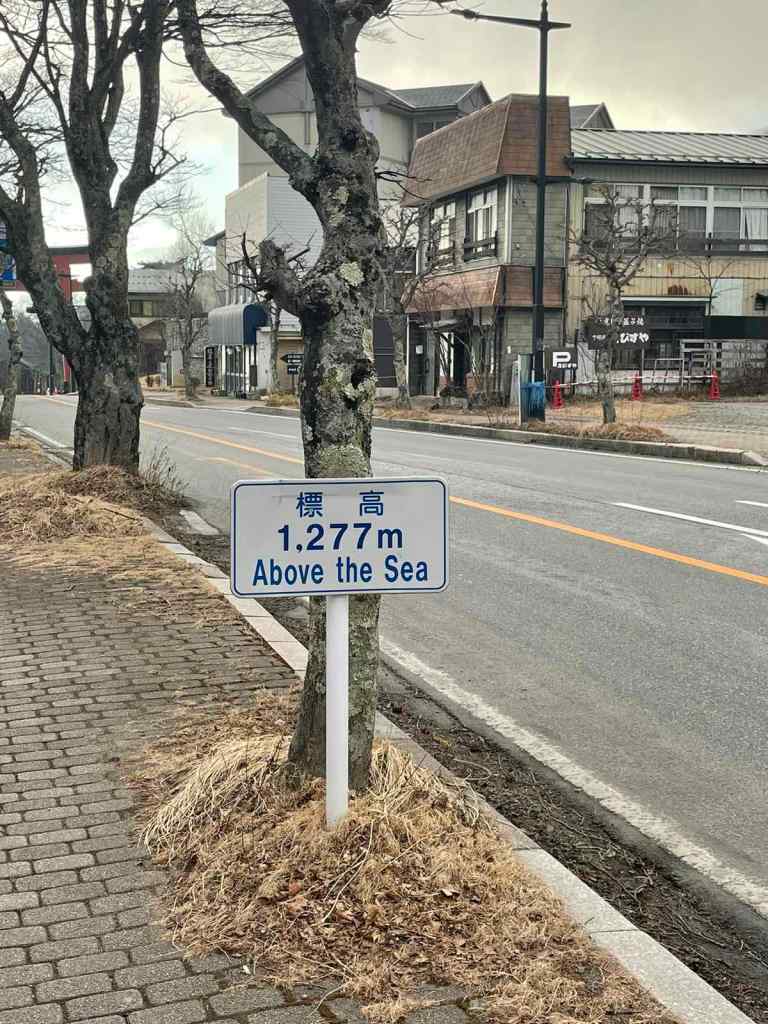
The bus was going up a serpentine, leaning toward the edge of the abyss on the particularly sharp turns. I thought I was going to die and my soul will resurrect in one of the wild deer I saw out of the window.
Thankfully, the deer did not like this idea and I got to the top 99% alive (1% goes to white hairs and dead nerve cells). I had to take an elevator and then walk through a moist gloomy underground tunnel, that led me onto the platform – viewing deck – to the falls.
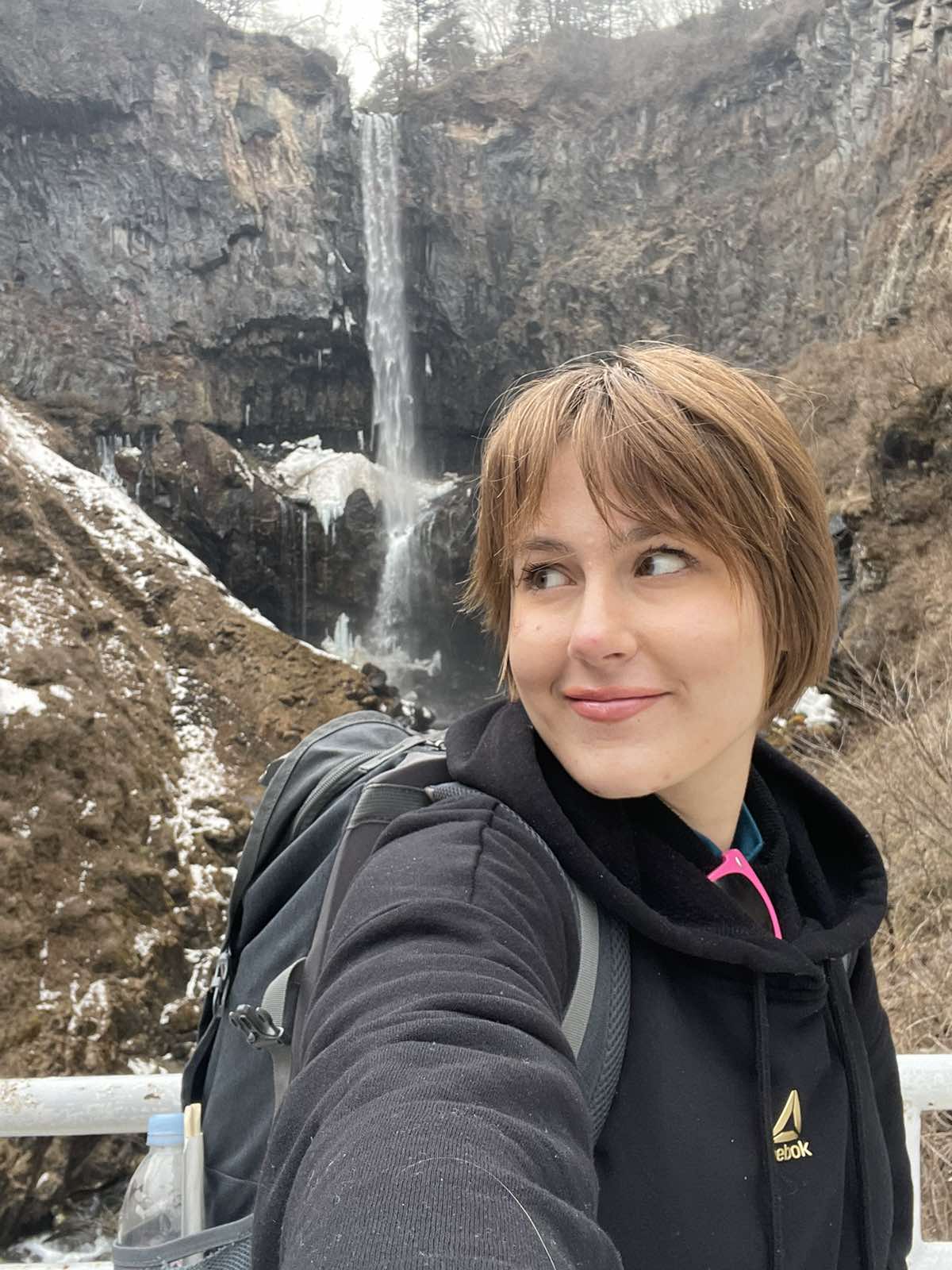
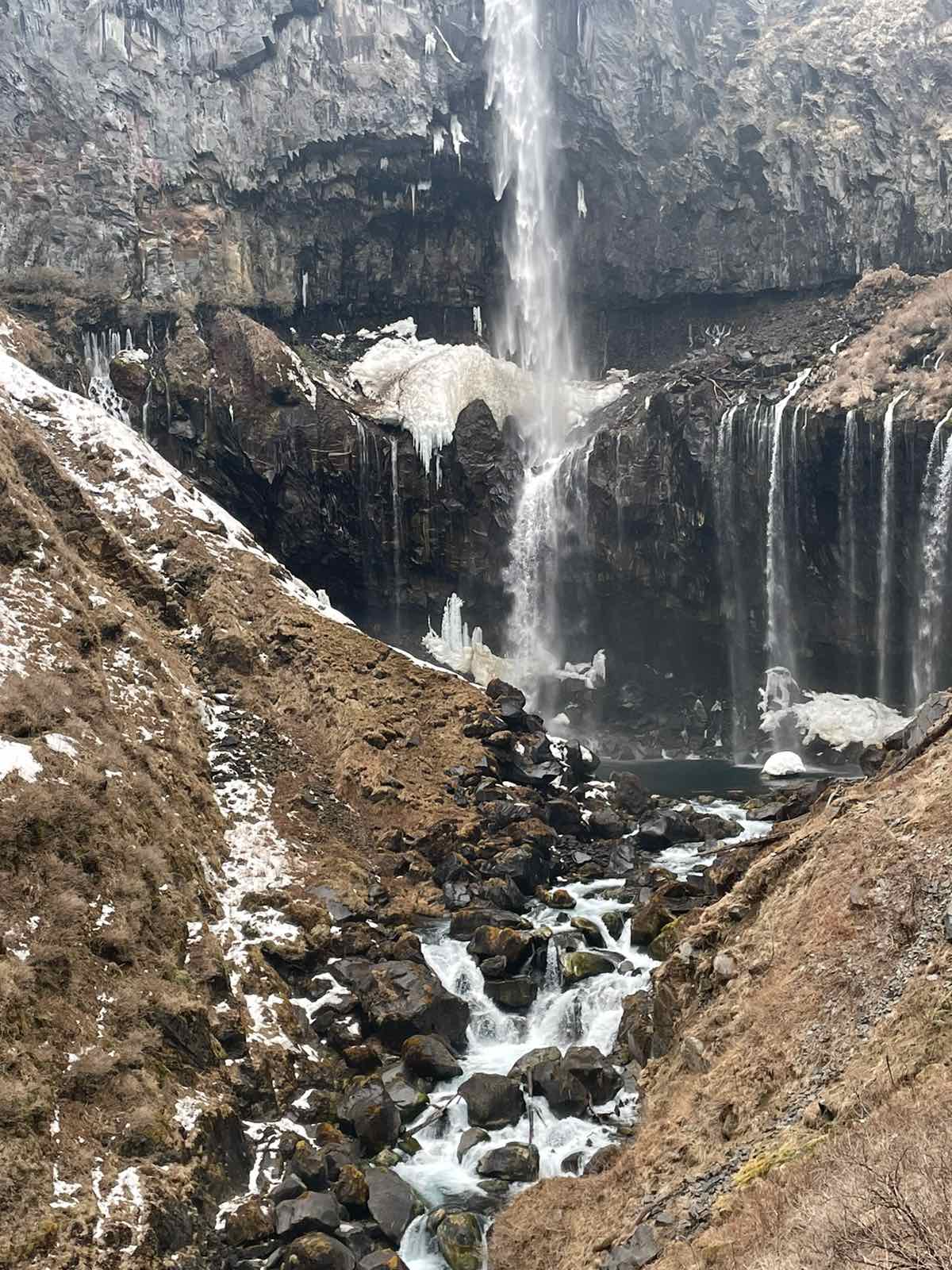
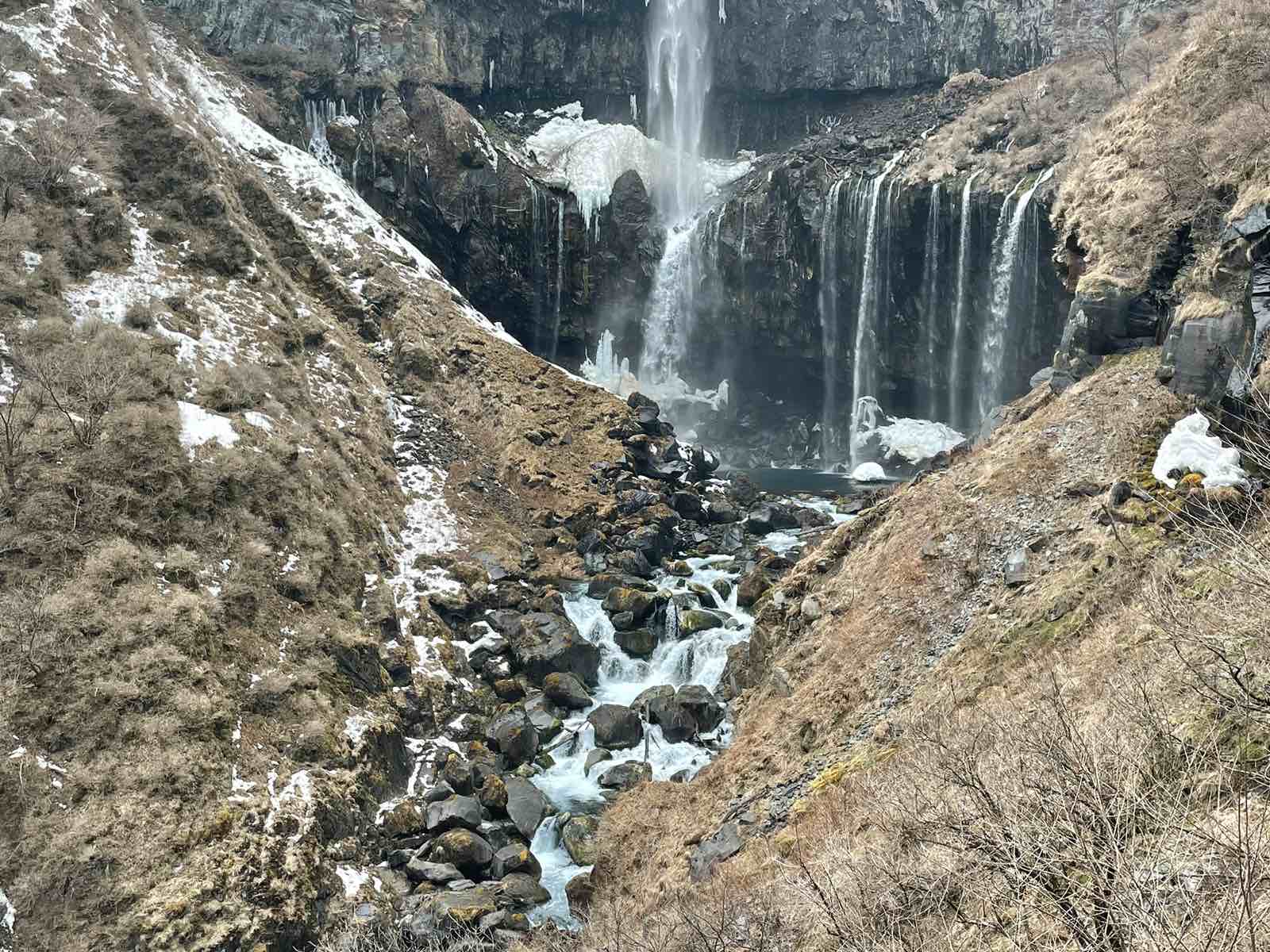
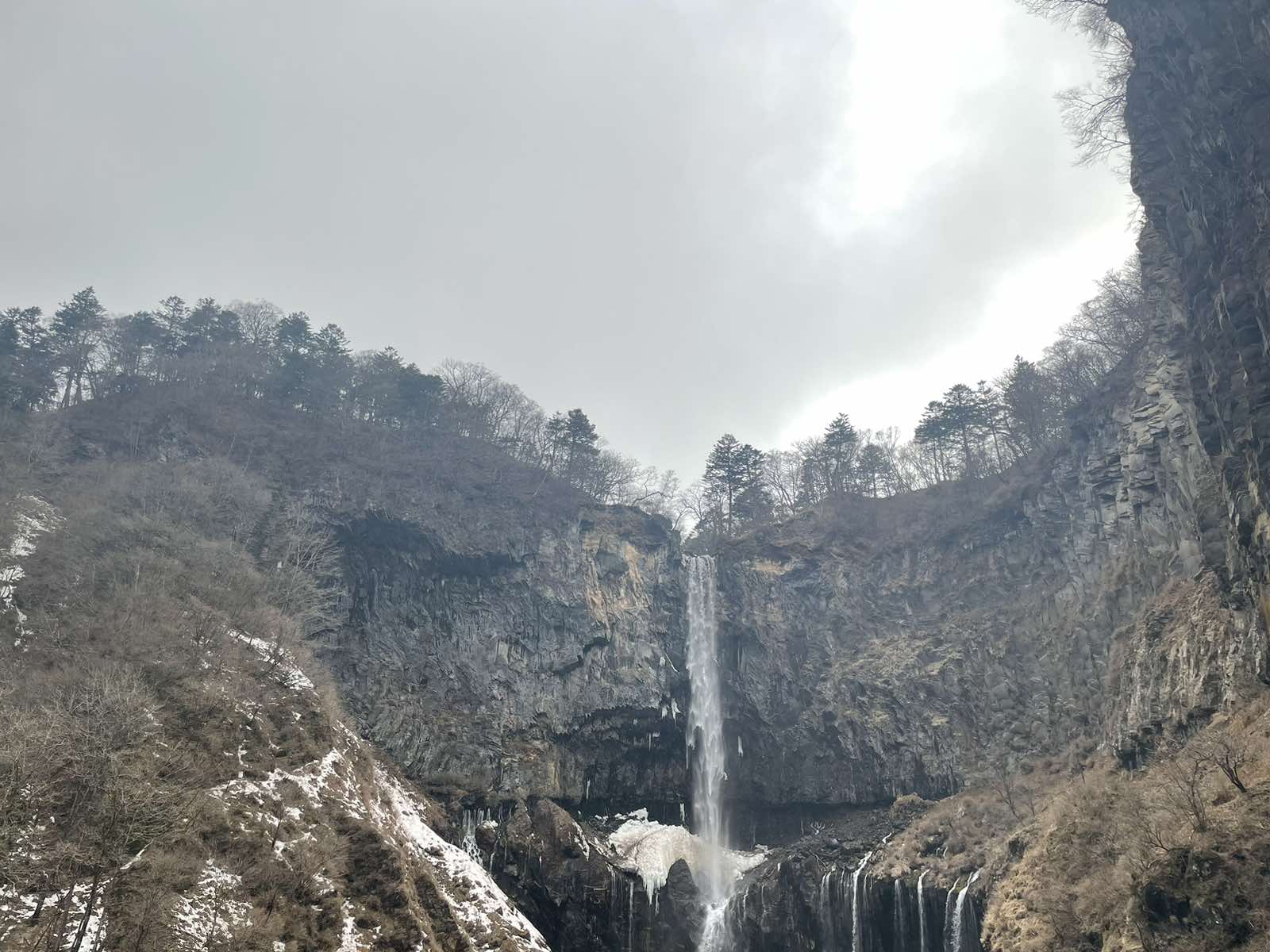
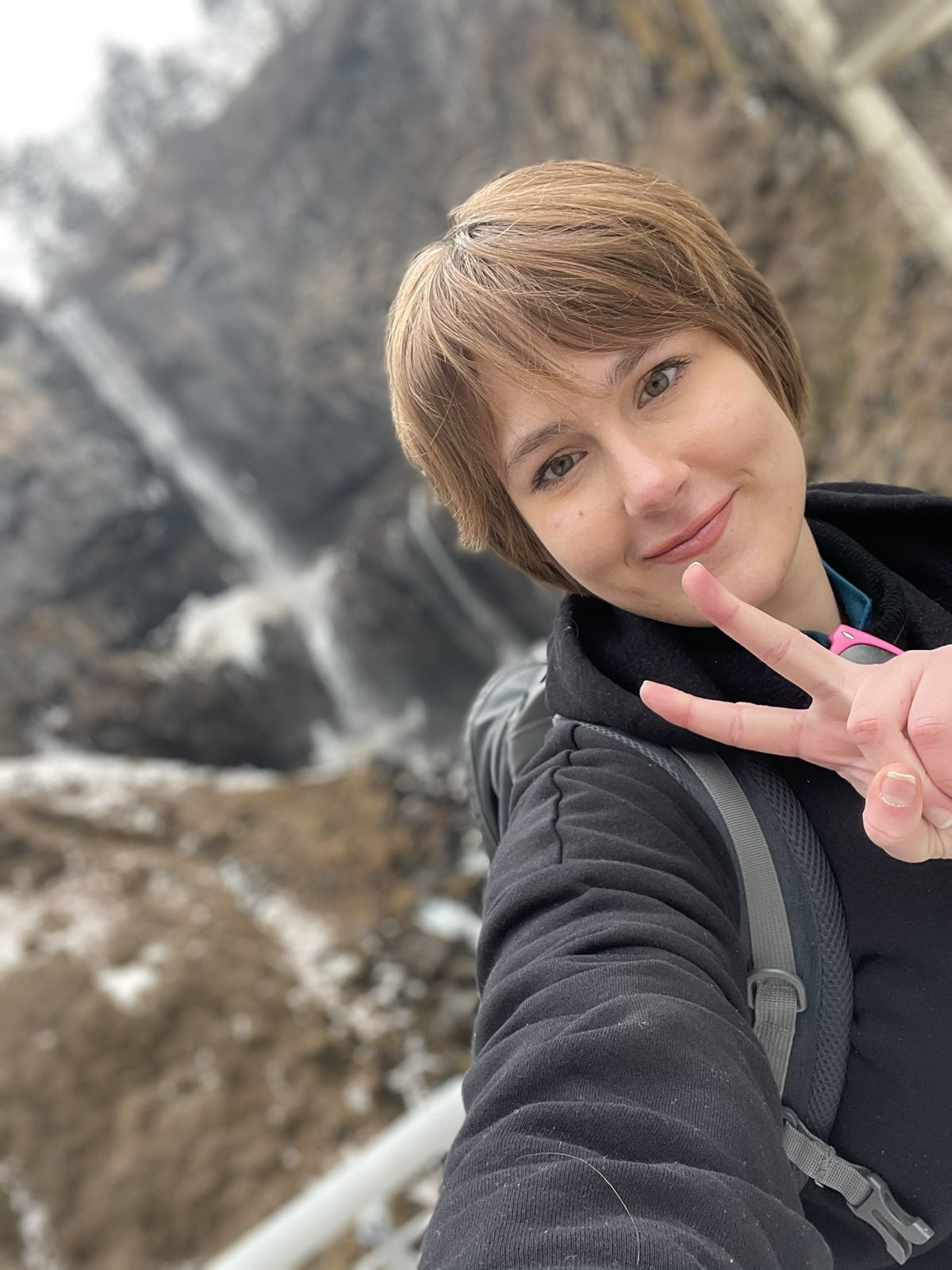
I mean, it was still impressive, but some greens around would definitely help.
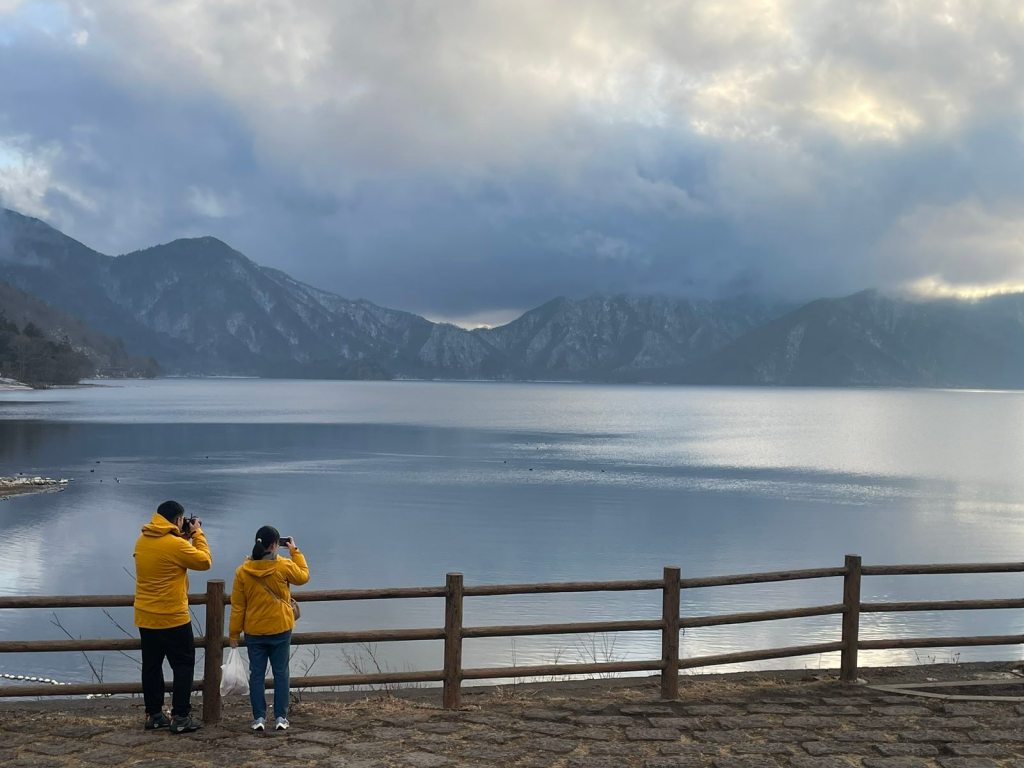
What I liked more was the lake nearby – I am not sure, but strongly suspect the Falls was sourced by this lake, as they were not far away from each other, and on the same level.
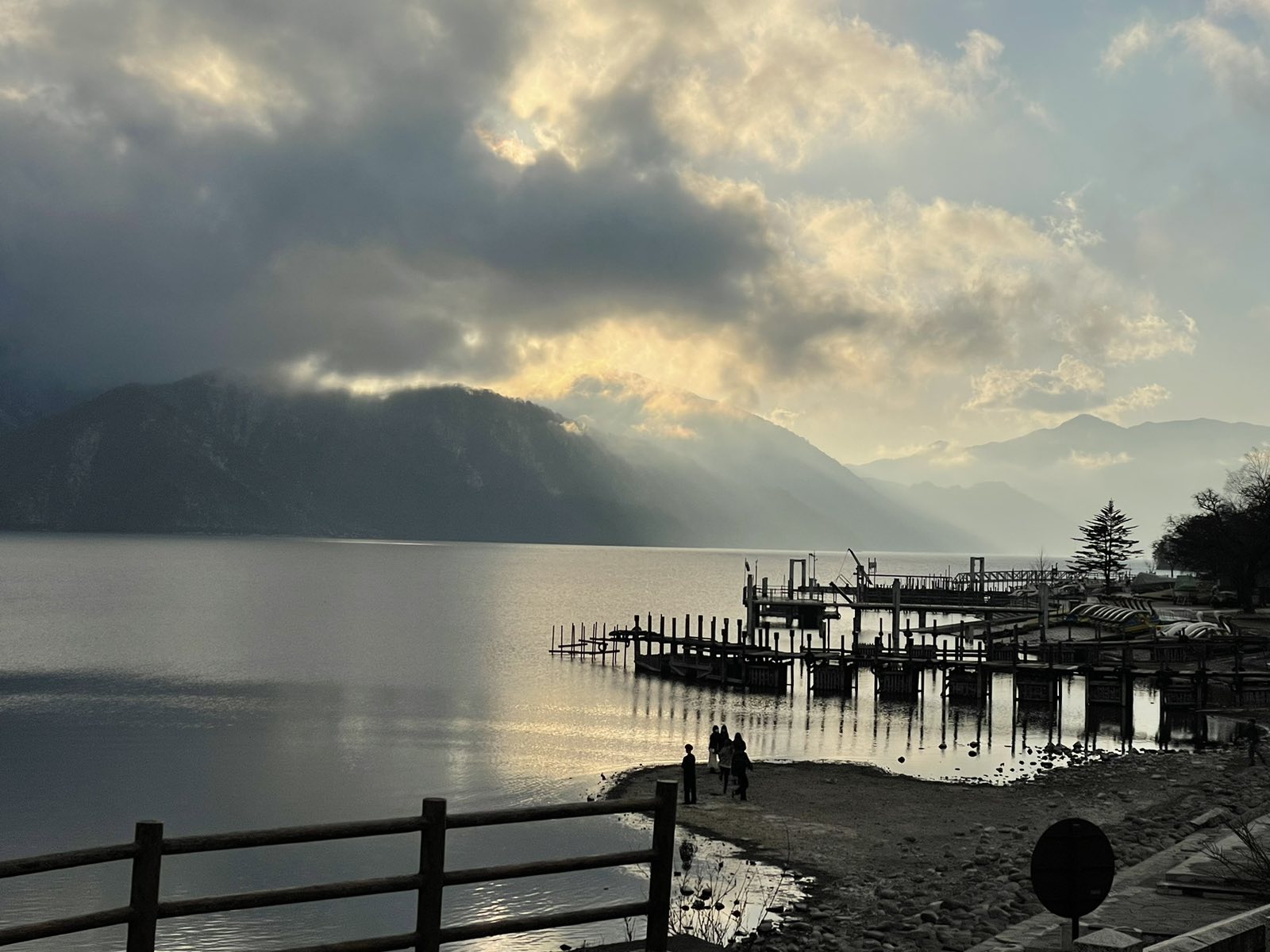
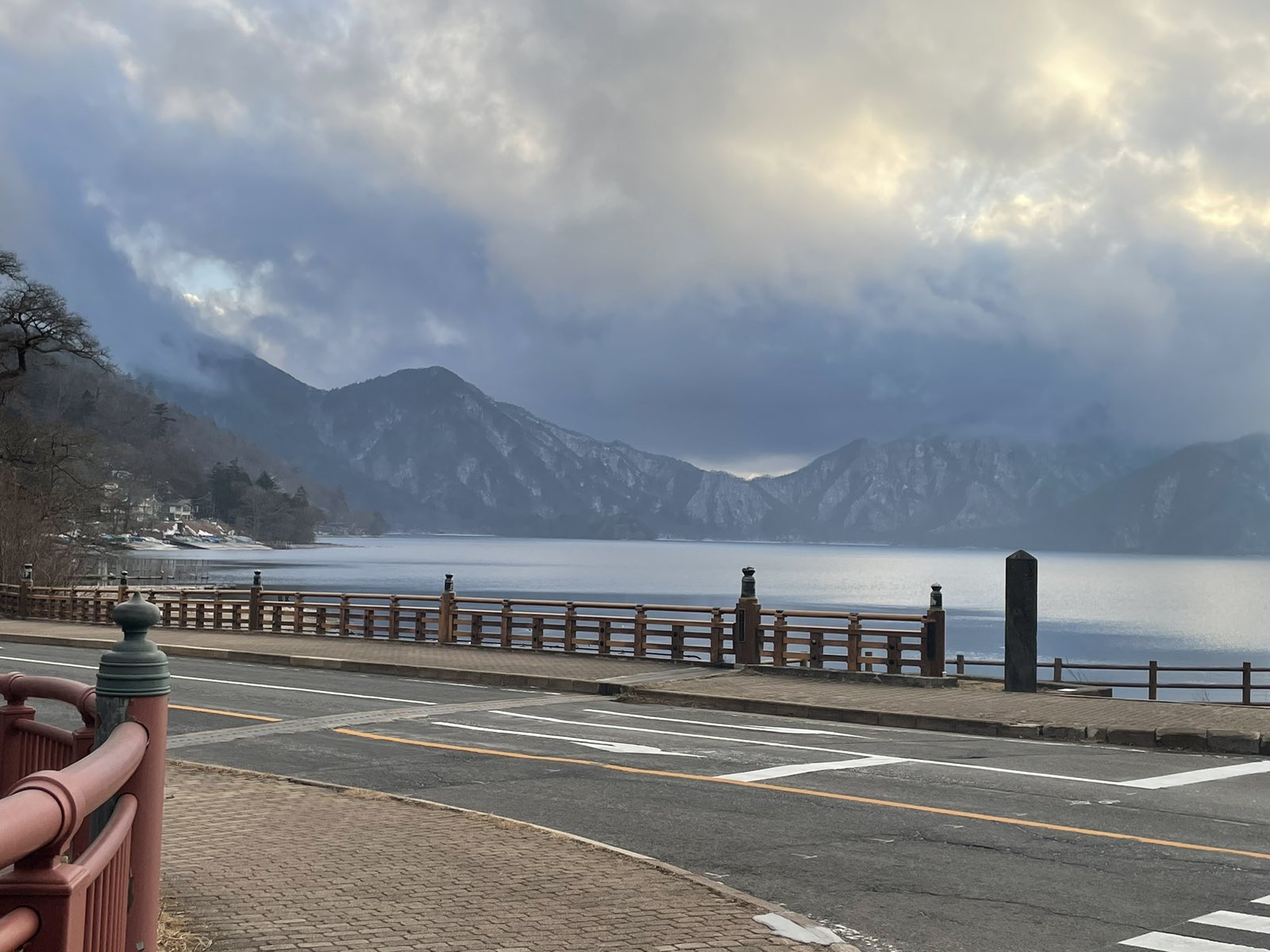
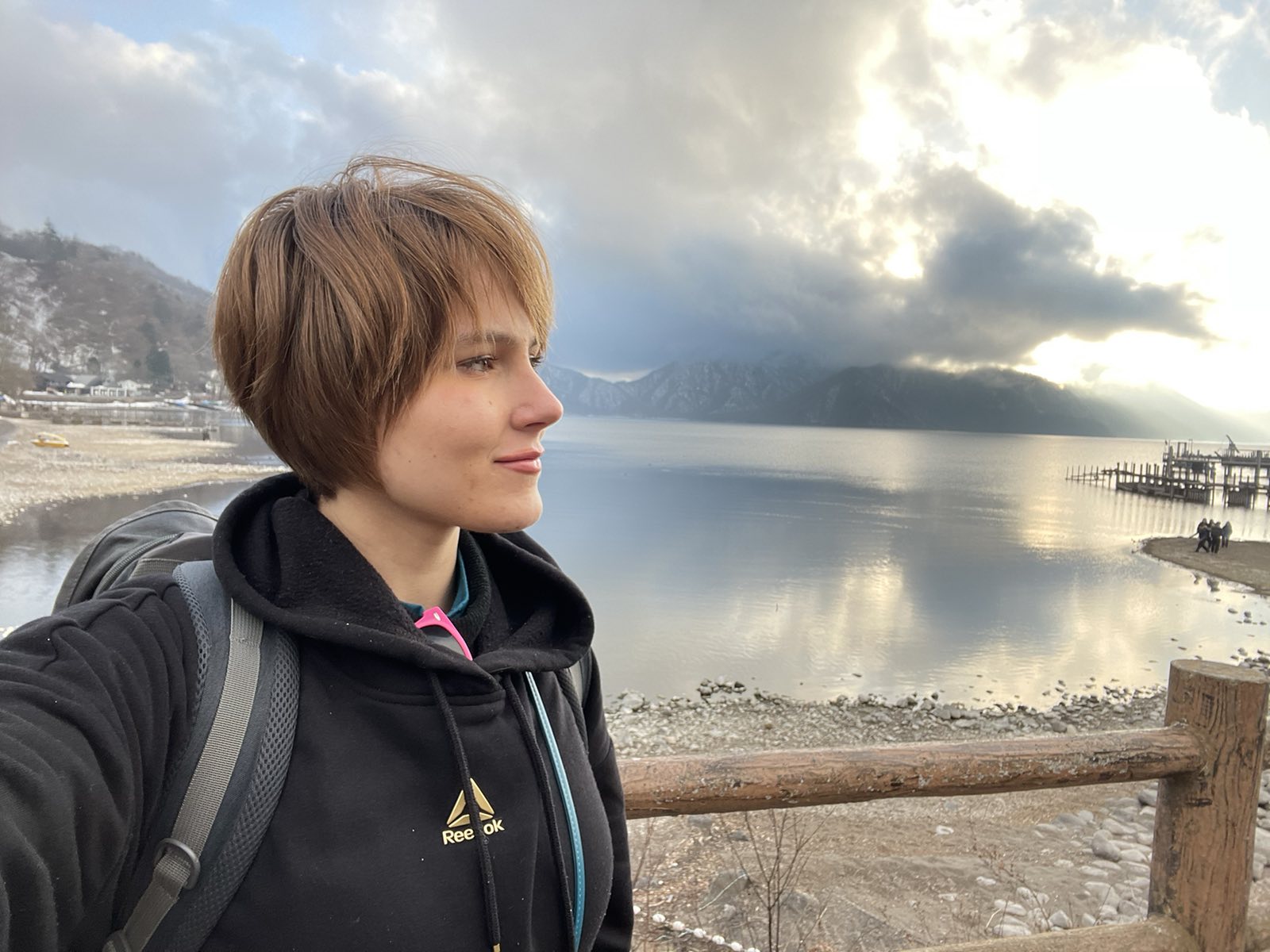
The bluish-darkish even water surface turned coffee-brown as it was getting darker. No people, just ringing silence and the lake which was so peaceful that it seemed you could walk on it. Mountain crests on the horizon. Fresh breeze. Red sunset.
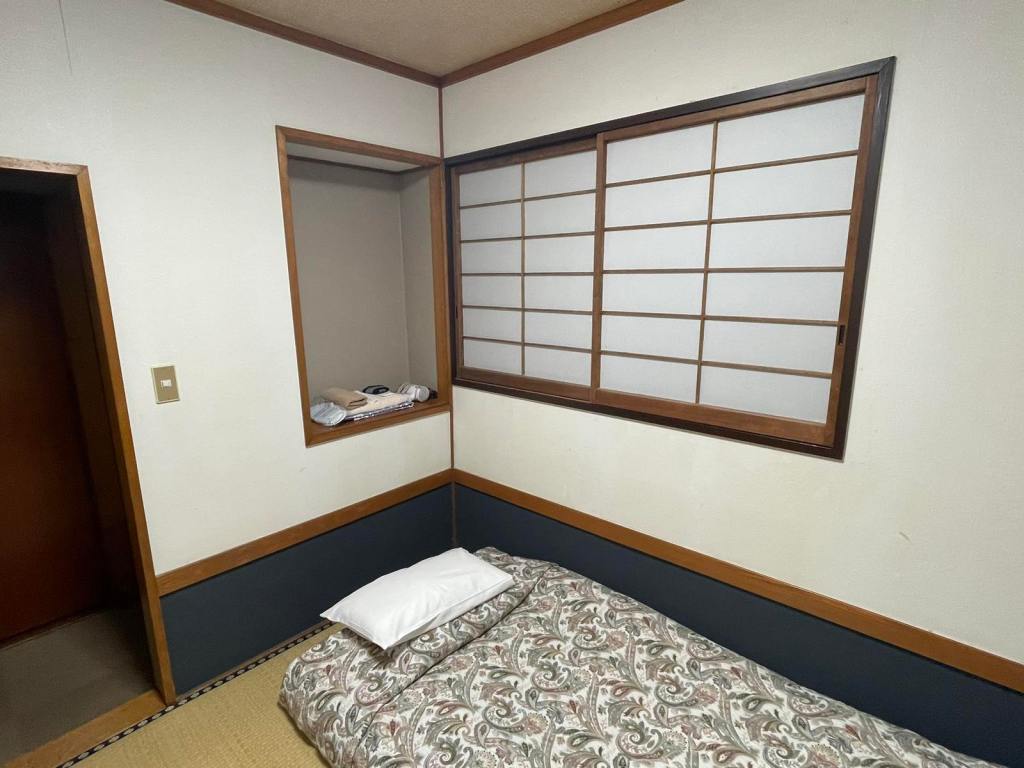
I made a room reservation on Booking, which was not far from where I was dropped of by the bus in the very beginning. When I got to it, it was already around 11:00 pm, very dark and rather cold. An elderly man welcomed me and showed the room which was just like the Ryokan rooms for which other fancy hotels wind up the prices .
Here, it seemed like the room was always this way until they decided to rebuild the house to be a small motel. The traditional interior was not meant to be an attraction for tourists or something to charge extra for. It was like this because in Japan, you do it like this.
Next morning, I sadly said good bye and headed home, planning to stop by Tojinbo cliffs first.
 romashos.blog