
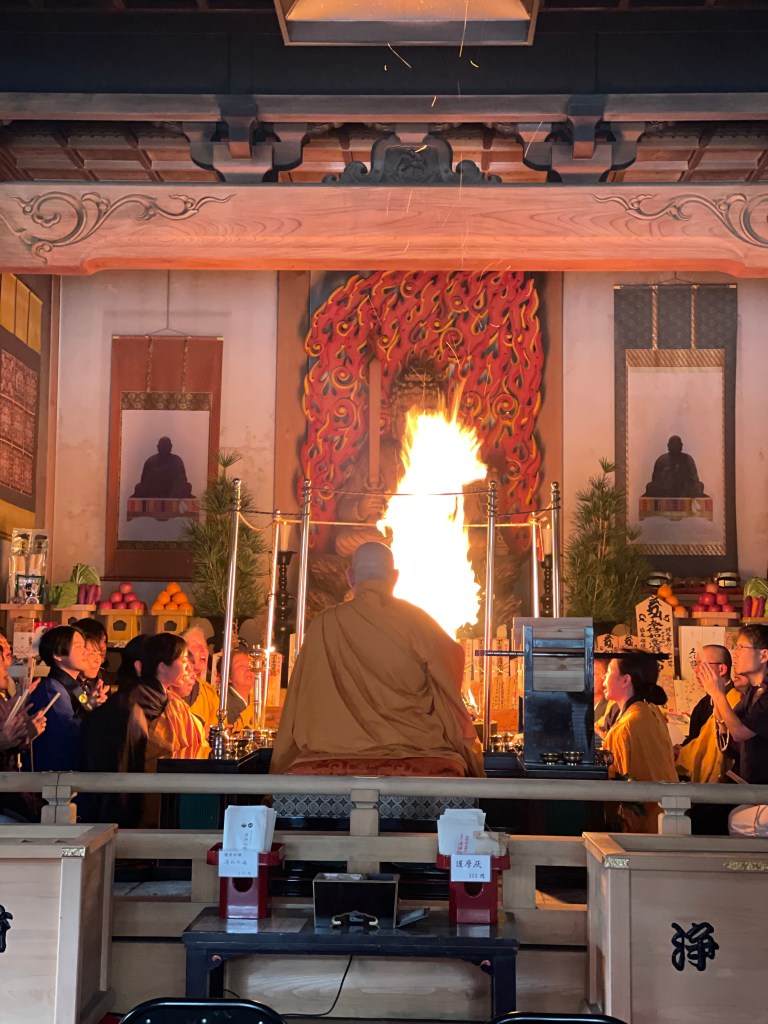
It took me around 4 hours, 1 bus and two trains to get to the secluded temple settlement high in the mountains of Wakayama Prefecture, south of Osaka.
The sacred mountain is home to over 100 Buddhist temples, most of which welcome tourists for a temple lodging, or shukubo. I stayed there for one night and two days, embracing the experience of the traditional Japanese dining, morning rituals, and getting a quick glance of the monk’s life.
The beginning of my journey unfolded with a series of train rides, leading me south of Osaka and into the scenic realm of Wakayama Prefecture. As I gazed out the window, the urban jungle gradually transformed into a picturesque tapestry of one- or two-story traditional houses. However, as we climbed up the mountainside, the quaint and authentic Japanese dwellings gave way to lush, almost tropical jungles adorned with vines and towering pine trees of remarkable height.
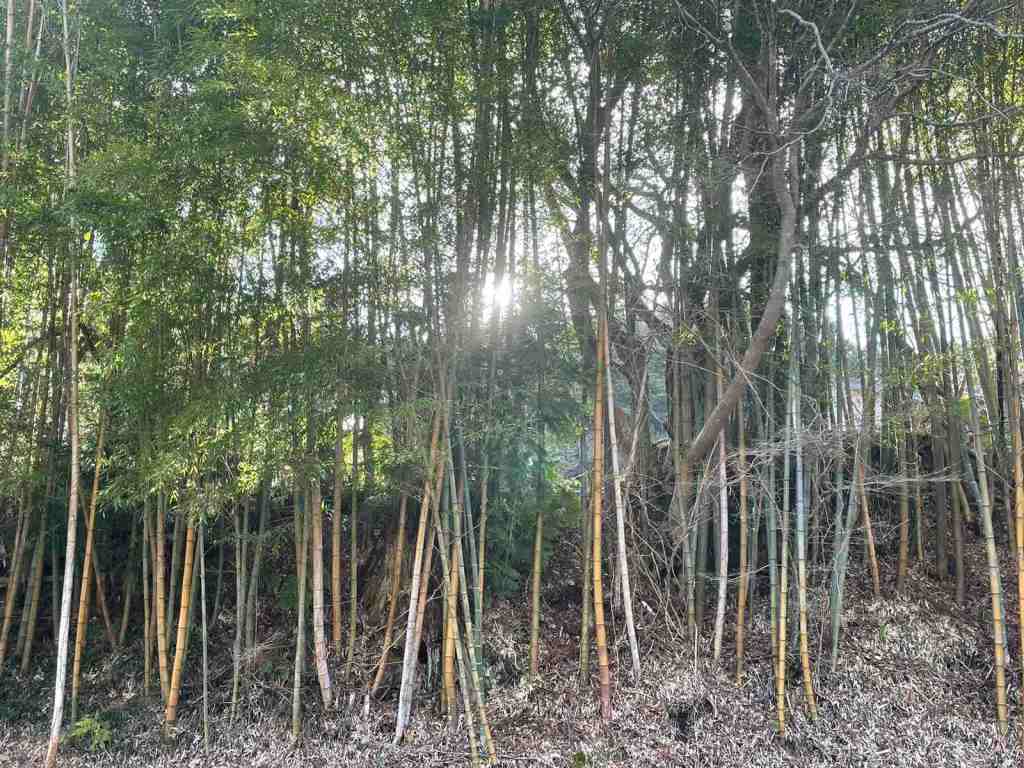
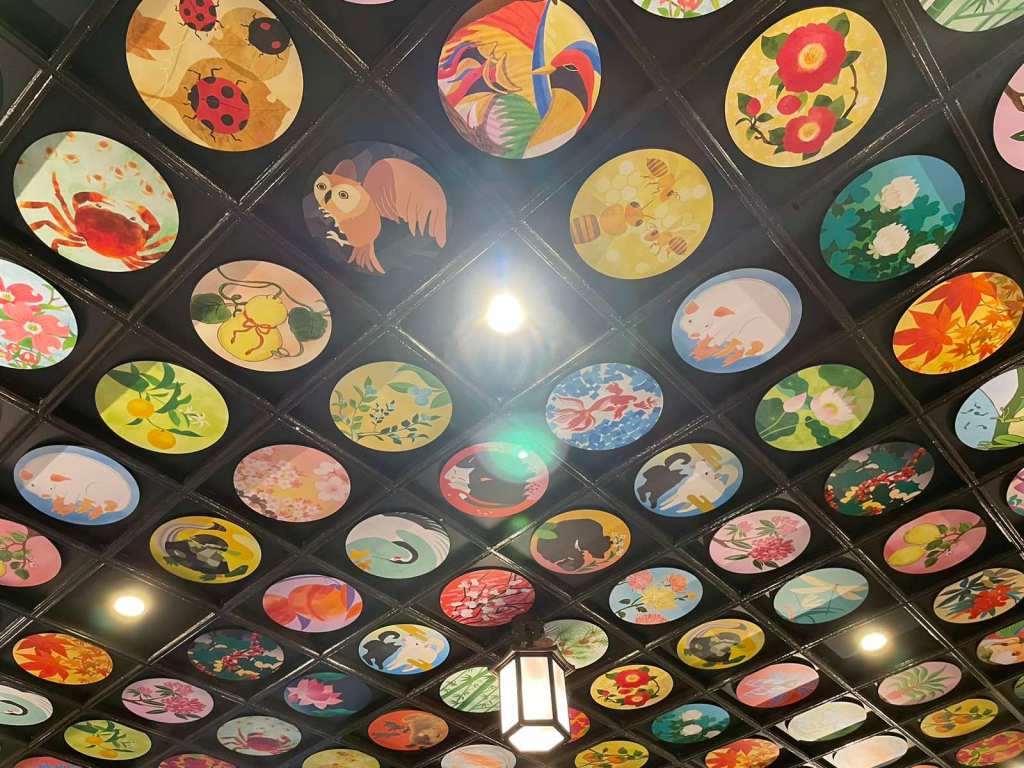
Every Japanese town has a local mascot – usually it is a small cute animal, plant or magical creature. Apparently, there also has been a local Koya feature – something to do with small patches of decor patterns, which would be put on ceilings in the common areas, and also sold as collections of fabric patterns in the souvenir shops. This one I saw at the terminal station:
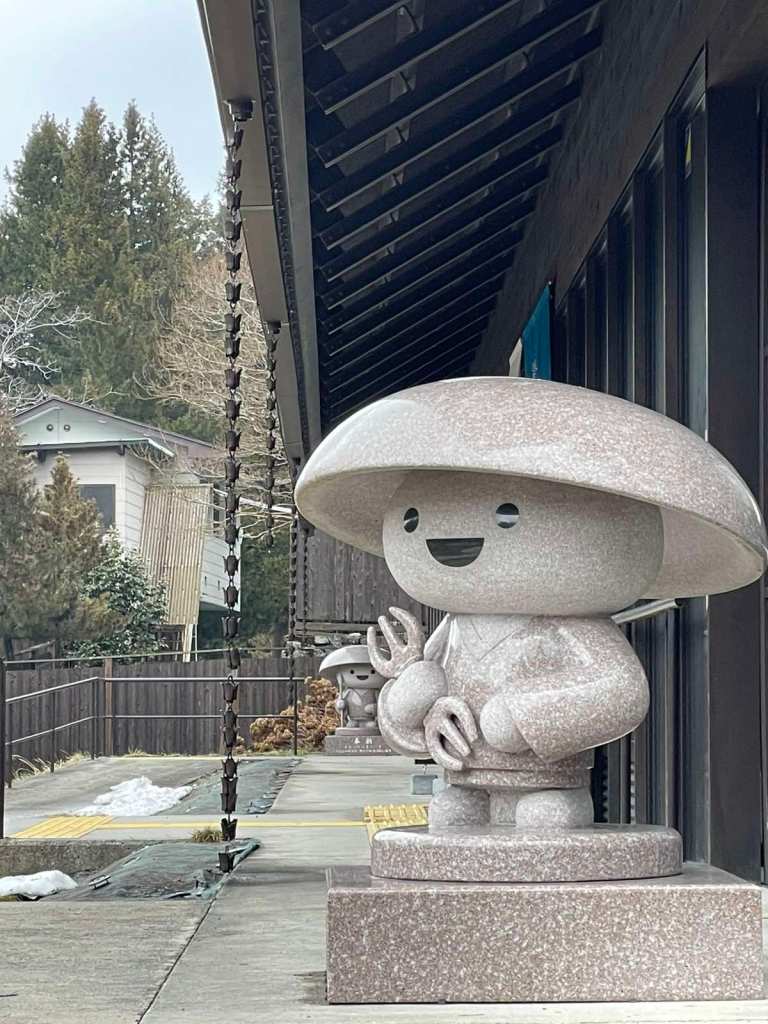
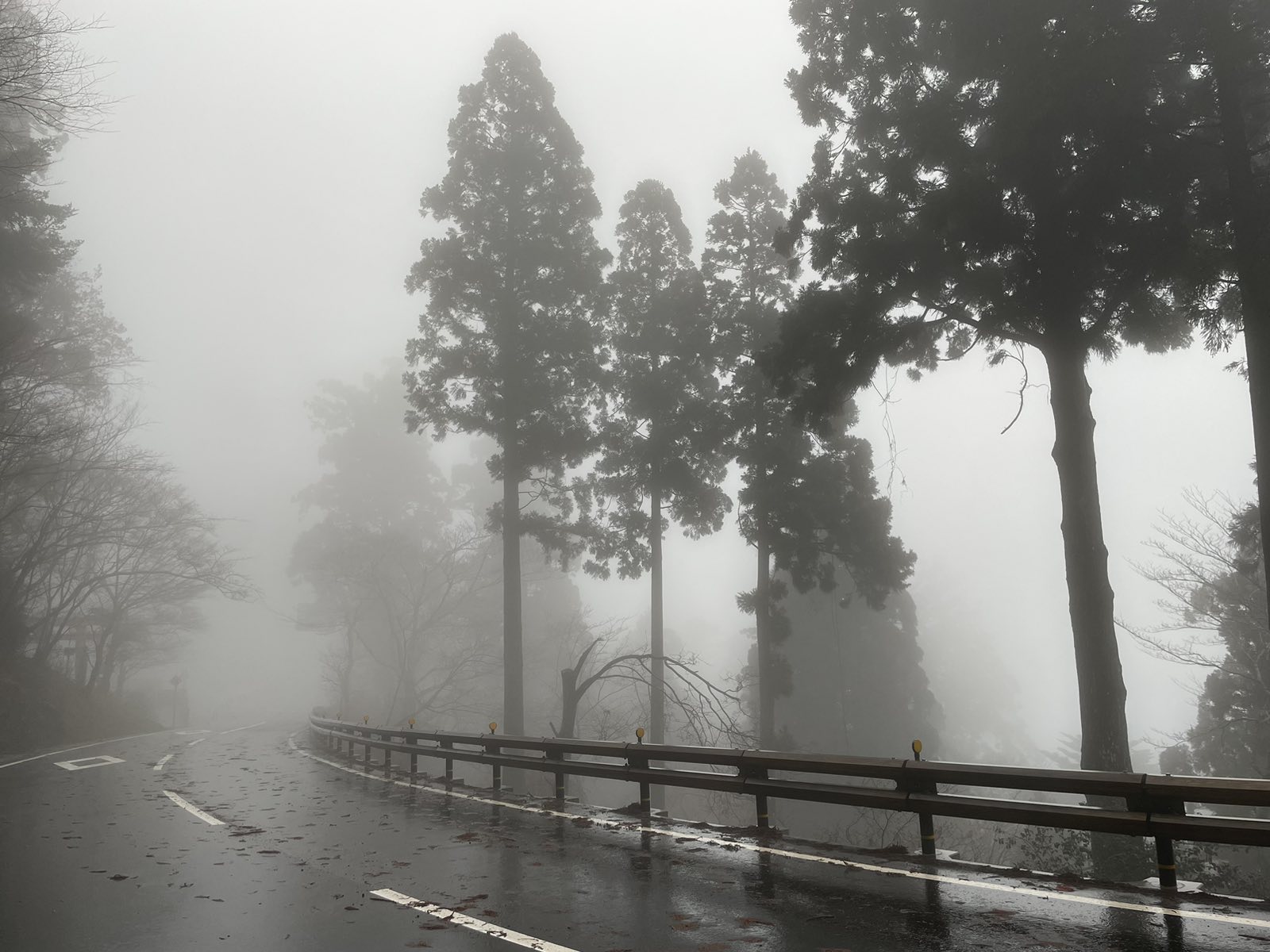
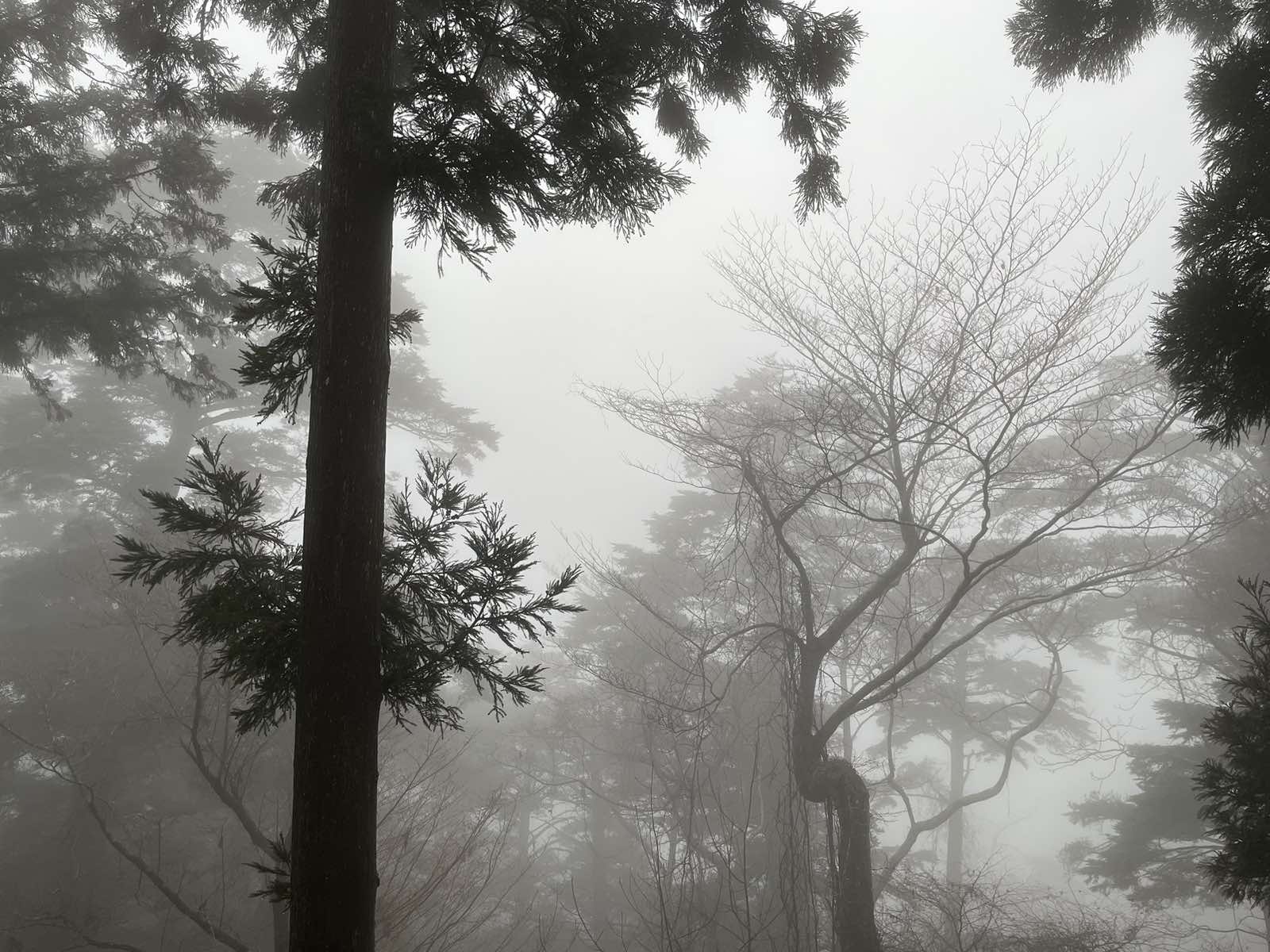
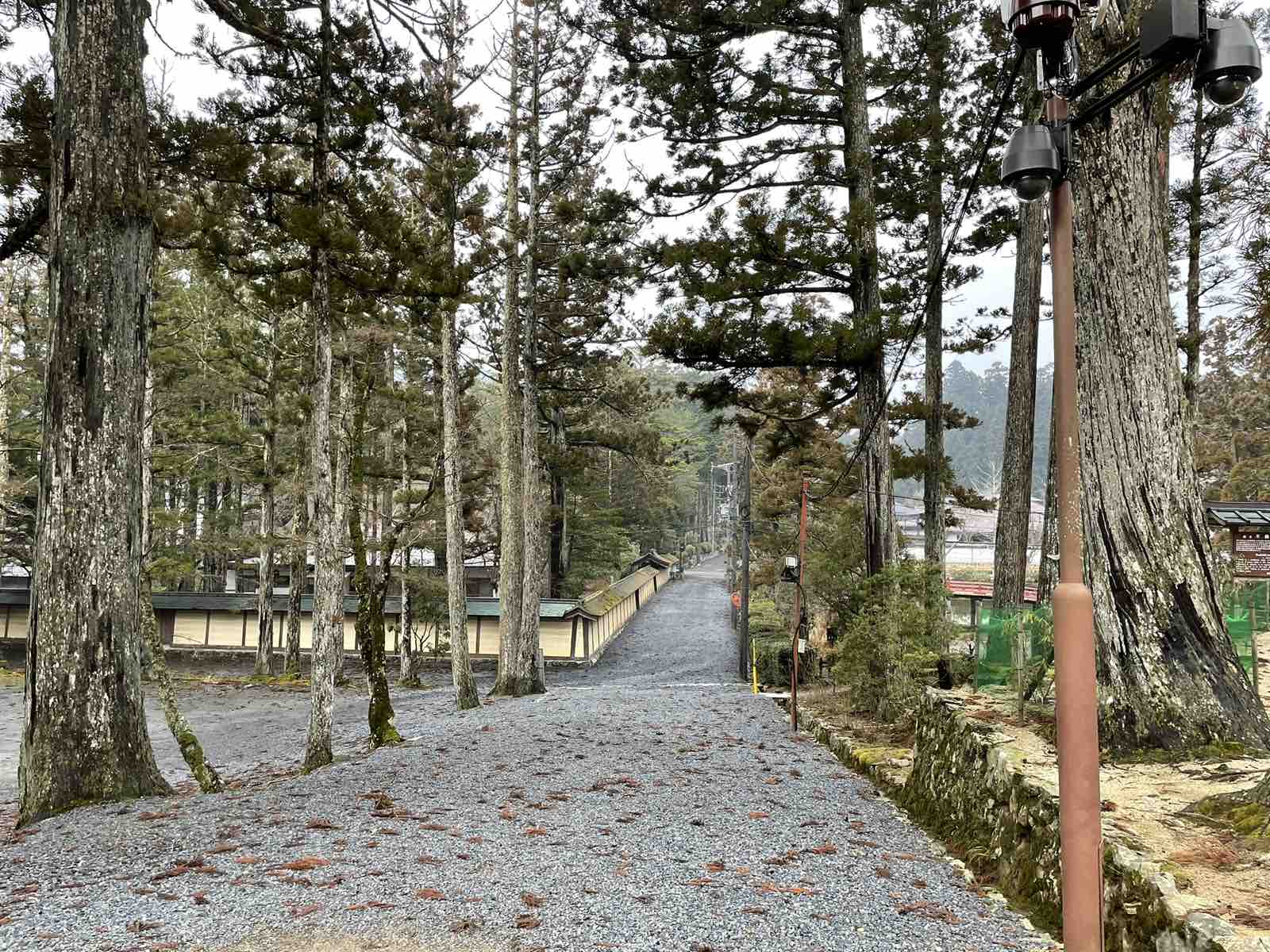
It was cloudy and foggy when we reached the terminal station and boarded the elevator, which brought us to a height of 800 meters. There, we were either left with a choice of waiting for another hour to take a bus, or walk 2.5 km on foot through the enchanting forests of Koyasan. As much as Japanese bus drivers can be polite and enchanting, the decision was quite obvious. Not even the birds sang, and the forest around me was silent, but welcoming.
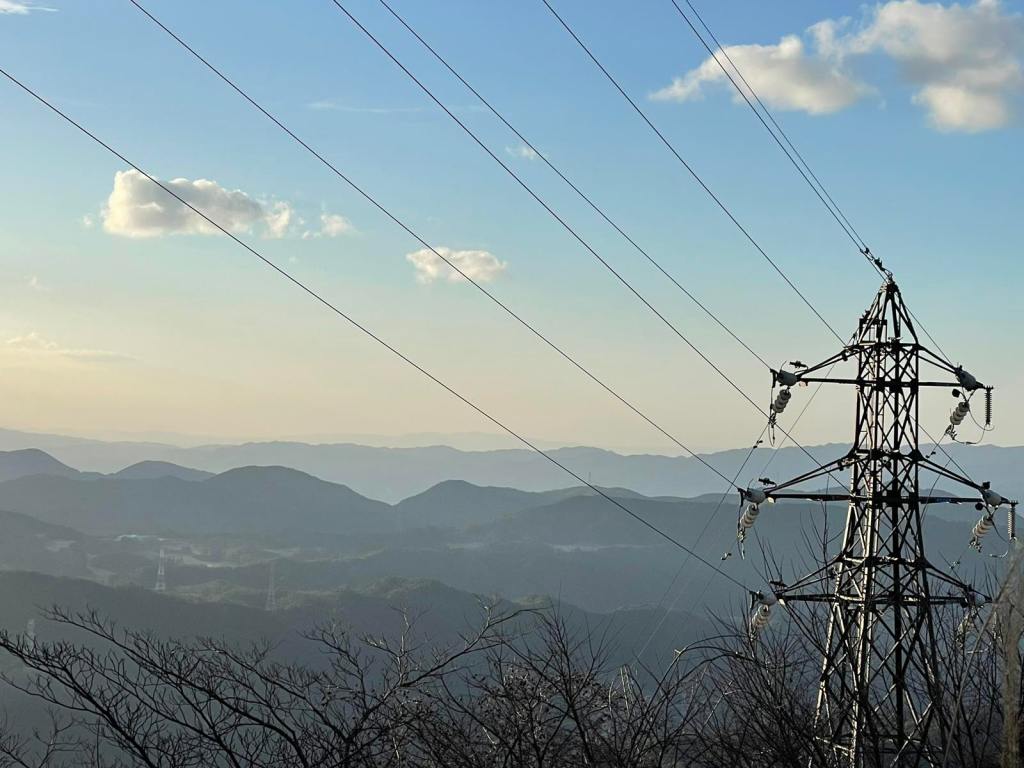
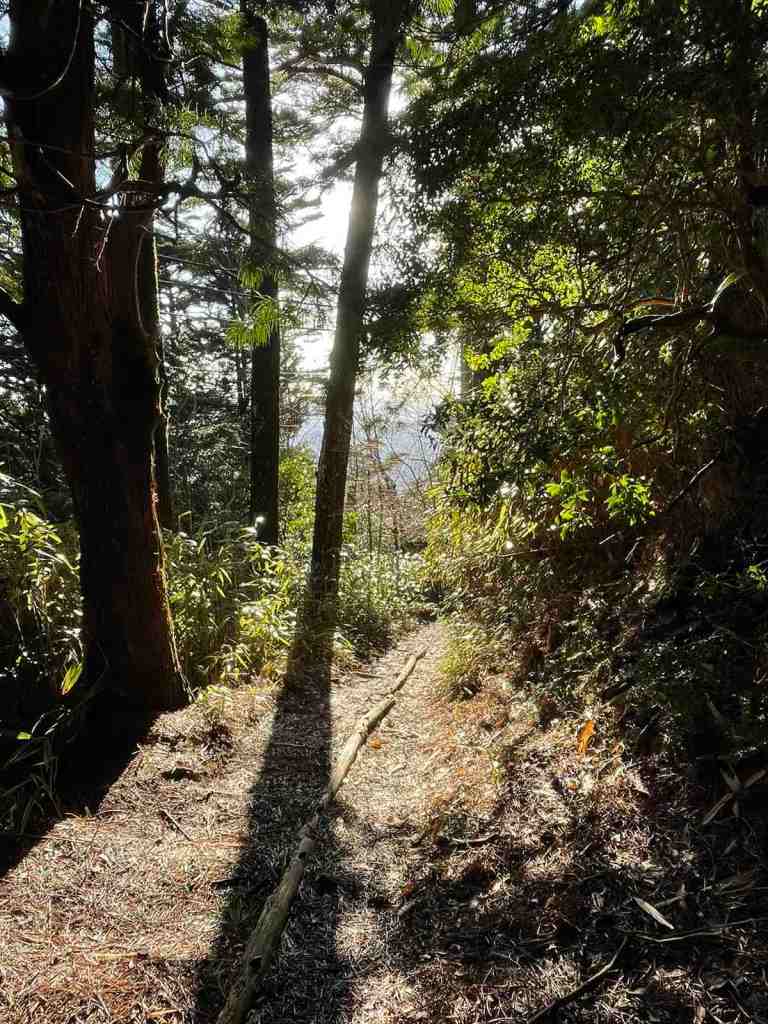
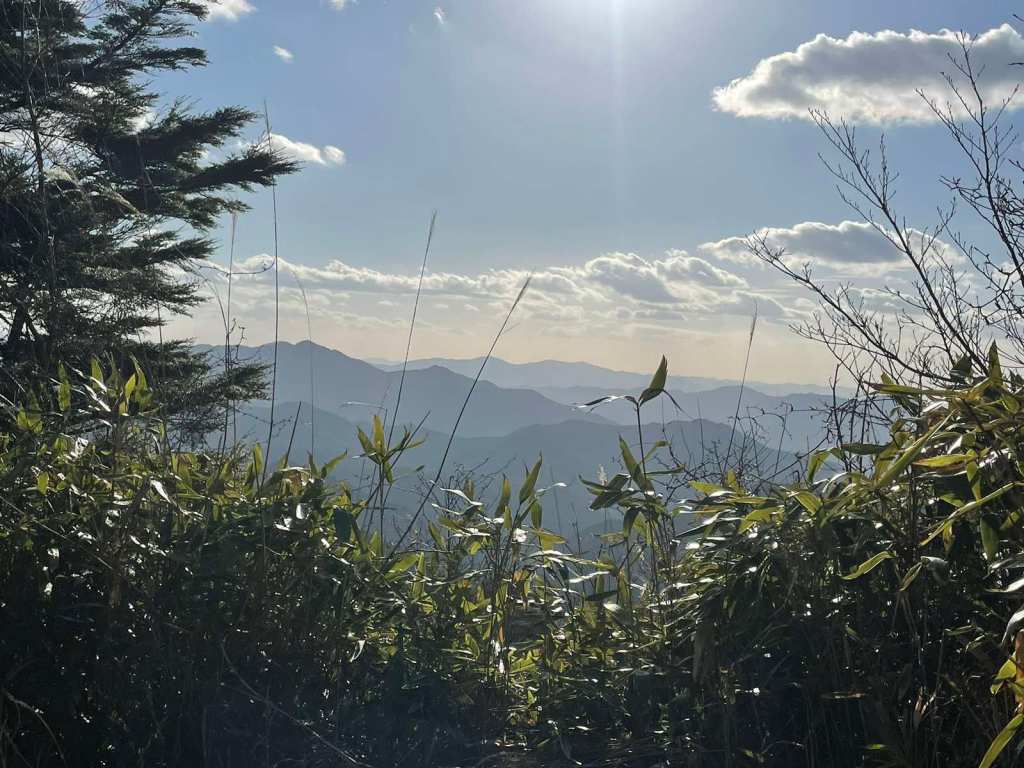
On our way back the next day, the sun did add some color to the landscape. Turned out, the local forests were also home to one of the most ancient pine tree species, as claimed by the nearby information point.
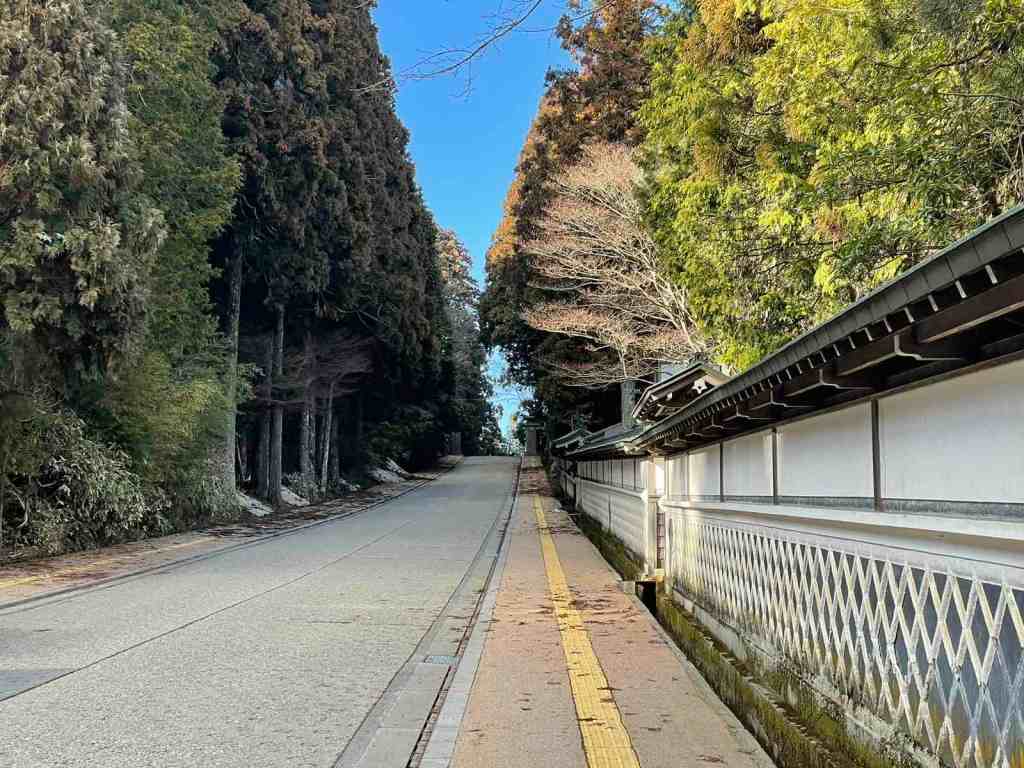
The rain was anything but merciful as I finally approached the village. I was all wet, cold, and tired, and have mentally held a funeral to my phone and e-book which probably have already soaked the rain in my backpack and died the heroic death.
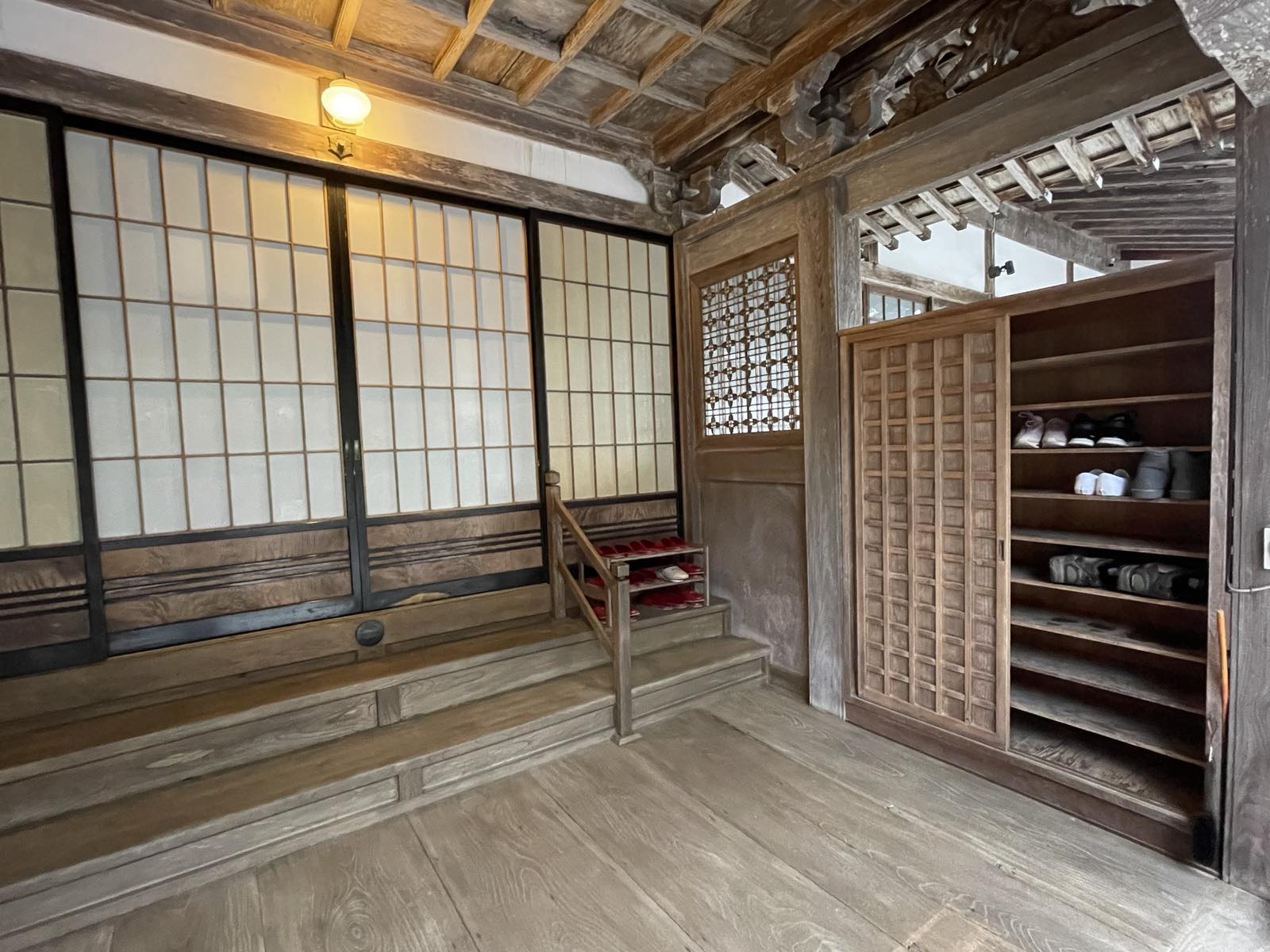
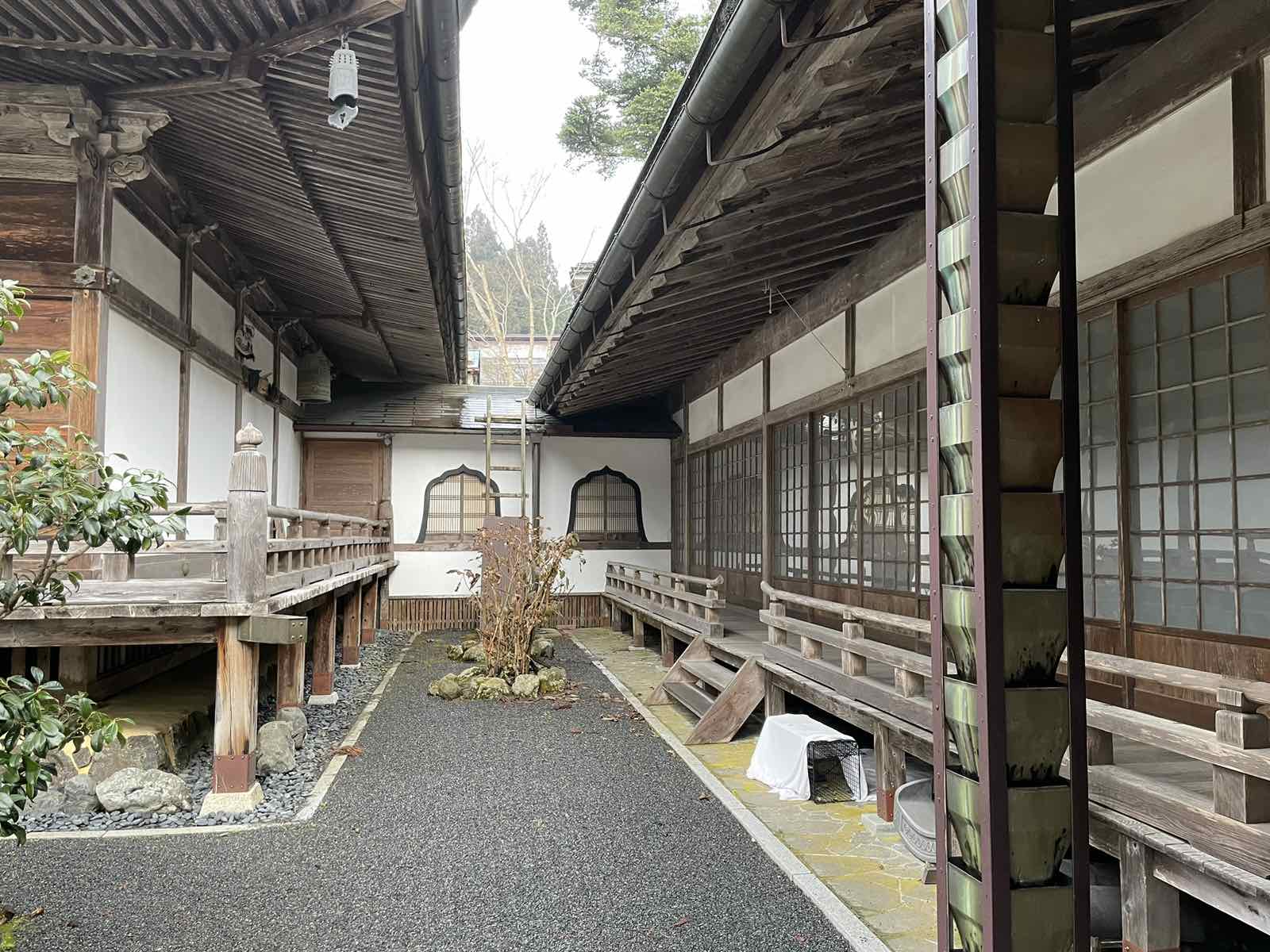
A small temple Fukuchi-in, resembling a fair-sized household, greeted us with open doors. A young monk who spoke poor English (better than nothing!) and was obviously blushing, pointed at the shoe rack, asking us to remove our shoes and taking some red in-house slipper instead.
We then proceeded to a room with some warm tea and rice crackers. After about an hour, another monk came to show us our room. It was a traditional Japanese room layered in tatami, with small Buddhist temple for prayers, tea area, and a set of yukatas – a simple dress used as a common clothing at home. We were then called for a bigger dinner – all plant-based (heaven for vegans), steamed or boiled.
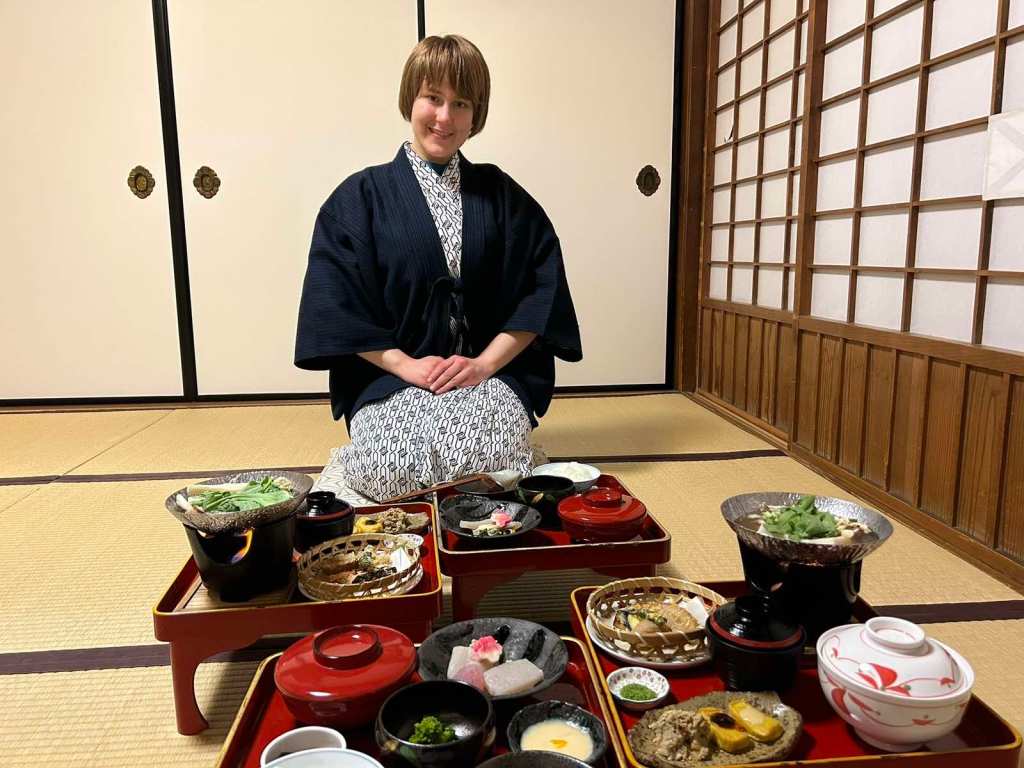
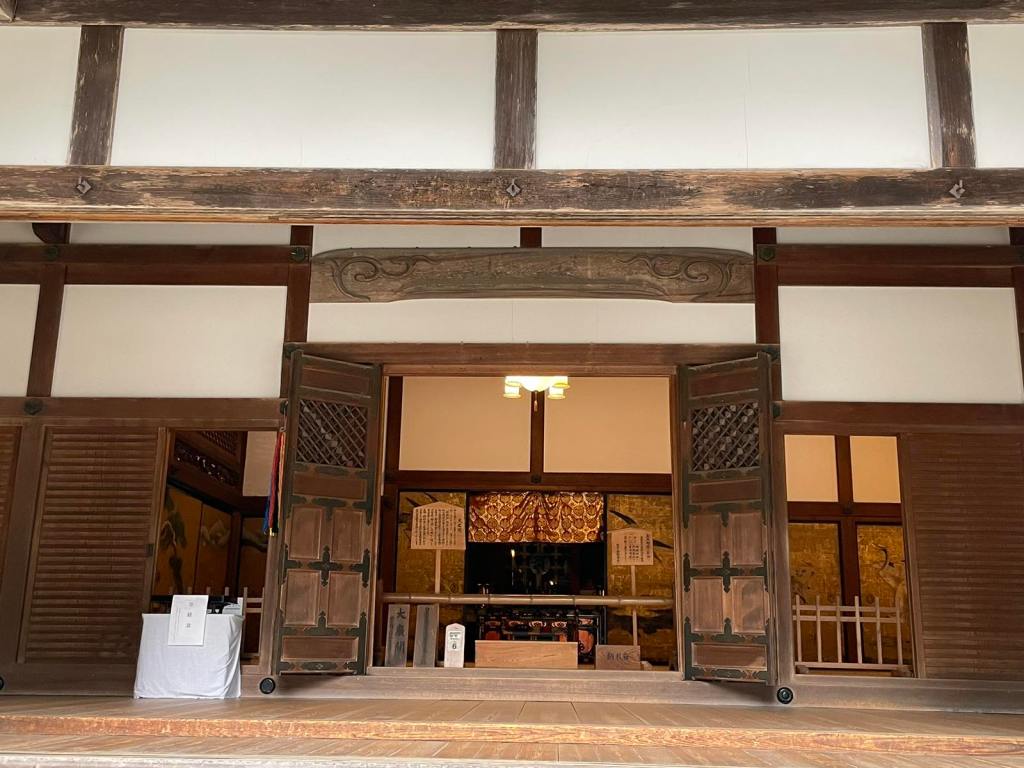
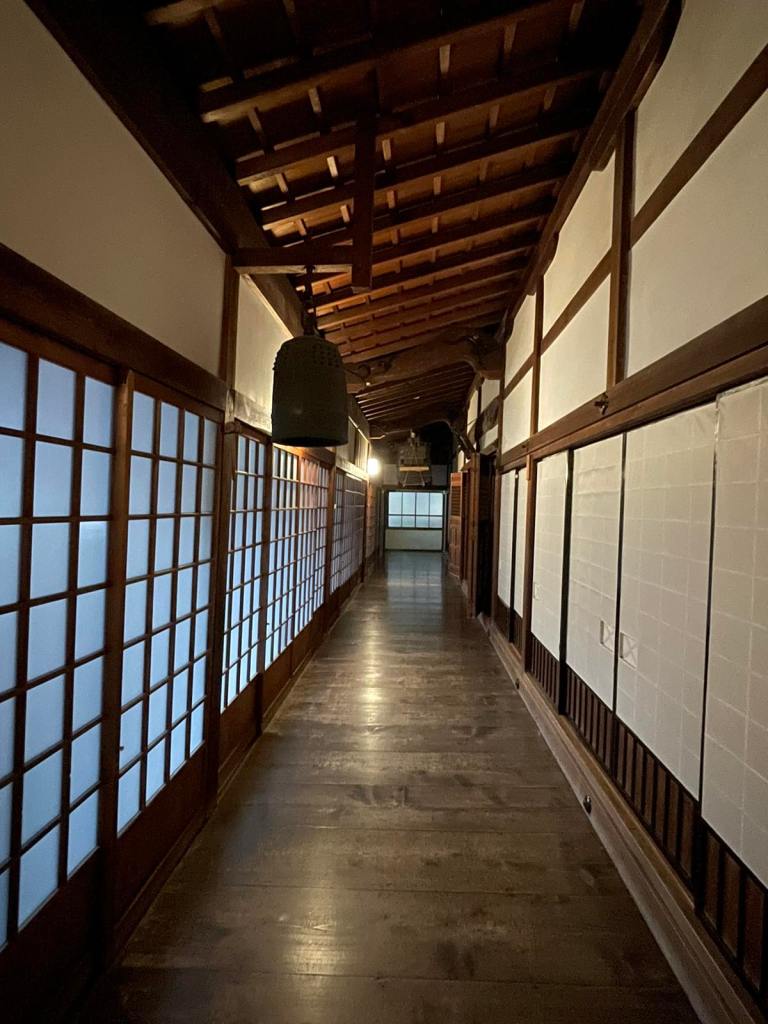
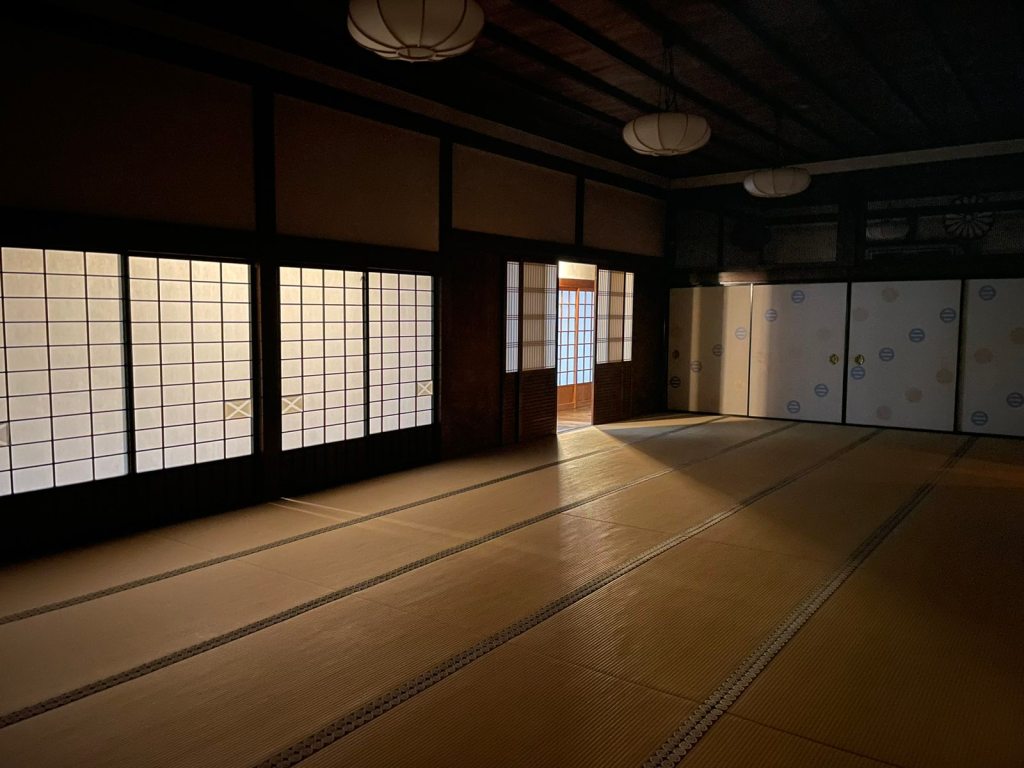
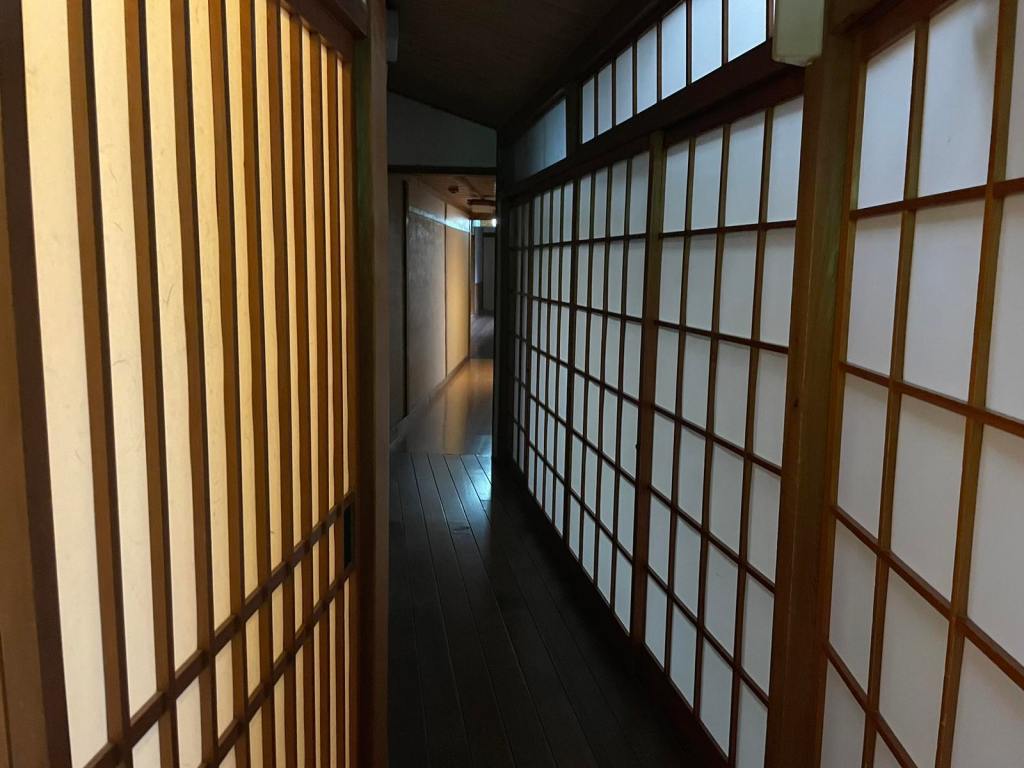
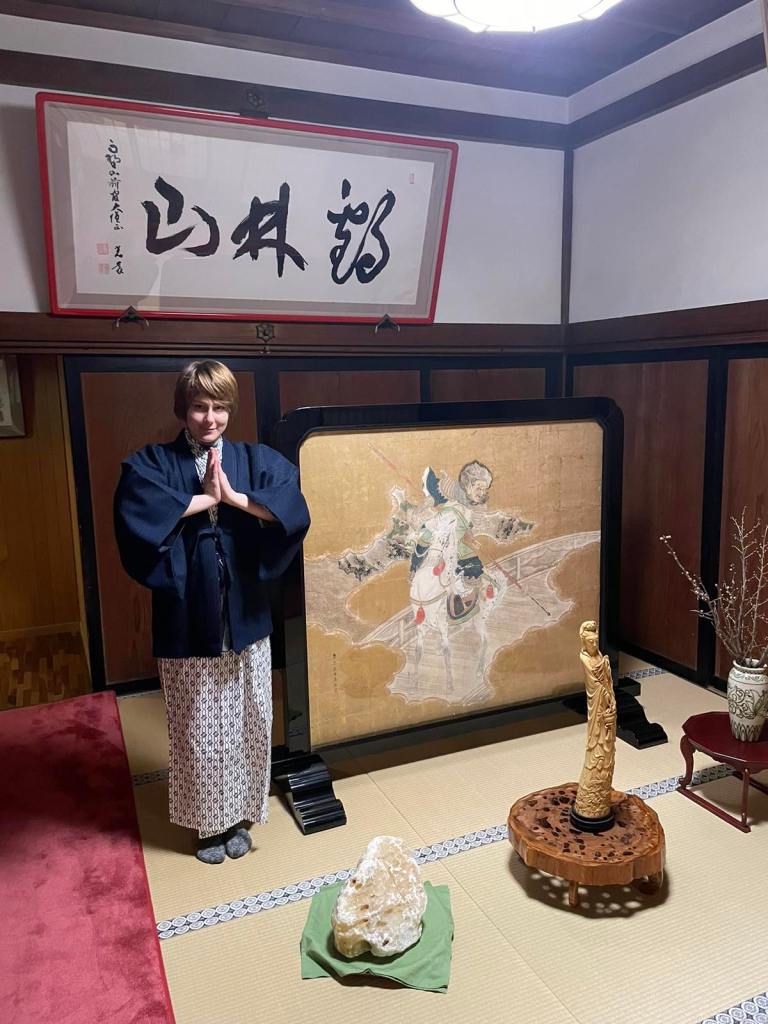
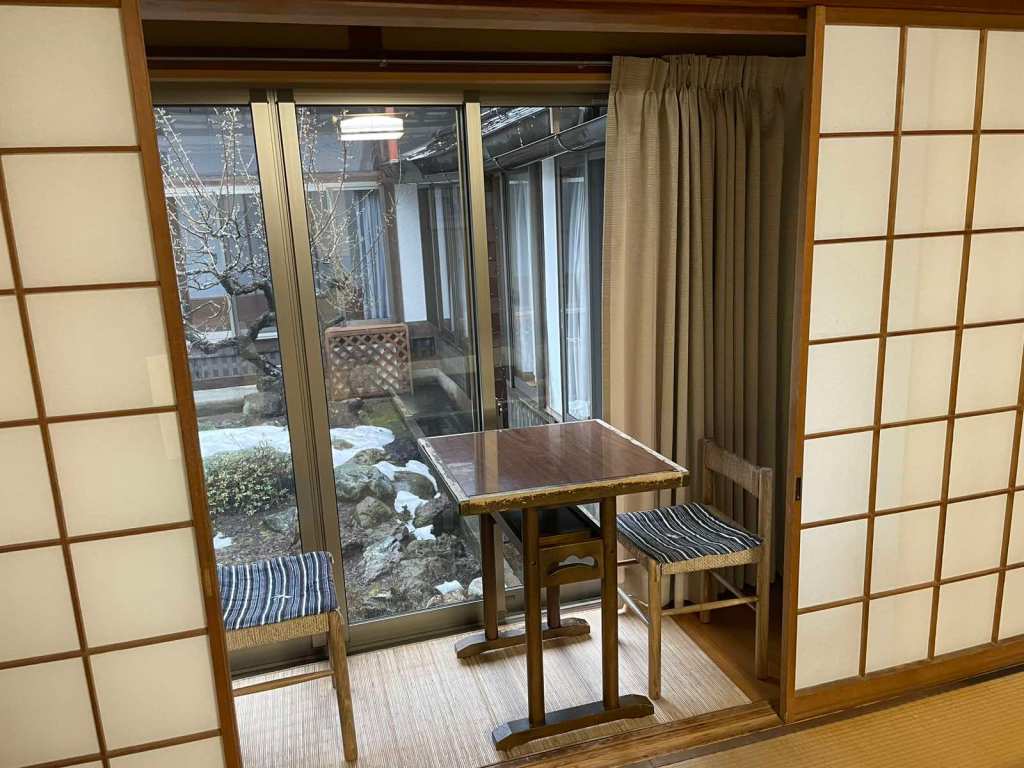
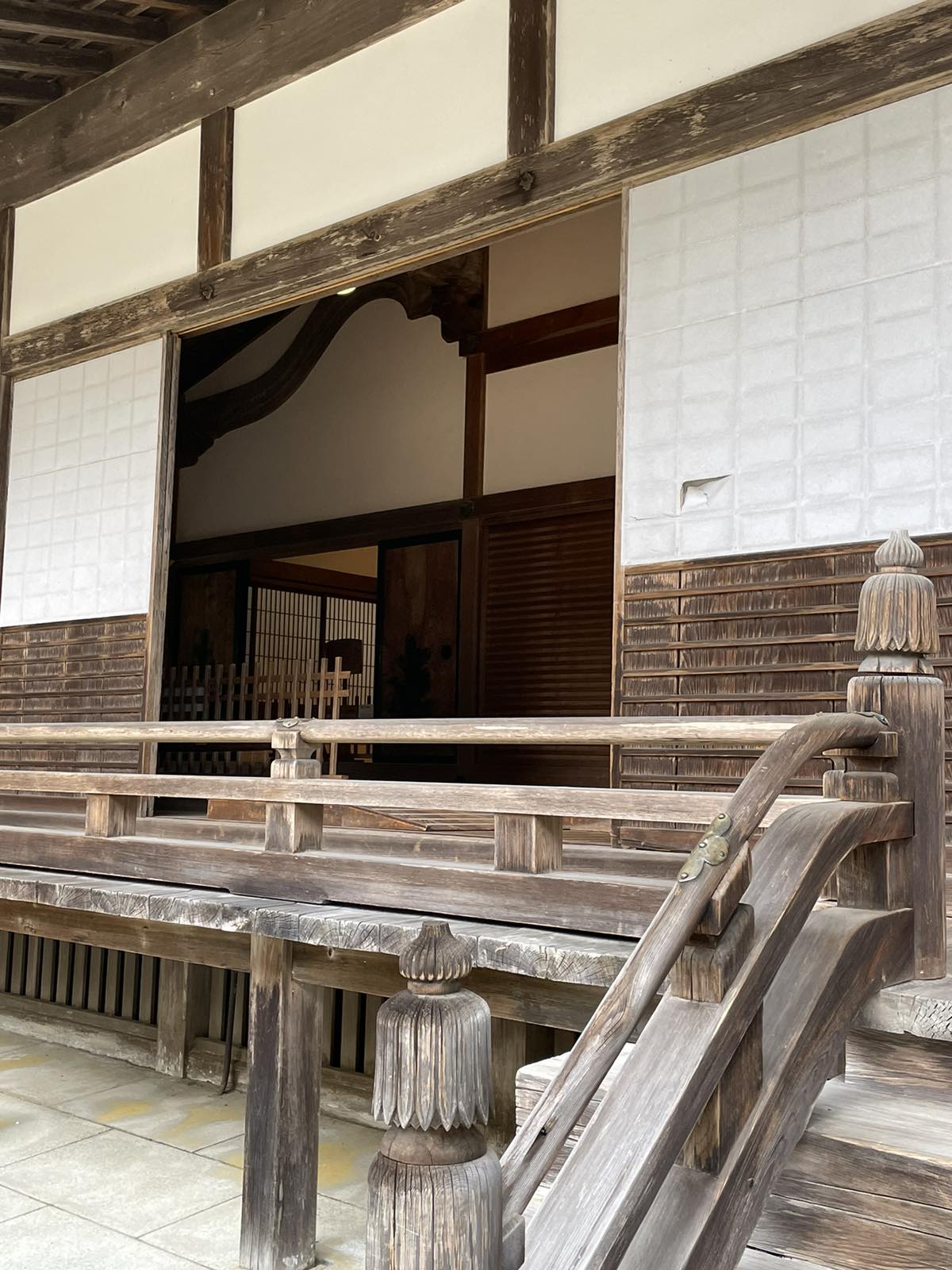
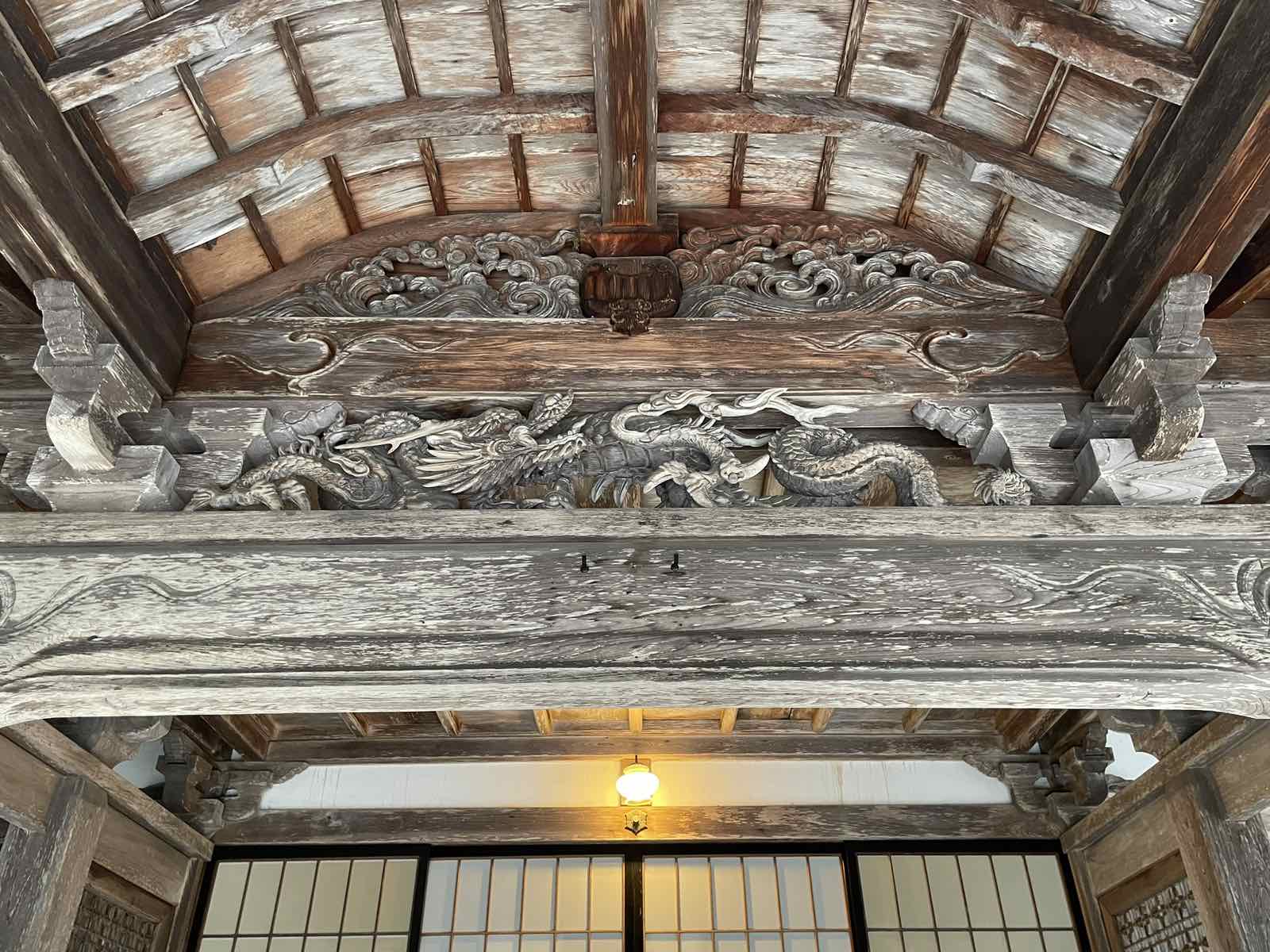
The next thing that happened has no photo evidence – unfortunately, any phones or recording devices were strictly prohibited (yes, my phone survived the rain). I woke up at 5:00 am to take part in a morning ceremony, held by 3 monks. We made our way to the opposite wing of the temple, went up a small staircase, removed the slippers and stepped inside a small dark room only lighted up with candles. Along the walls, there stood wooden tablets of the monks who died. In the center, all golden, stood an altar and three statues of Buddha – the one guards us before birth, during life, and in the afterlife. The three monks dressed in bright orange, read mantra, hitting the bowls from time to time, until they waived their hand to us. One by one, we came up to a deep vat with ash, bowed, sprinkled spices over the ash three times, bowed again, and quietly returned to our seats. The three sprinkles were for the peace in the whole world, peace among relatives, and peace in your own soul. We then read mantra altogether. After the final bow, two of the monks left and the youngest told us about the place, showing other Buddha statues in the corners of the room. I found out that the temple we stayed in was built in the 14th century, but sadly, got burnt down and reconstructed after. The village stood on a mountain plateau, which secured it from earthquakes, and provided picturesque view.
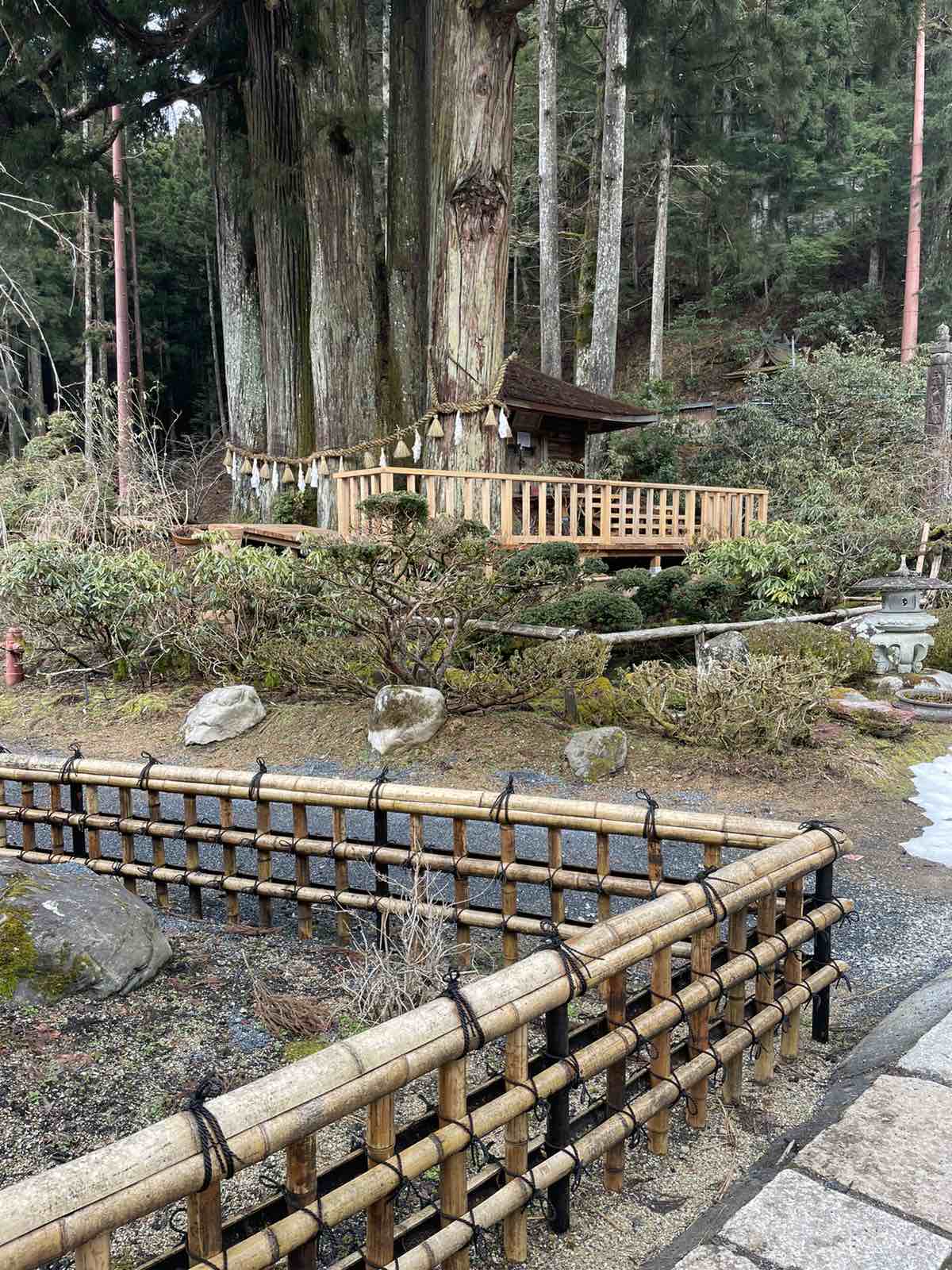
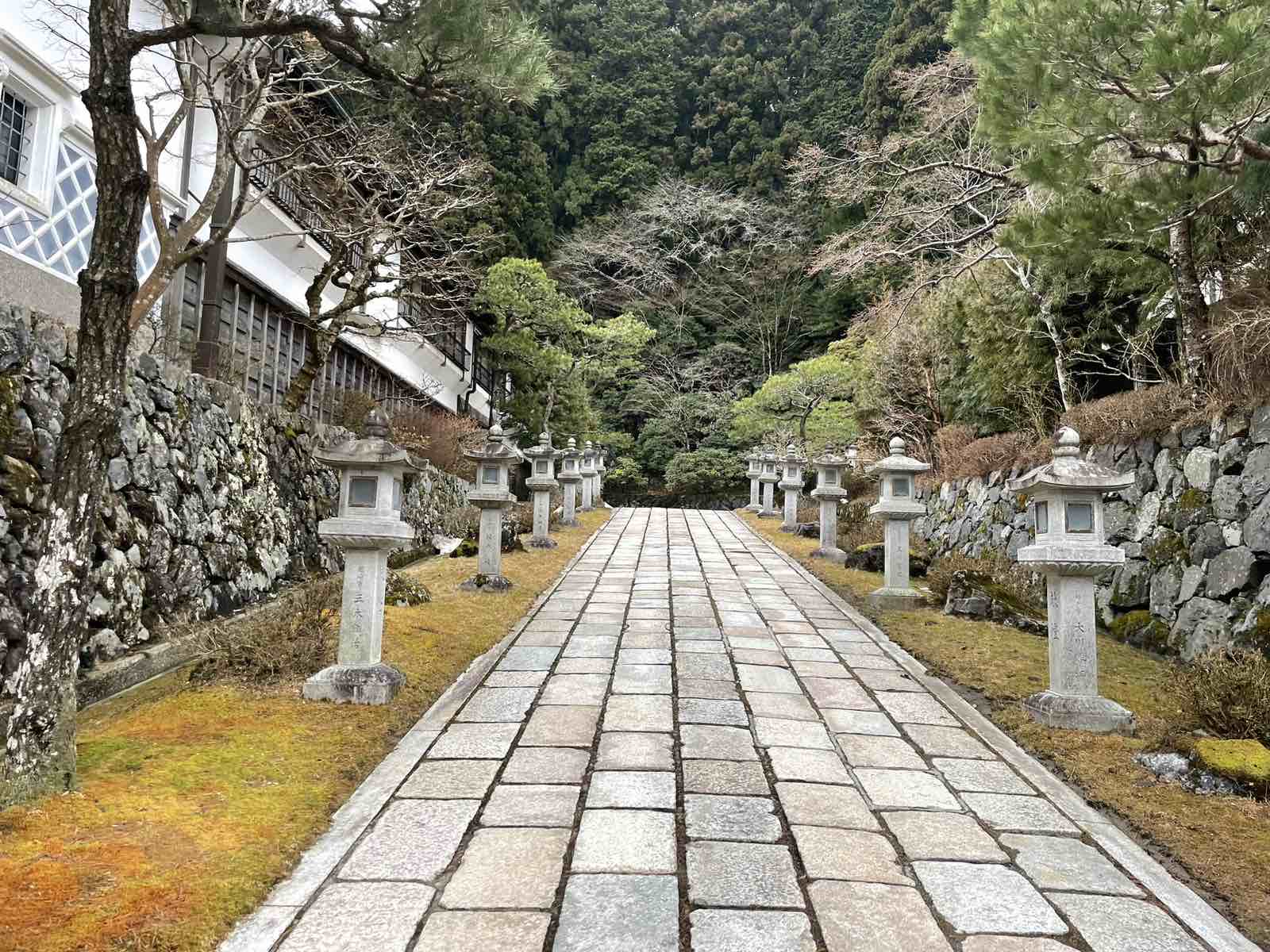
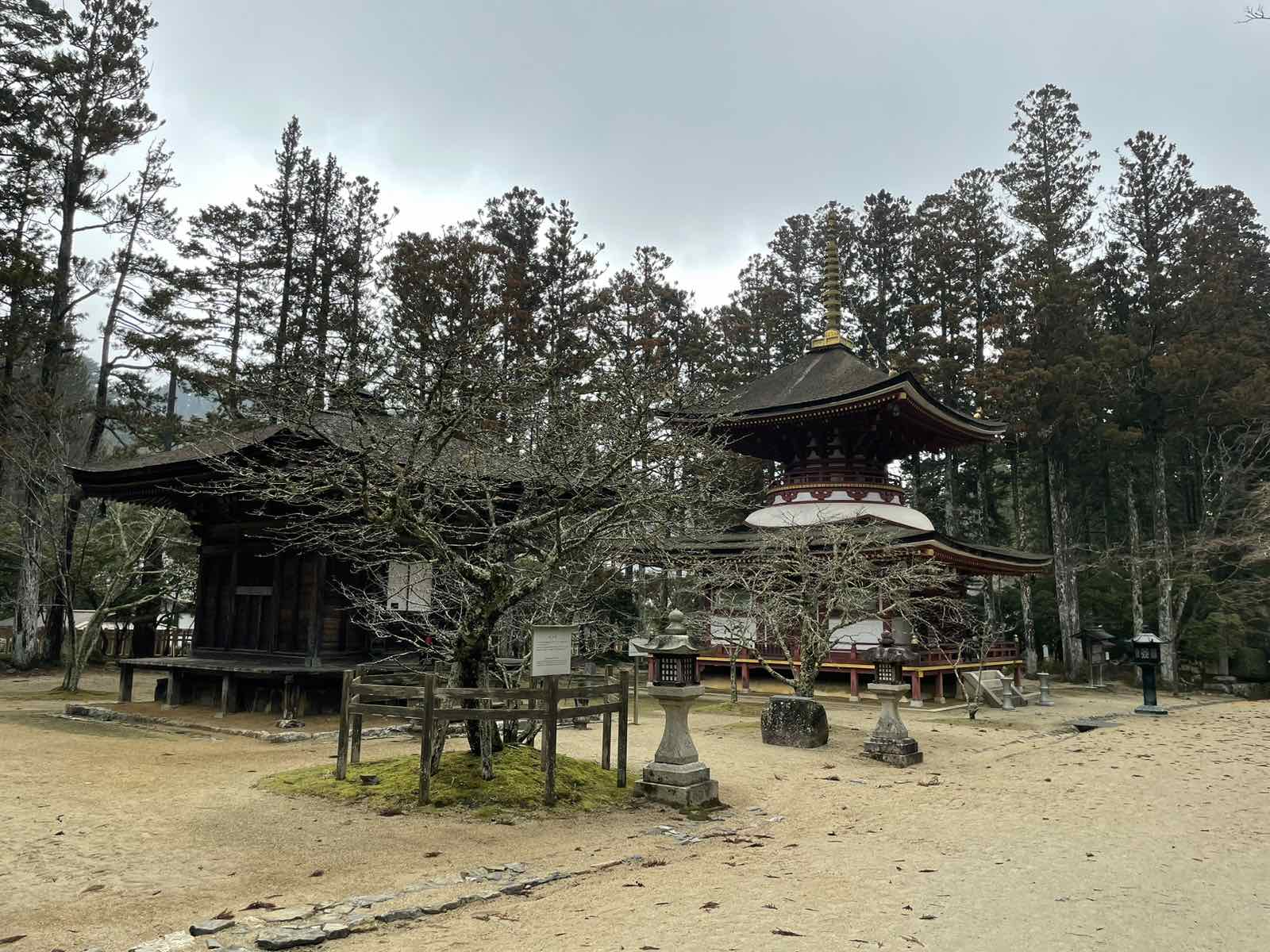
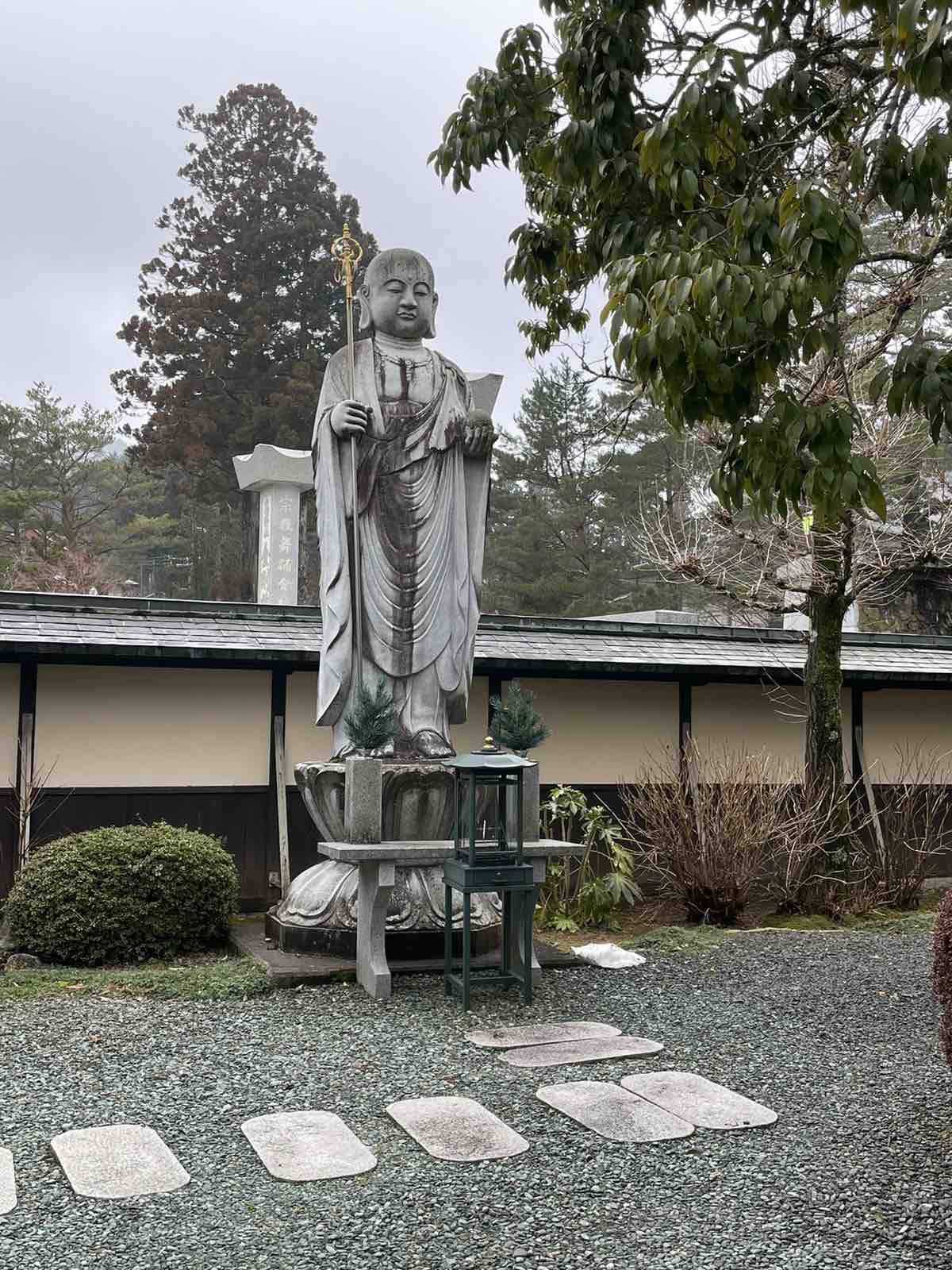
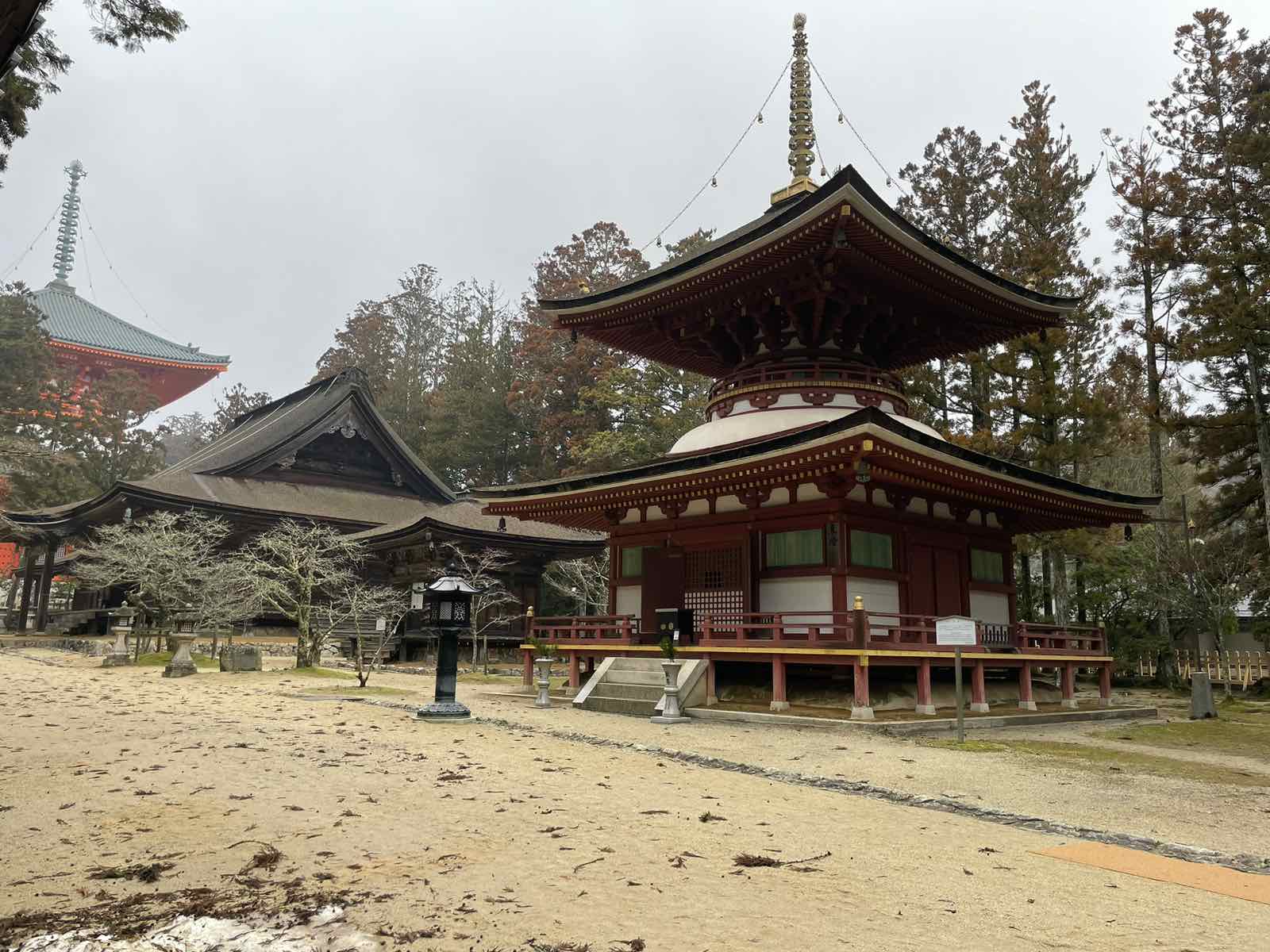
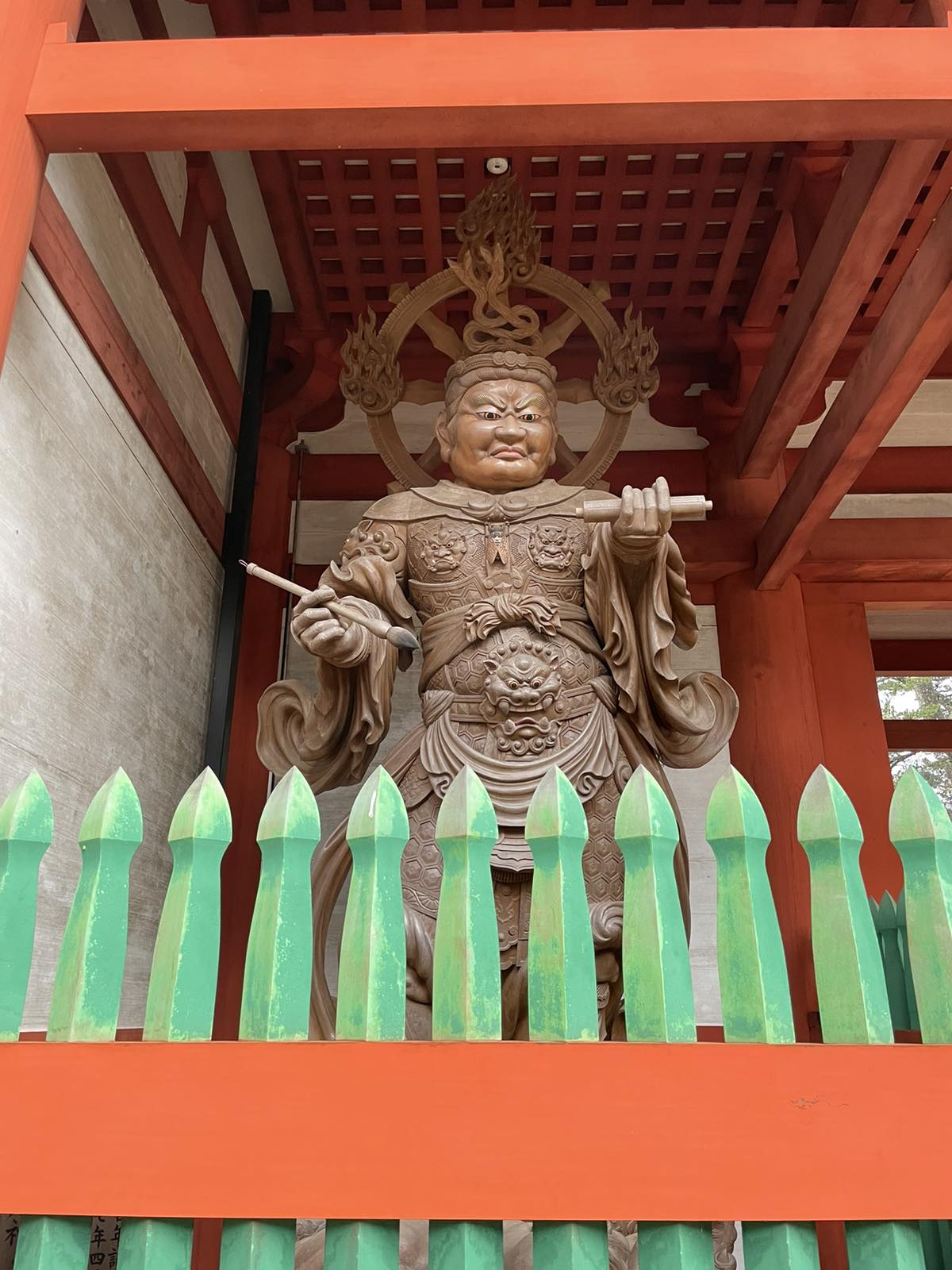
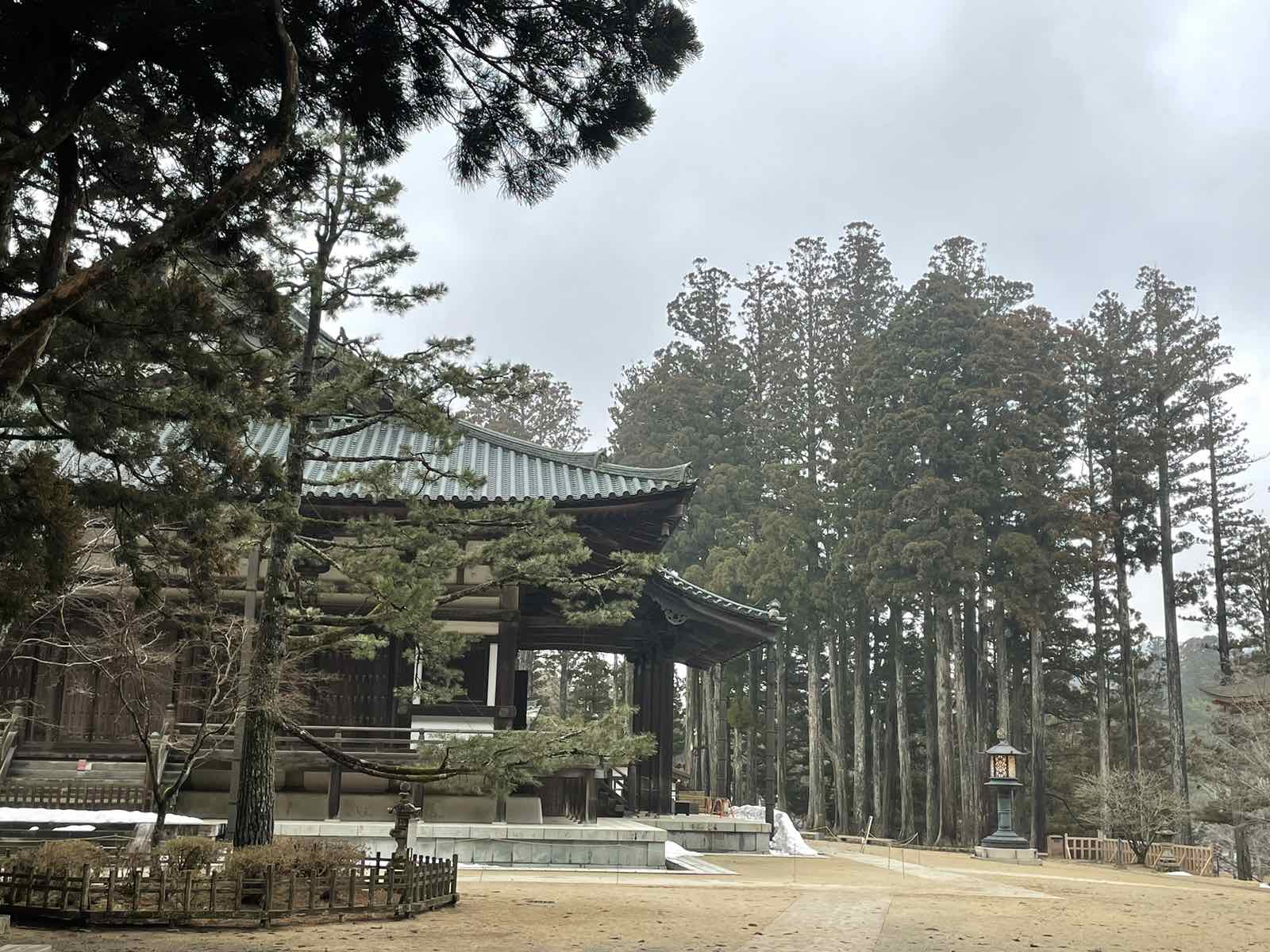
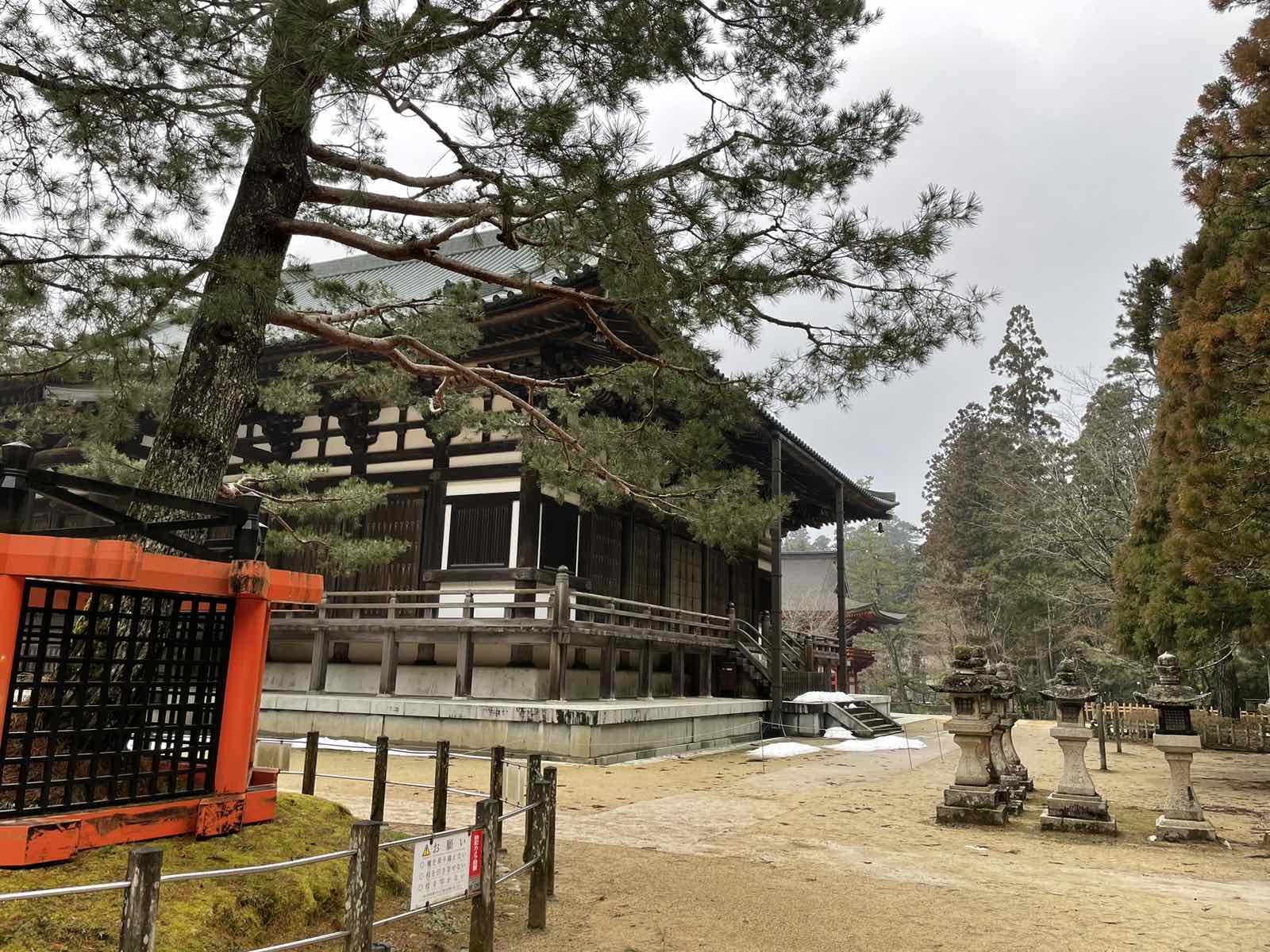
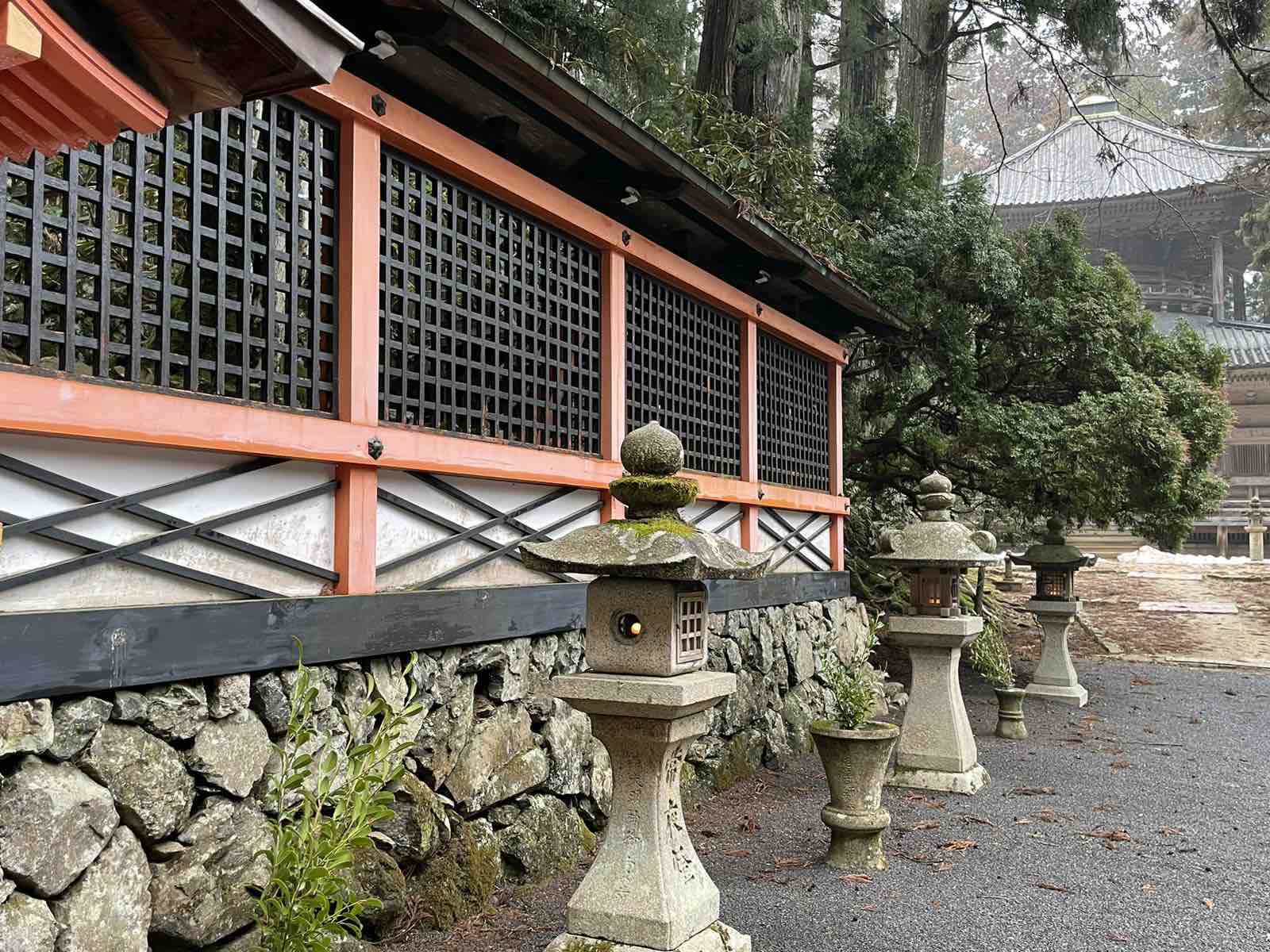
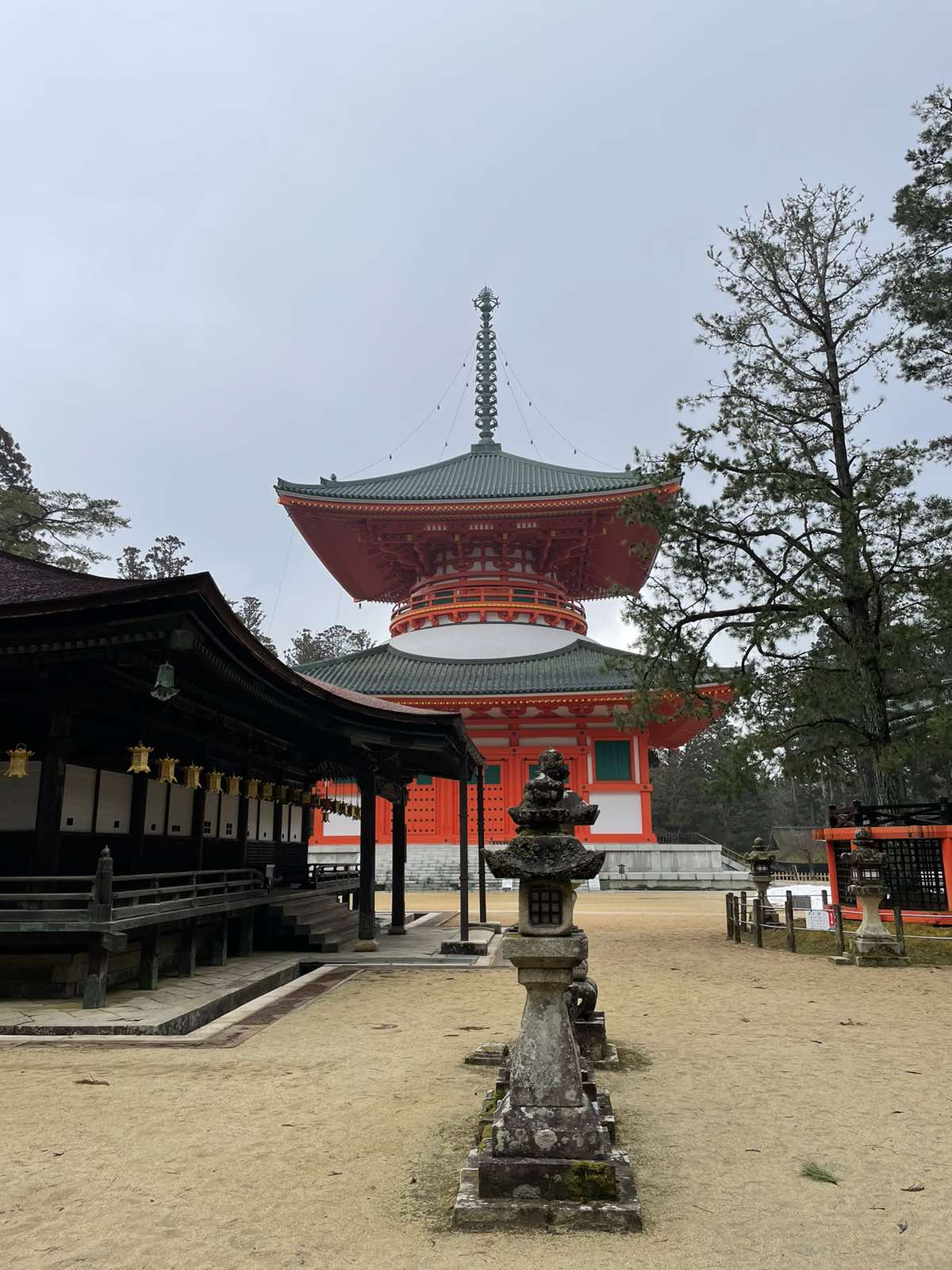
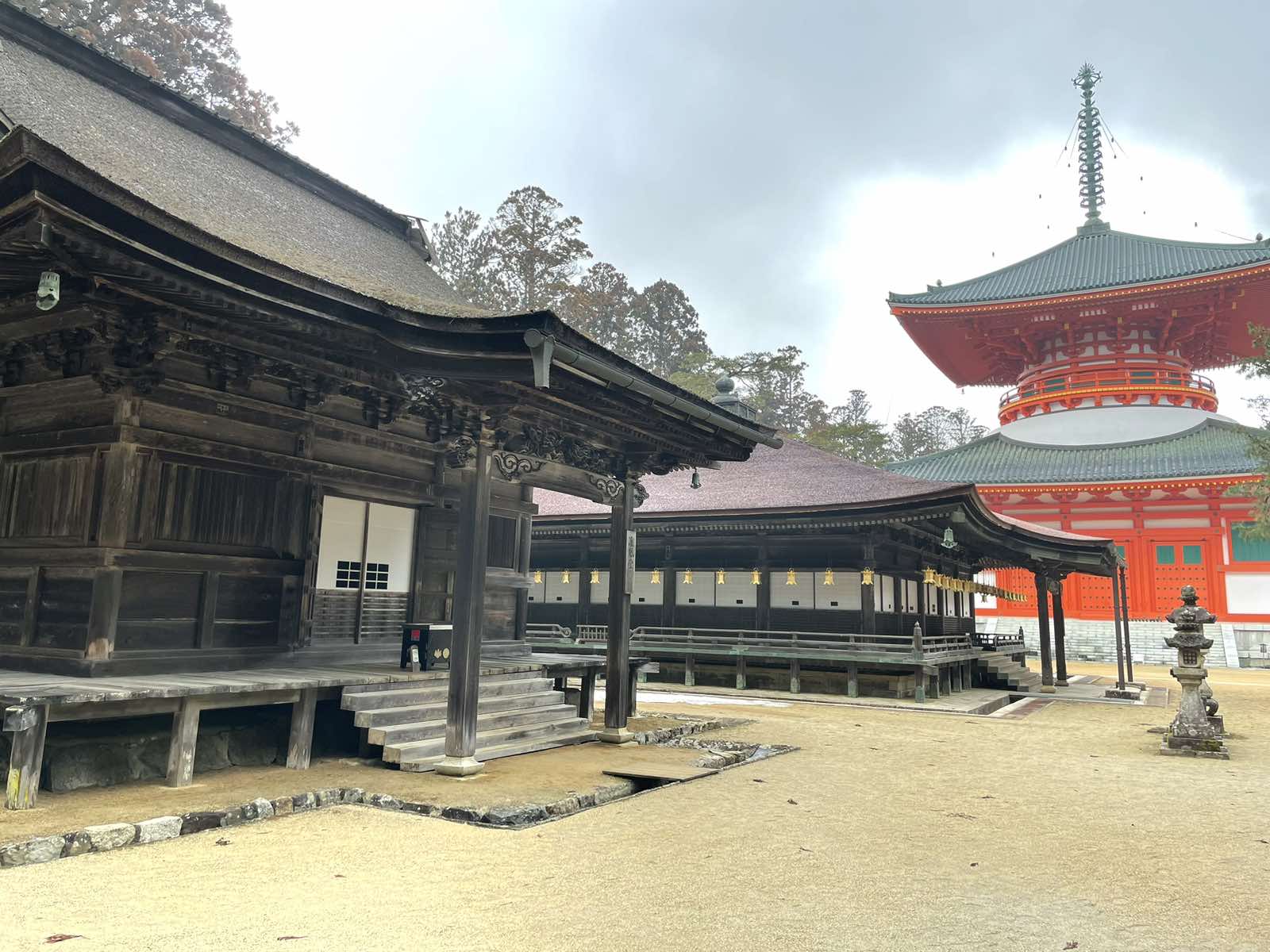
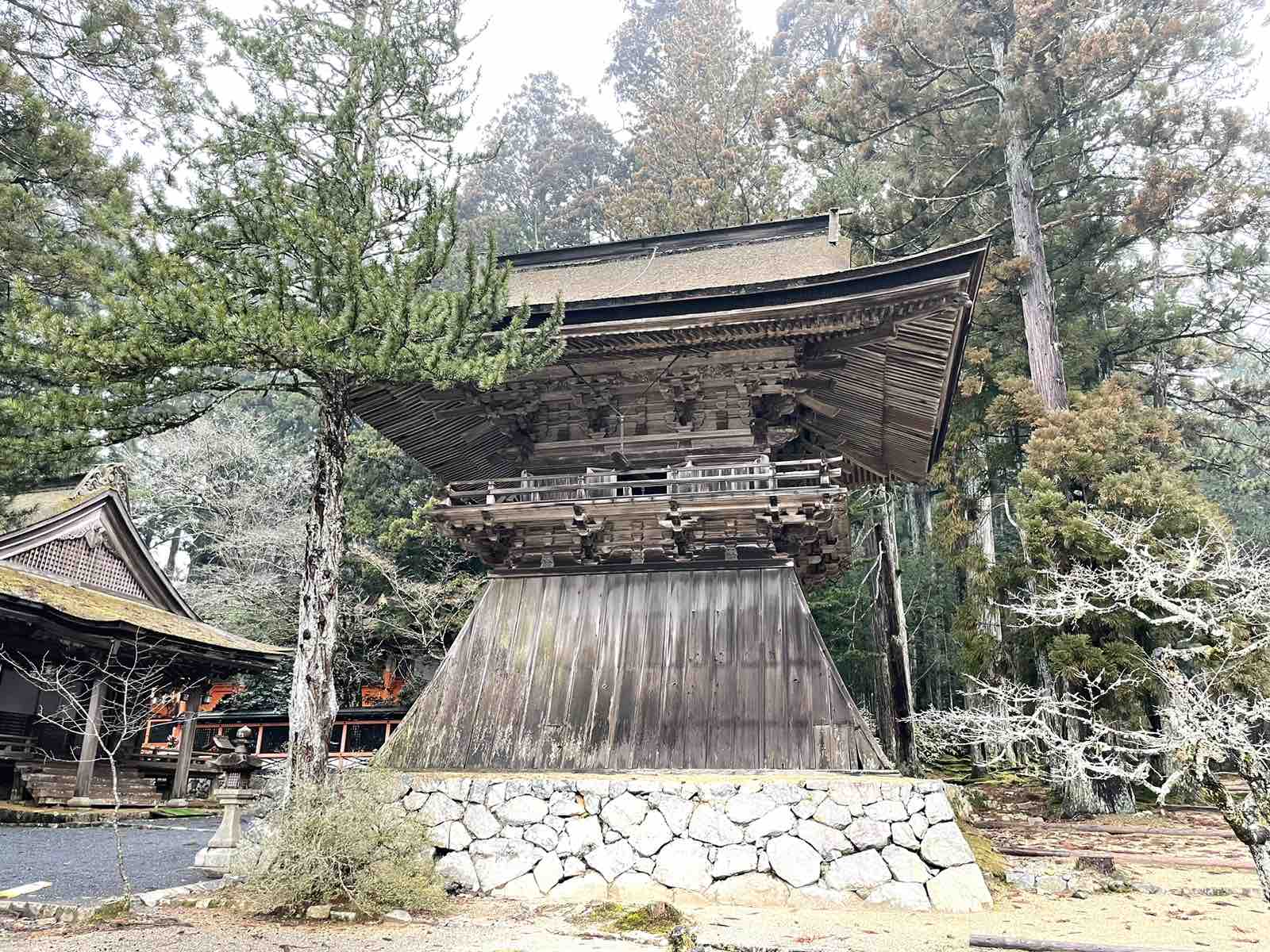
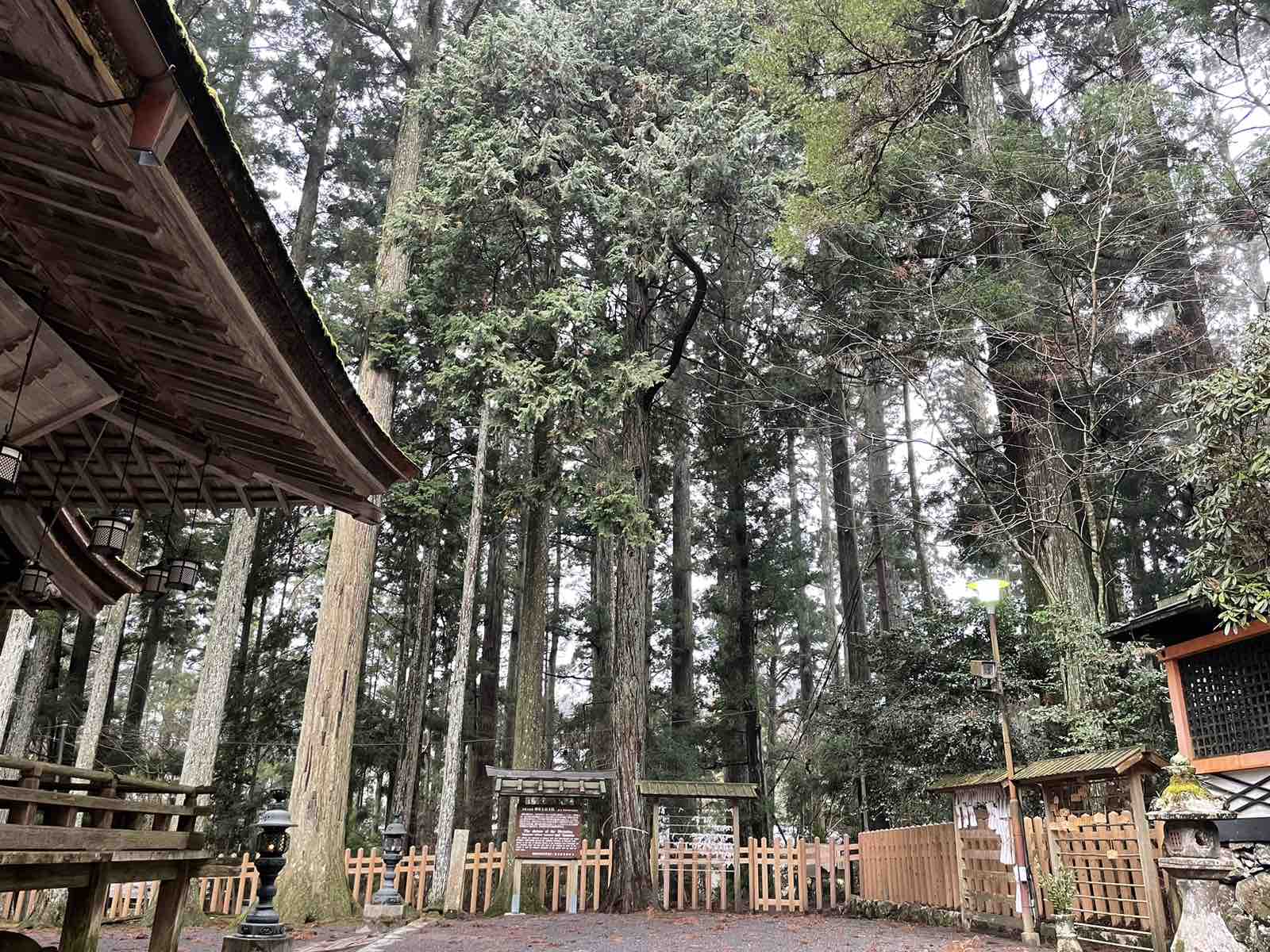
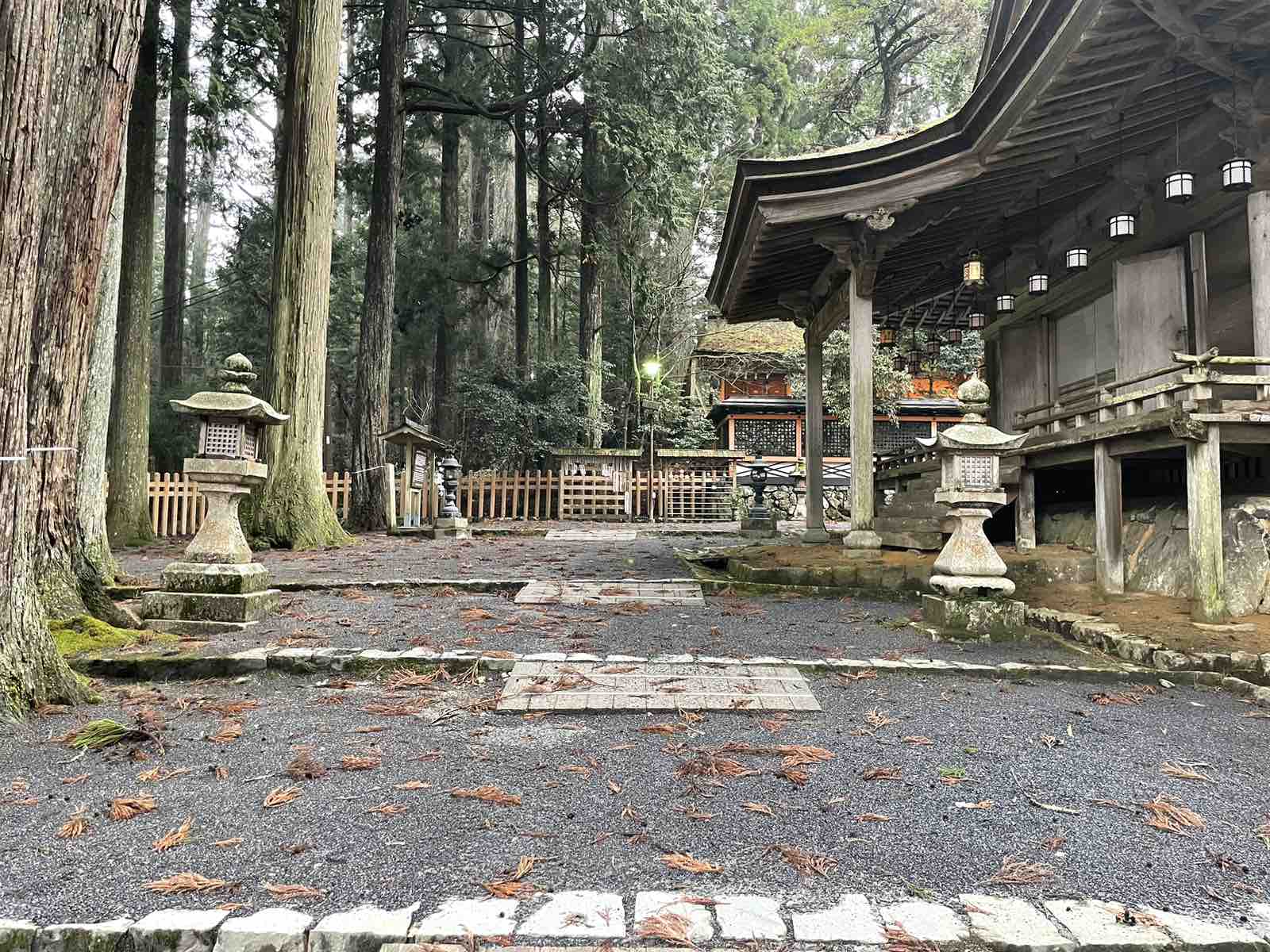
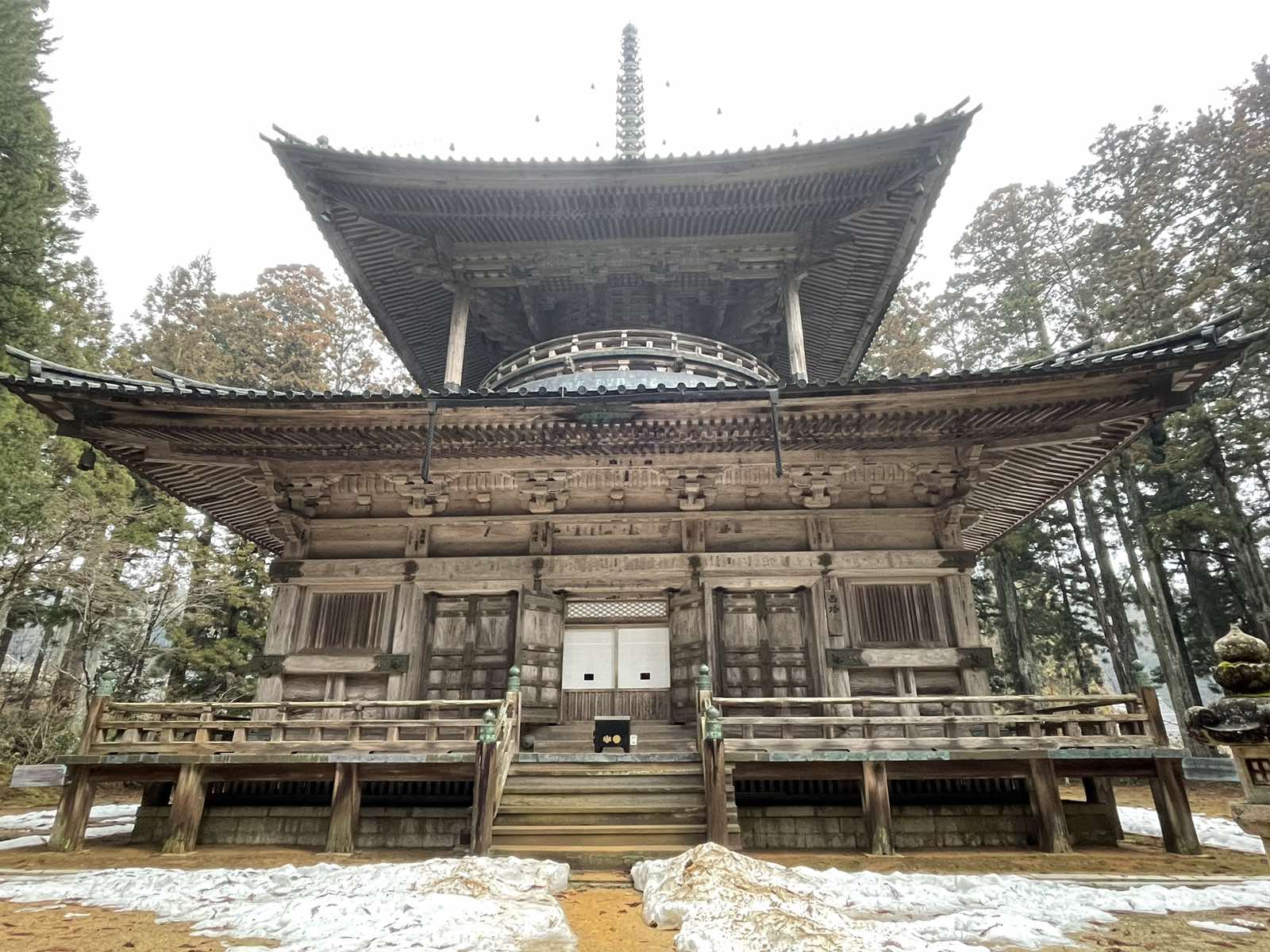
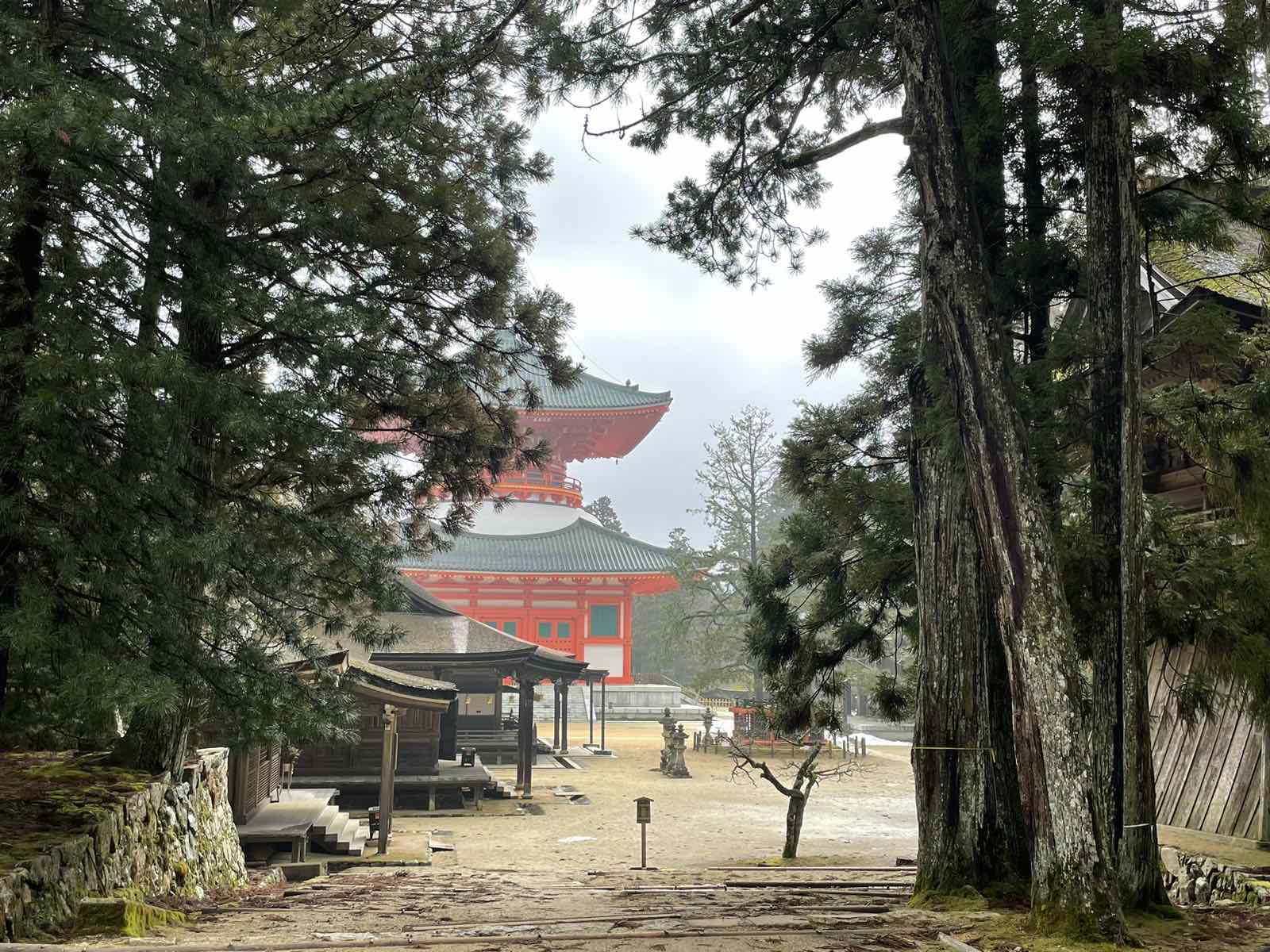
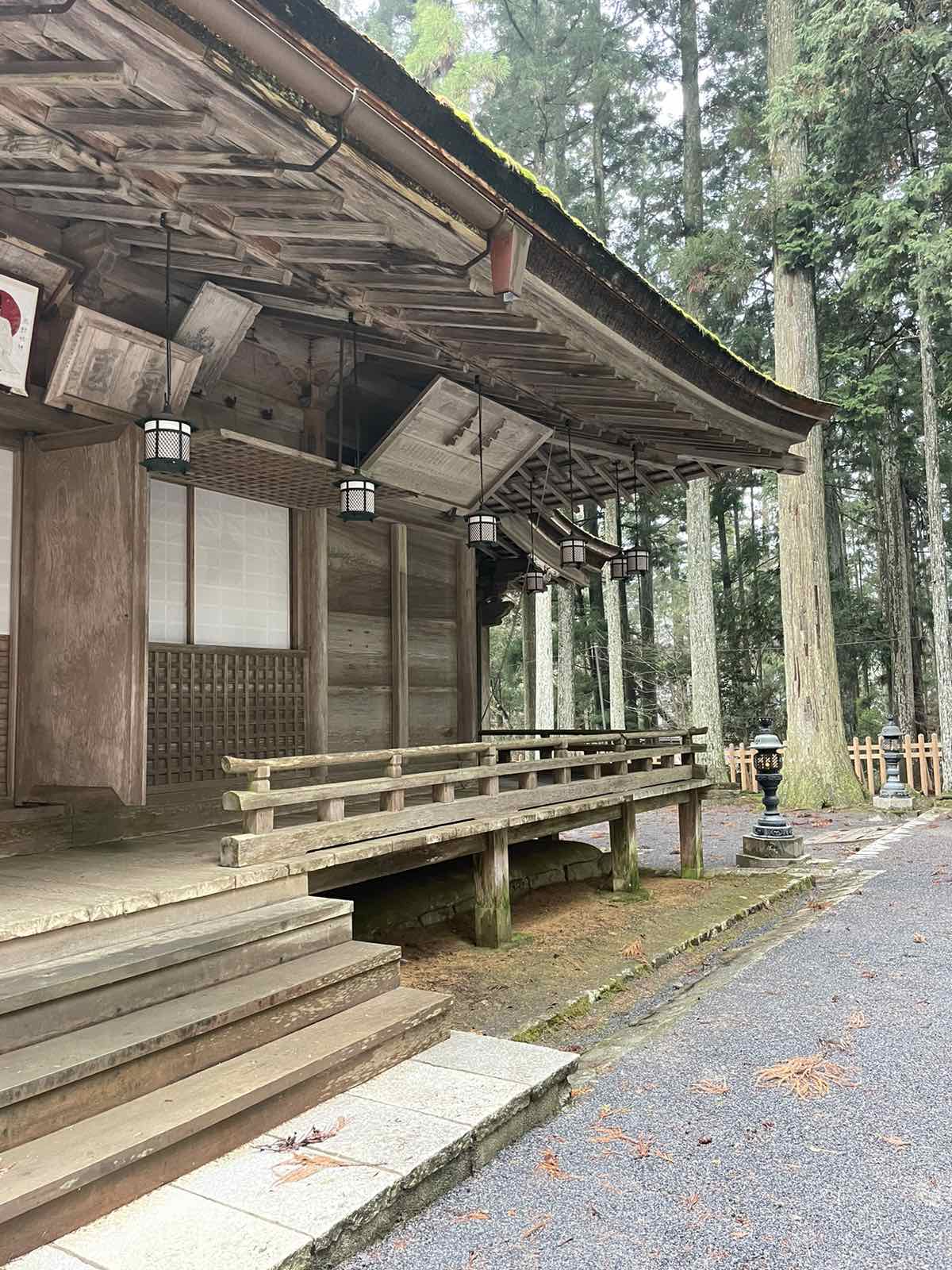
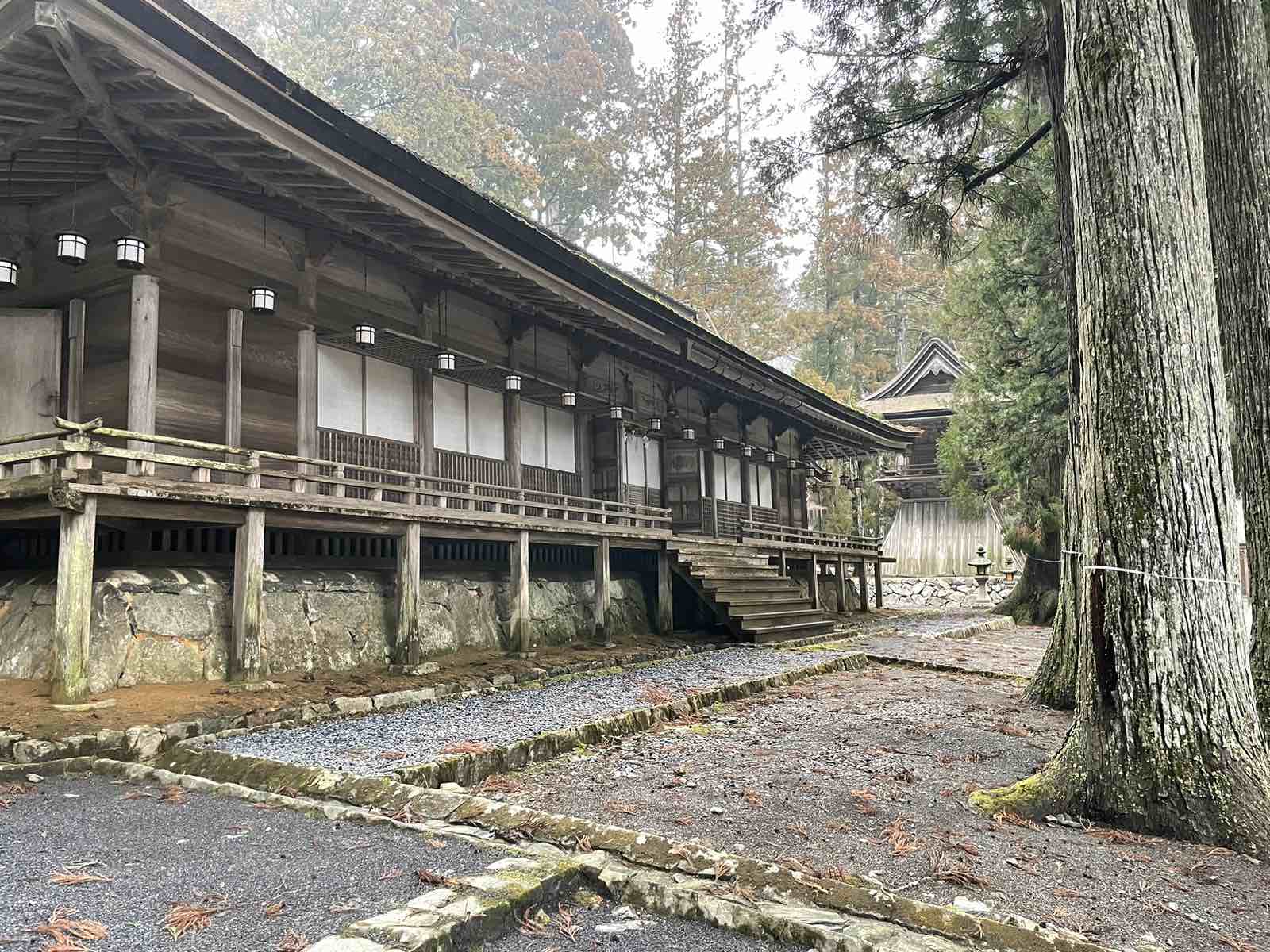
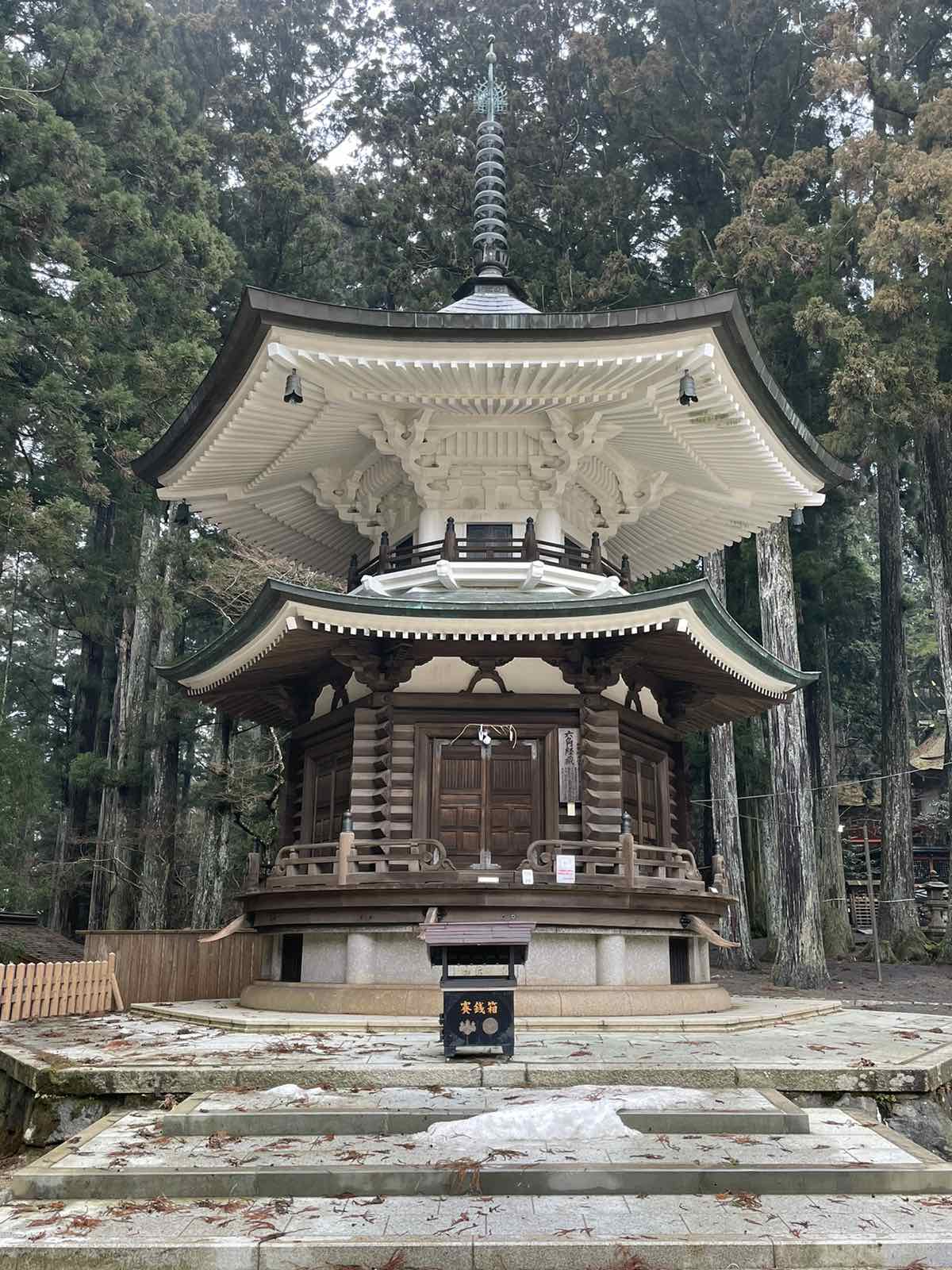
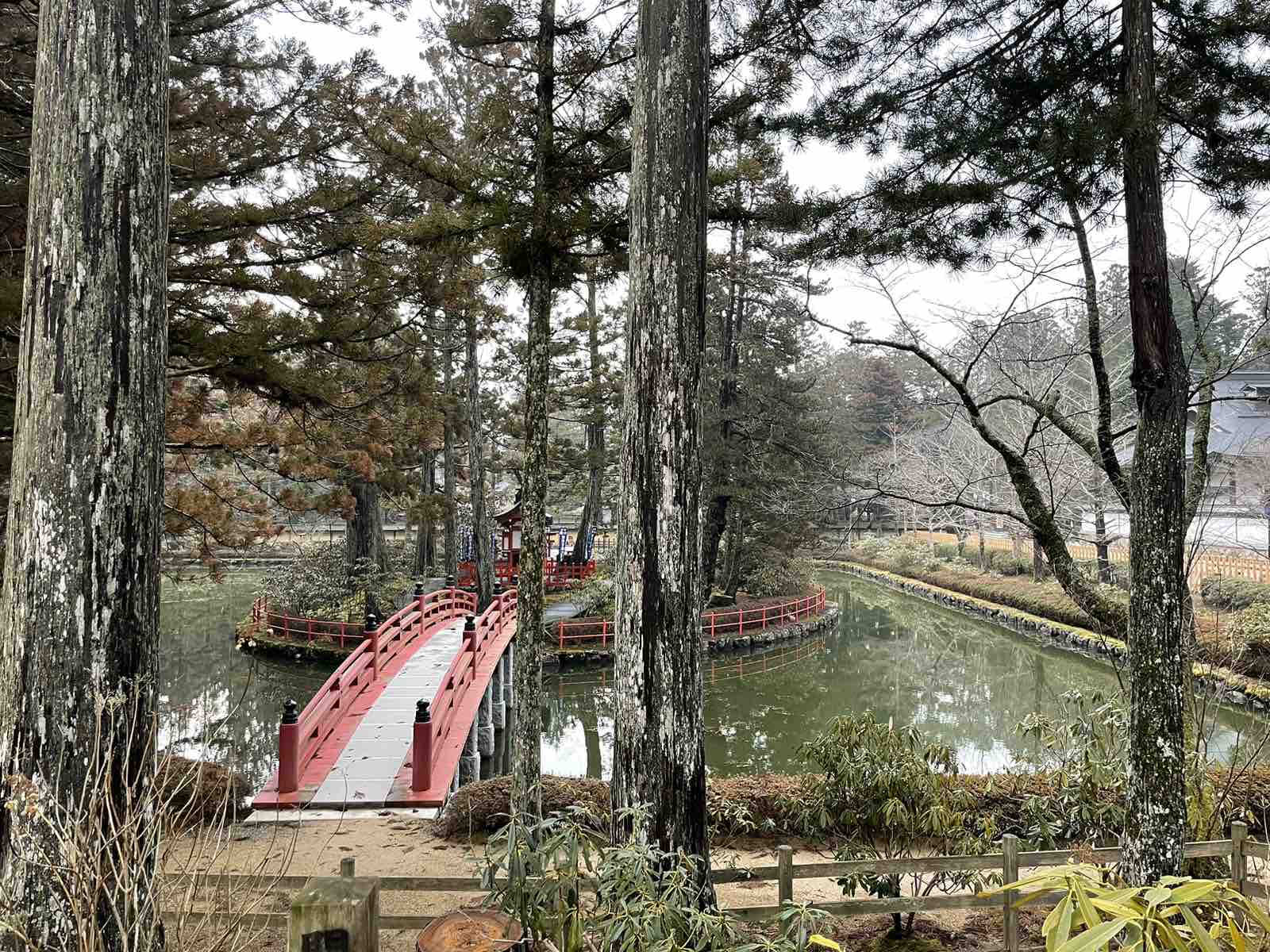
Of course, Fukuchi – in is just a small temple, hosting curious tourists like me to earn some extra profit for the household. The real temples built more 1,000 years ago were a little further down the road.
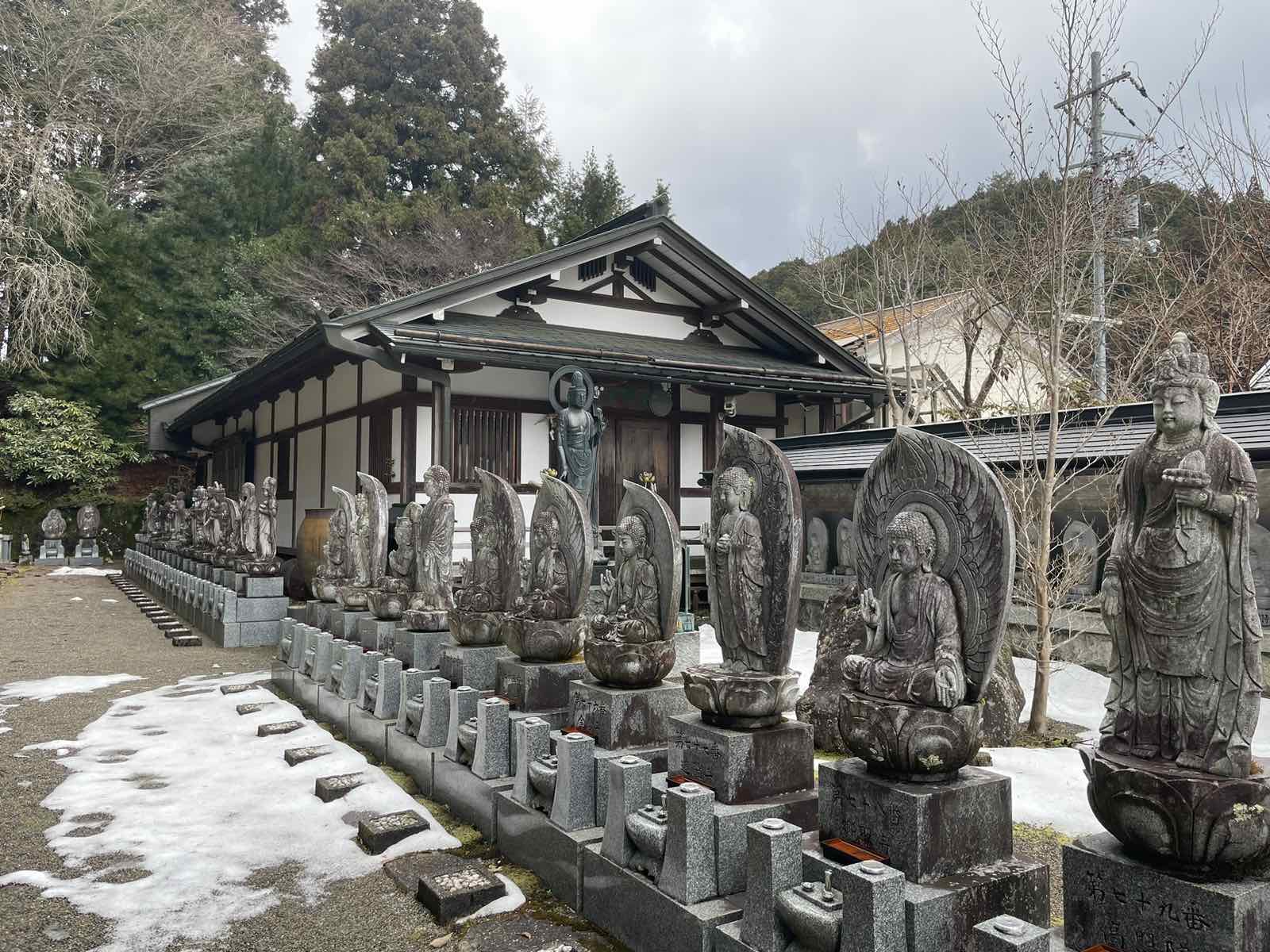
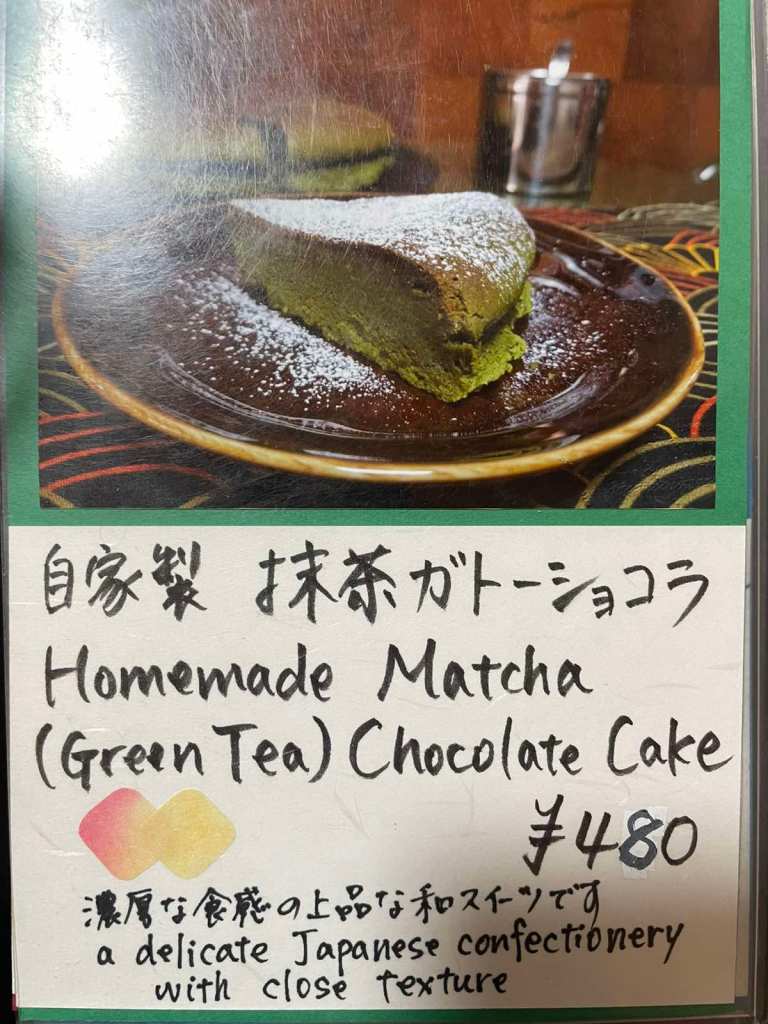
On my way back to the train station, I took a bite in the local cafe. The description of the cake was definitely intriguing:
 romashos.blog