
I fell in love with Indonesian culture during my stay in Bali – I owe that mostly due to a fortunate series of events, making me choose Ubud for my stay on the island. They say, if you want parties, go to Canggu, and for culture – go to Ubud.
And if you love Indonesia – continue travelling the country!
Indonesians know this damn well – out of all the Asian countries they probably charge the most for a Visa (while some countries do it for free at the border).
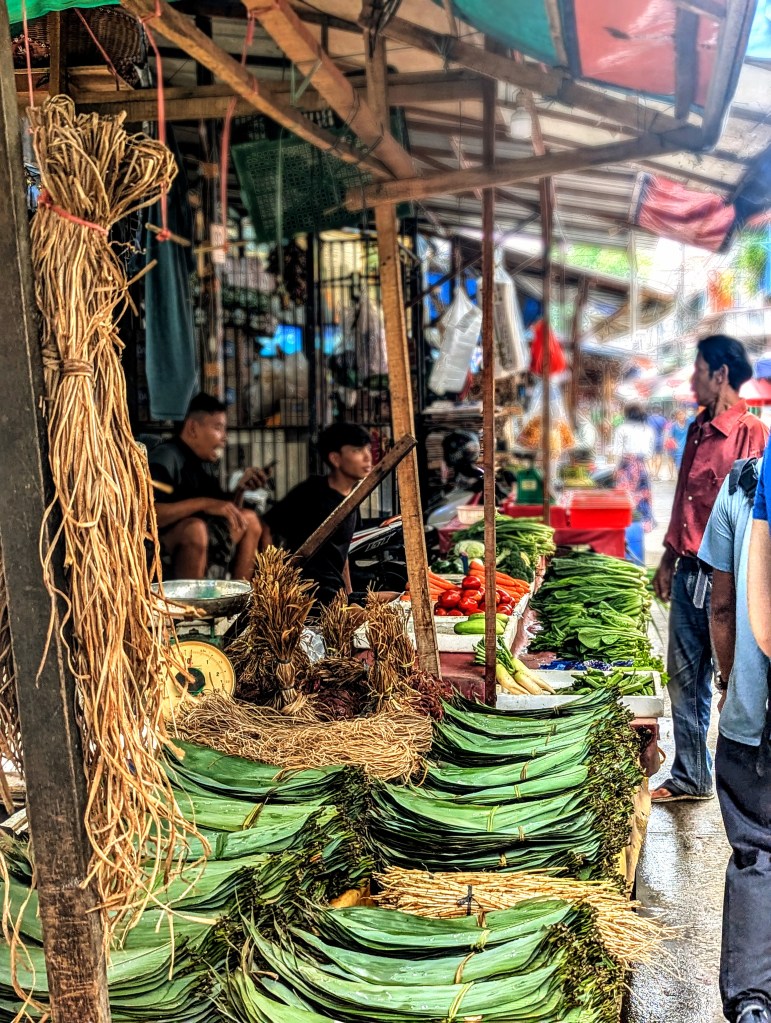
Thanks to my friend in Bohol, Philippines, I found about the walking tour initiative and immediately booked one on GuruWalk the next day after my arrival (first day I chilled, as I arrived around midnight!). I also asked about the 200,000 rupiah walking tour at the reception of my hostel, which was overheard by a lady who directly organized it. I could clearly tell she was eager to book me in, but I am currently money – sensitive, and figured I could probably save 50,000 rupiahs (which equals to 2 – 3 meals). Fazs, our tour guide, was amazing, just as all tour guides on FreeWalkingTour, GuruWalk, GetYourGuide, etc. On my way to the meeting point in the morning, I was passing by a chaotic, almost disastrous in its poverty, street food market. I saw a lady with some deep-fried pies, and thought I would try one for breakfast.
Little did I know that 20,000 rupiahs was the price for the whole pack of these pies, which consisted of the soybean filling in breadcrumbs , & fried. I tried to give away some of them to the other members of the group (and they did like it), but spoiler – still ended up throwing away three of them into the trash in the evening. They were really tasty, but deep-fried food is difficult to digest, and after the food tasting during the tour (which was also almost all fried), I could not bear even looking at anything that had oil in its ingredients. These soybean Indonesian pies were added to the list of non-digestible foods, where alcohol has been a member since Boracay.
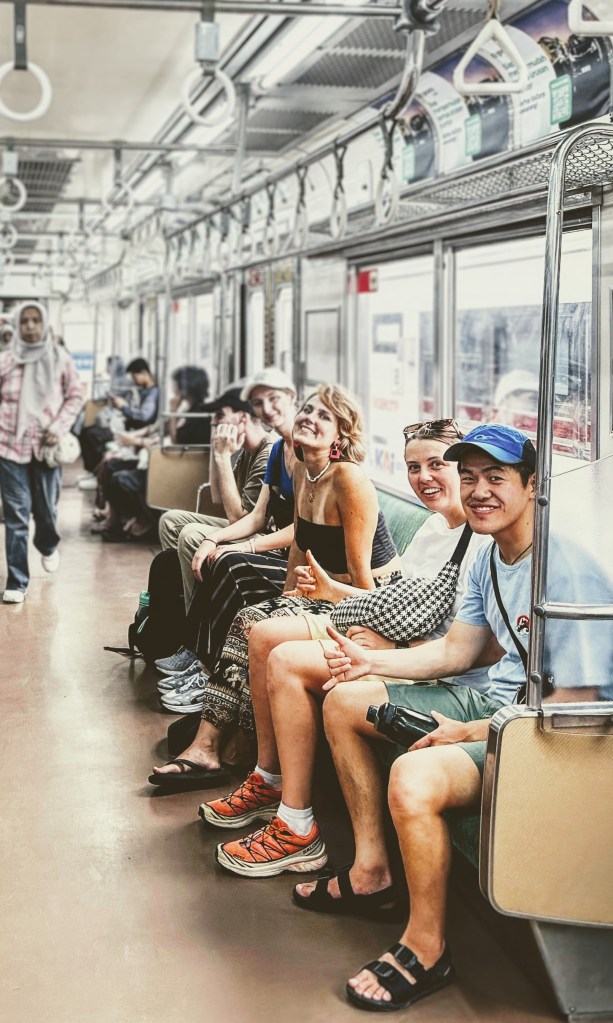
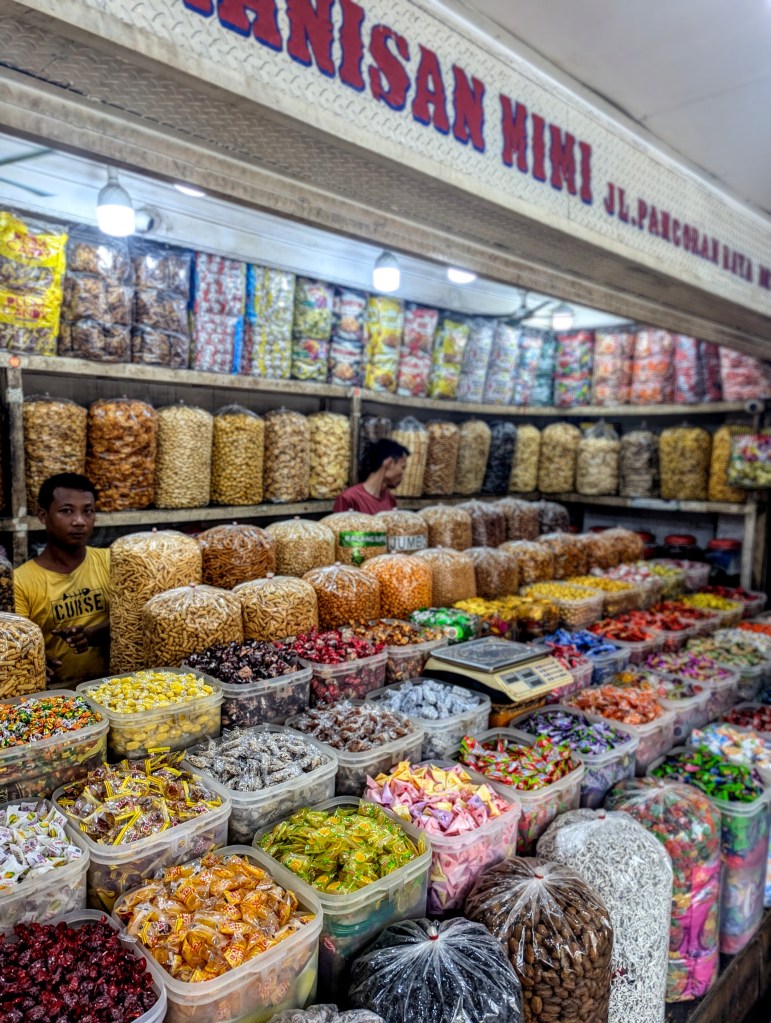
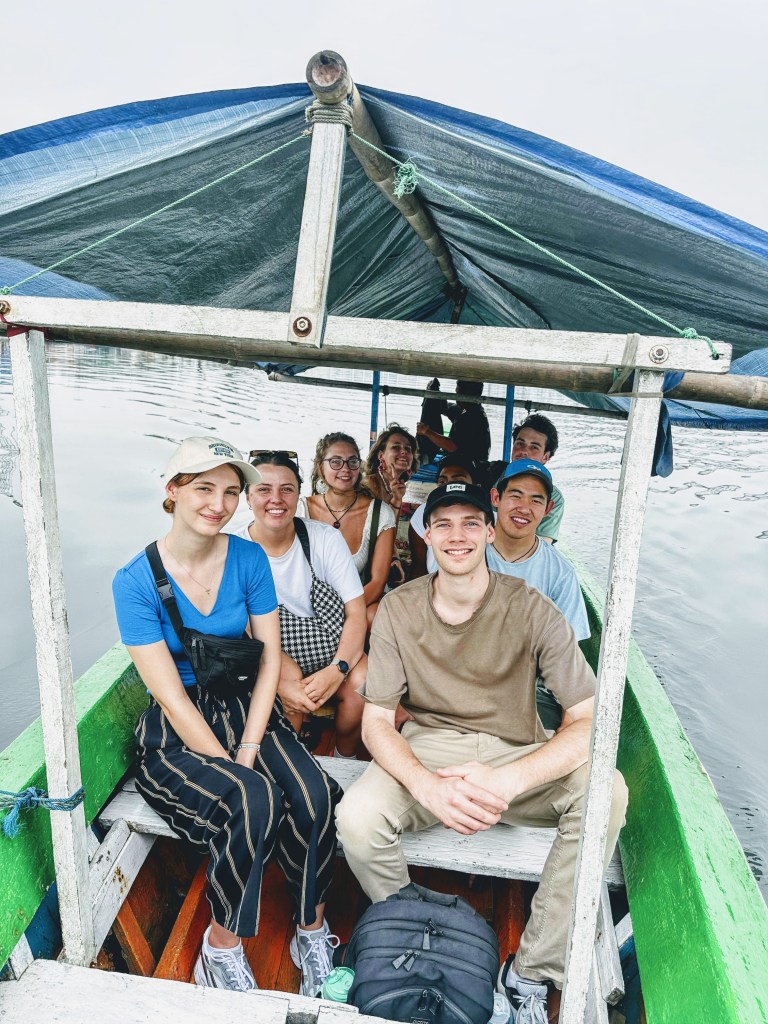
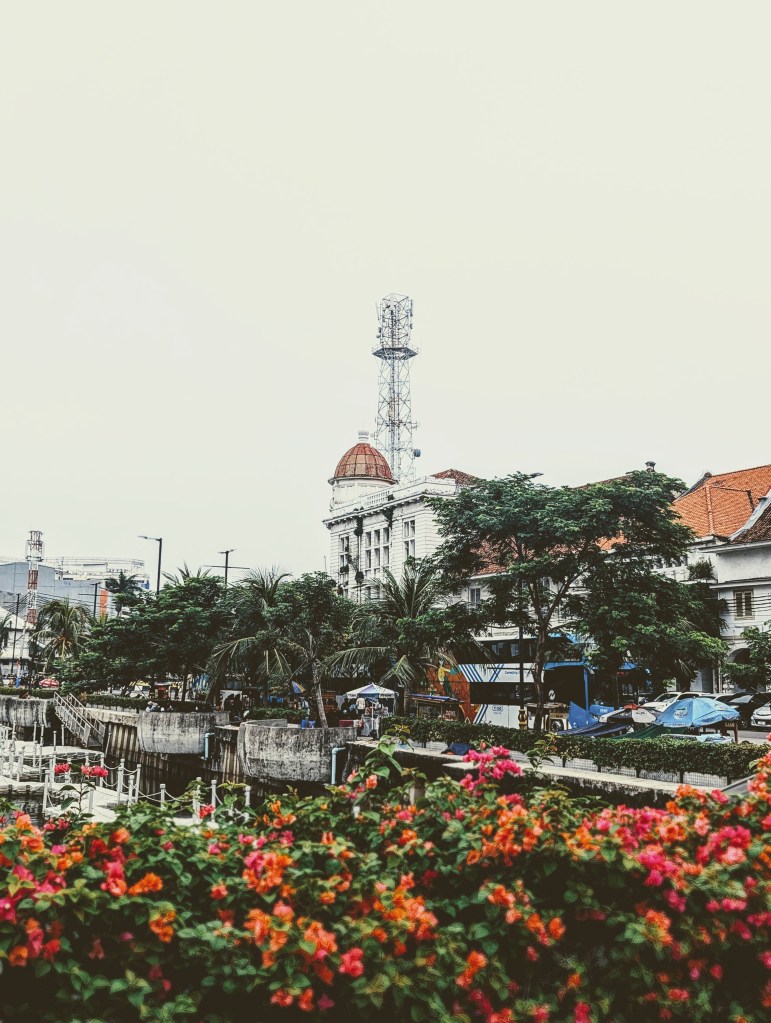
We started off at the Old Town, where we saw the Jakarta Office, old church that was rebuilt into a puppet museum after being destroyed several times, and the café Batavia. One of the most recognizable and expensive cafés in Indonesia, it holds one of the ancient names of Jakarta. Another name the city was known as is Sunda Kelapa. I believe that “kelapa” meant coconut, and “sunda” was the name of the people who lived in the area… or their language. Or something close to this, anyway. By the way, Jakarta means “Glorious City”.
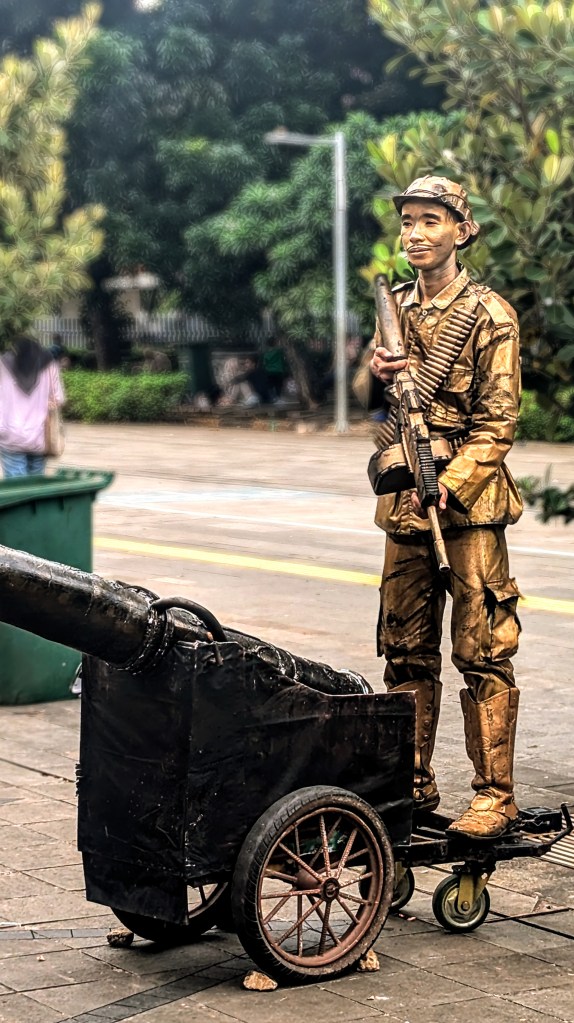
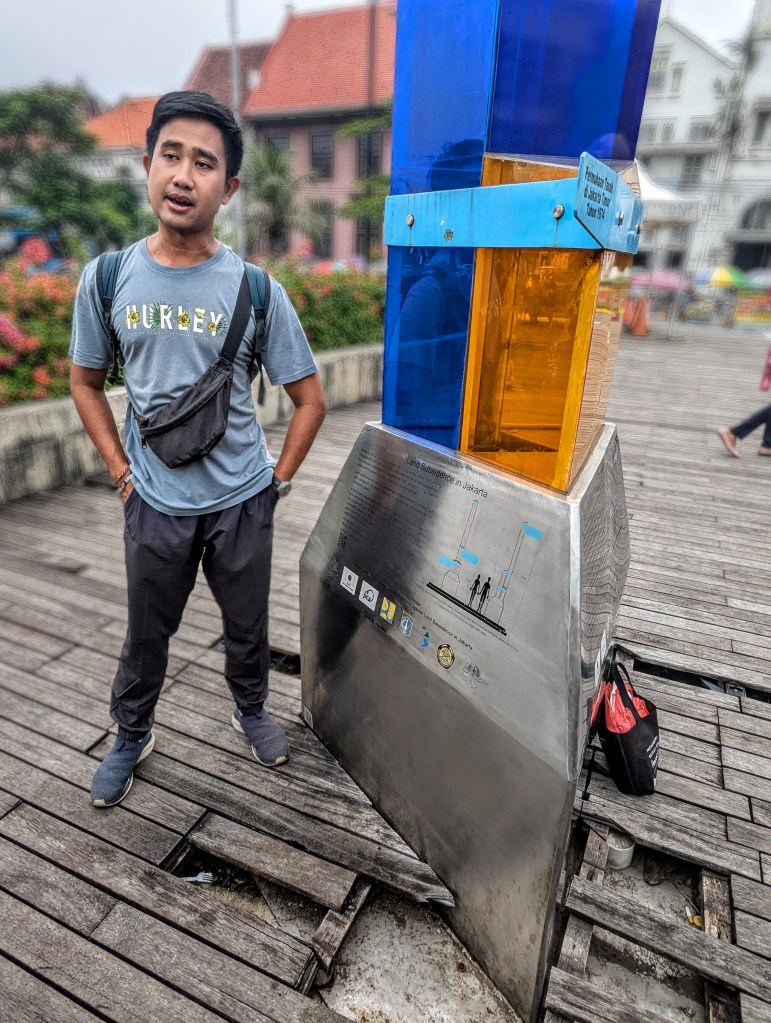
We passed by the square, were the street performers dressed as Dutch ladies or pure gold-covered soldiers were posing for pictures, and reached the small lookout point onto the canal. It contained a meter stick – 4-meter-high monument signifying how Jakarta is sinking 20 cm every year. Considering its also prone to earthquakes, the government made a decision to move the capital to the new city currently under construction in Borneo, in the area much safer and at a higher altitude.
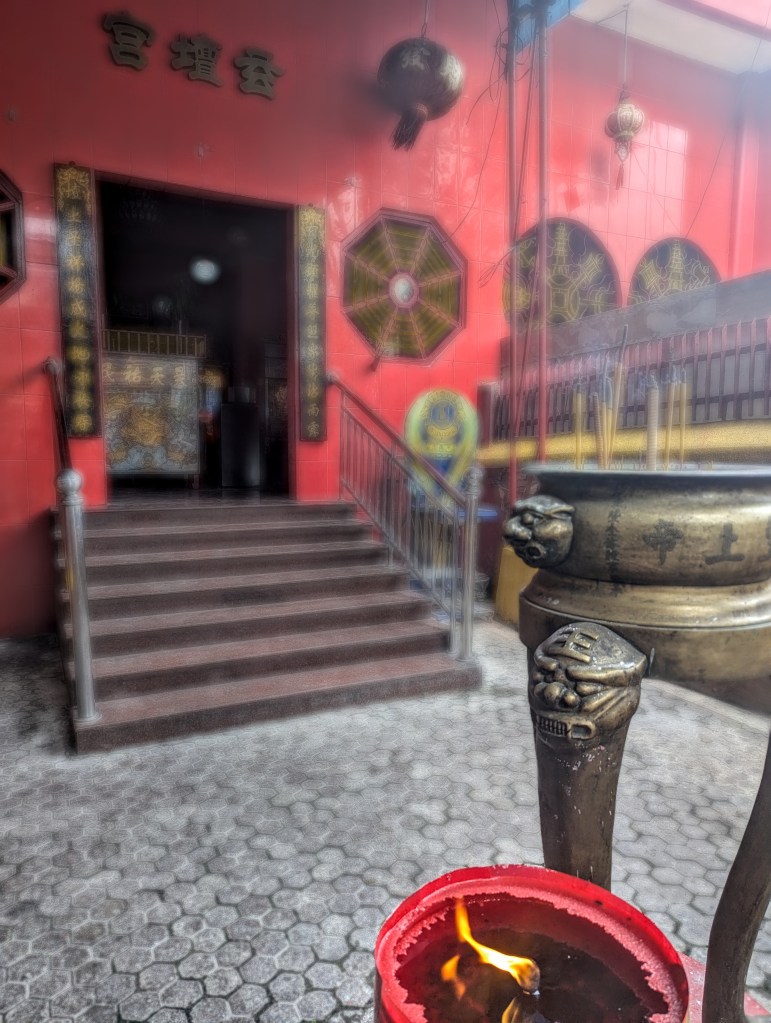
When we visited the hidden Chinese temple in Chinatown, Fazs admitted his mother always visits the temple once each year to honor the culture of her parents, although she had to convert to Islam in order to marry his dad. She does is secretly, as the dad would not be too happy finding this out. I asked how old the temple was – and received a funny, yet honest answer. Every time our tour guide would ask how old the temple was, he would receive a different answer. It was rebuilt a couple of times, and was definitely there before European colonization – that we know for sure.
Fazs himself is Muslim by religion assigned at birth as its indicated on his citizenship card (and just as it is for any Indonesian), although he does not practice or truly believe. If he decides to convert, he will have to go through the bureaucratic hell in order to change his official records, not to mention family conflicts based upon the new religion…
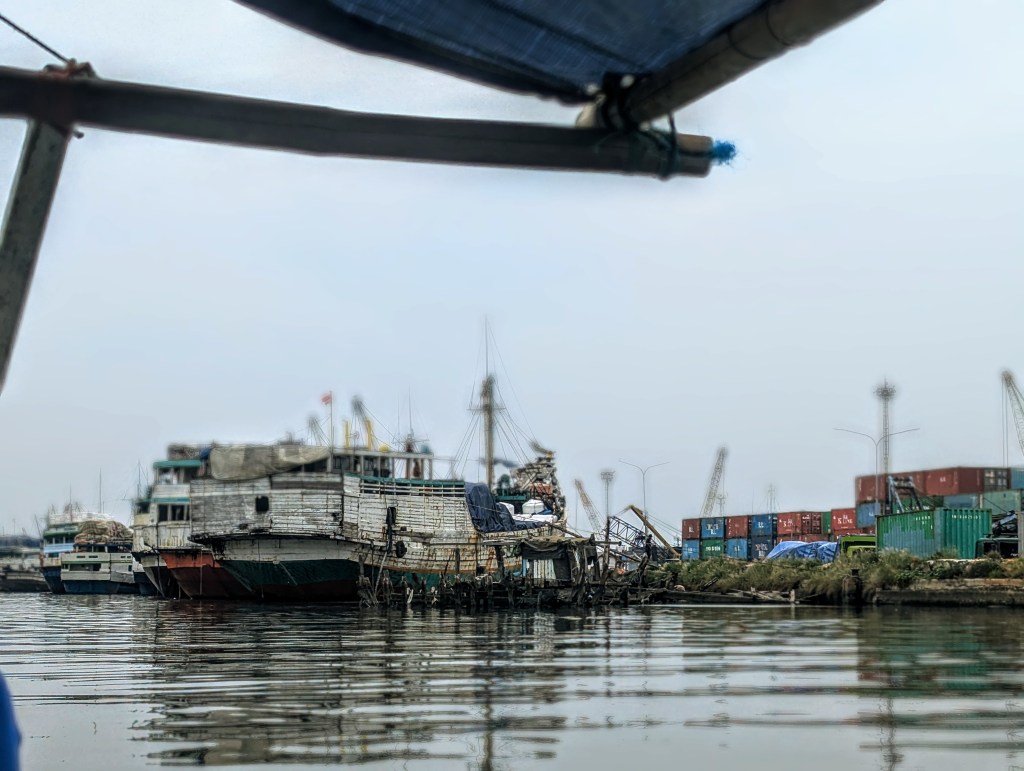
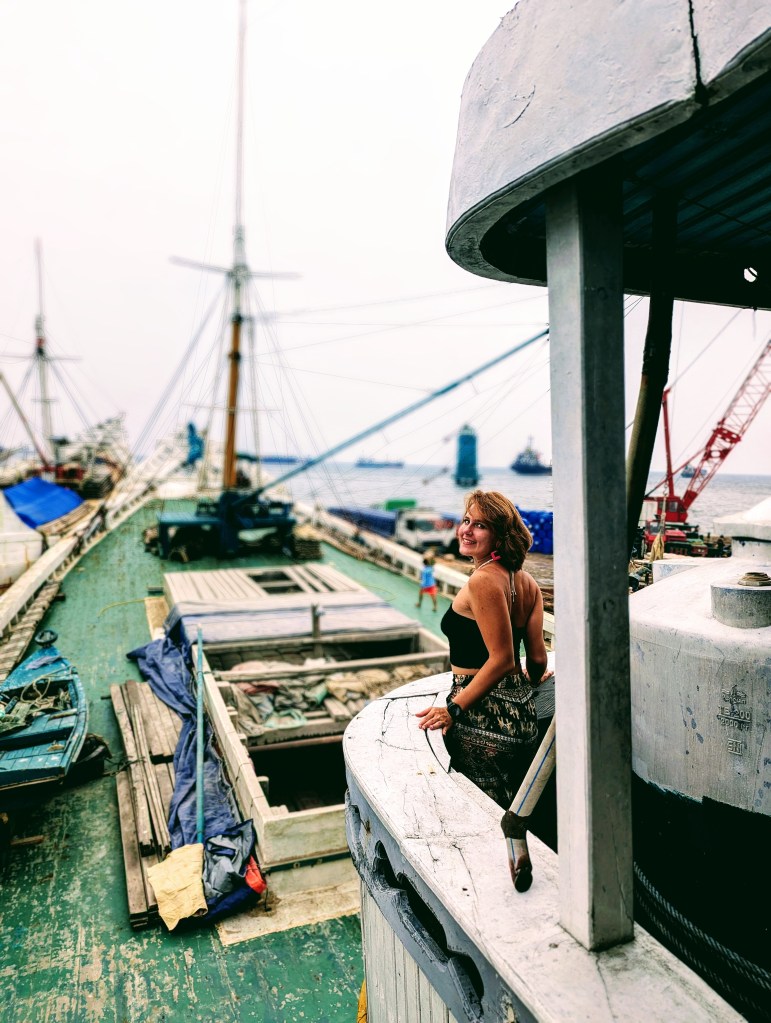
One of the good things about these tours is that they are also led by locals – and that means they take us to places we might not otherwise ever go as solo travellers, because these places are SO local. Like the harbour we visited, where the ships transport goods from Jakarta to the Indonesian Thousand Islands, and back. Yes, Indonesia has Thousand Islands, too! We literally climbed the ship over the board, then up the not-so-friendly stairs on the very top, ending up somewhere like 20 minutes above greyish water of the harbour. The ship carries cement, by the way. Our hands were all dusty.
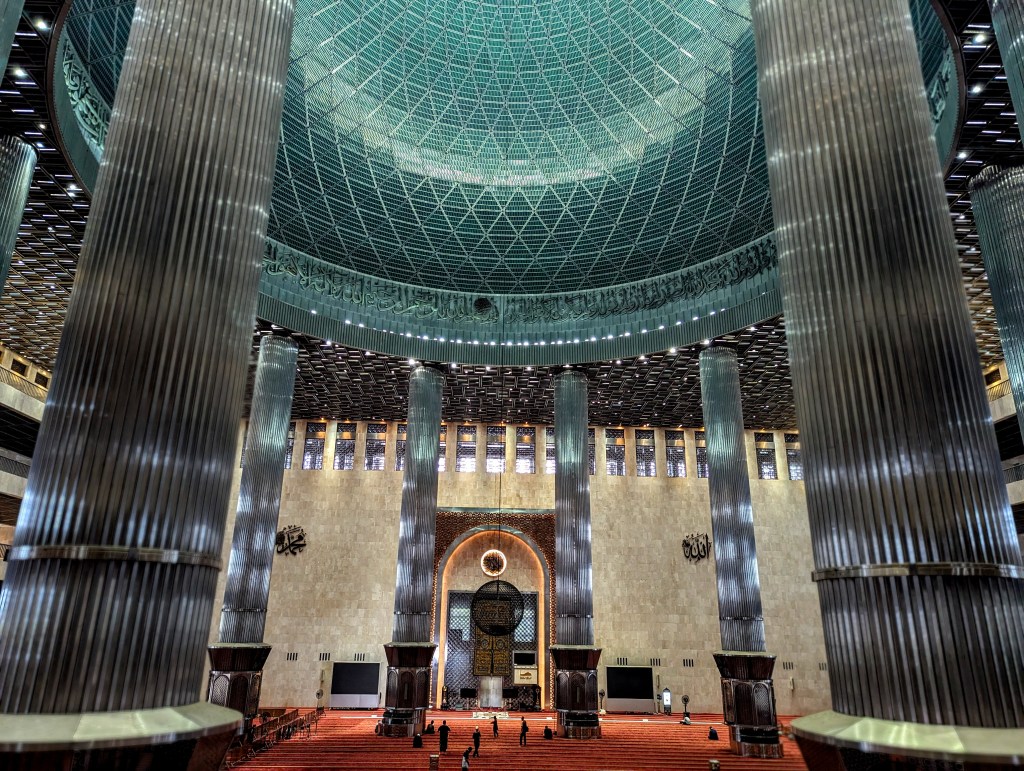
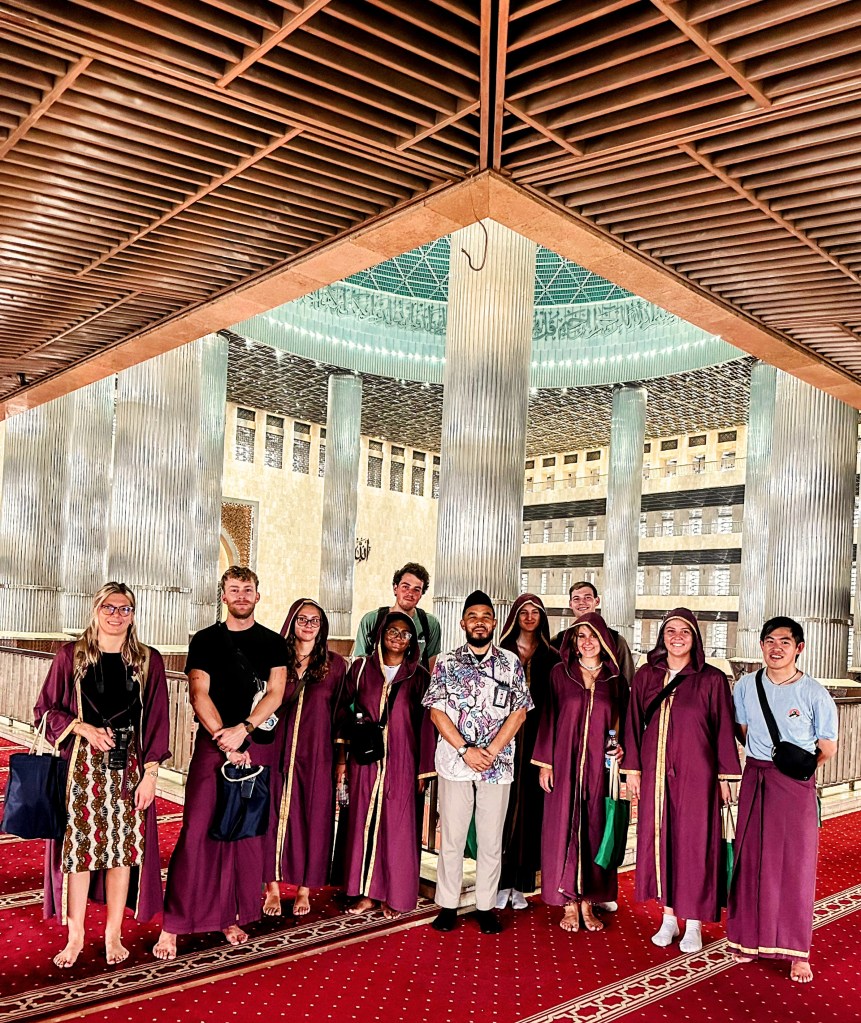
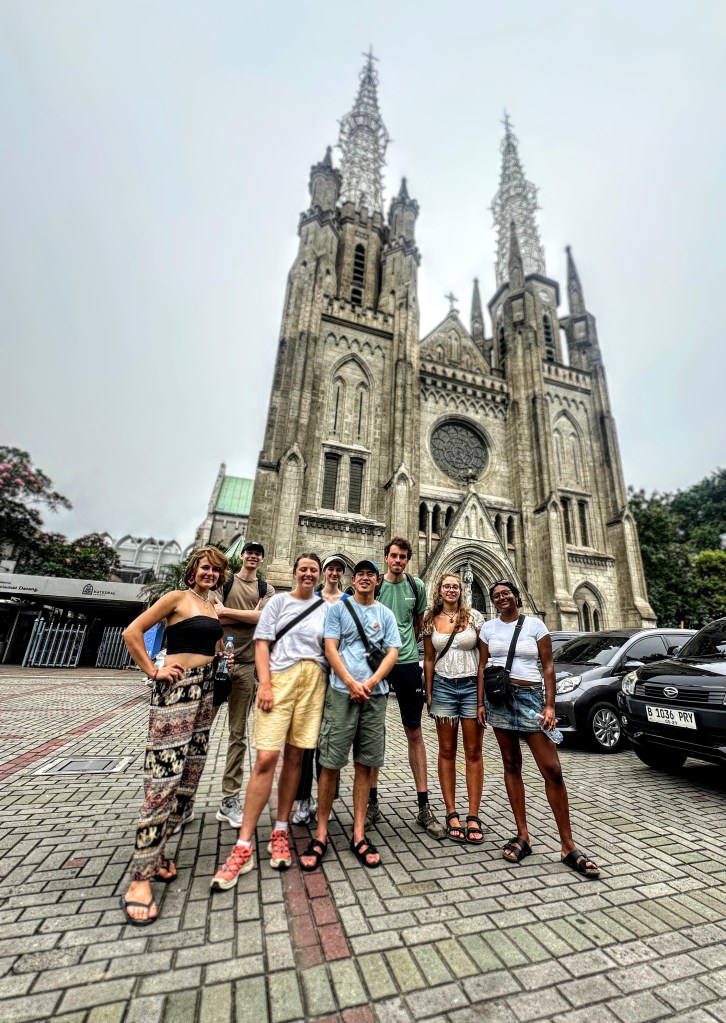
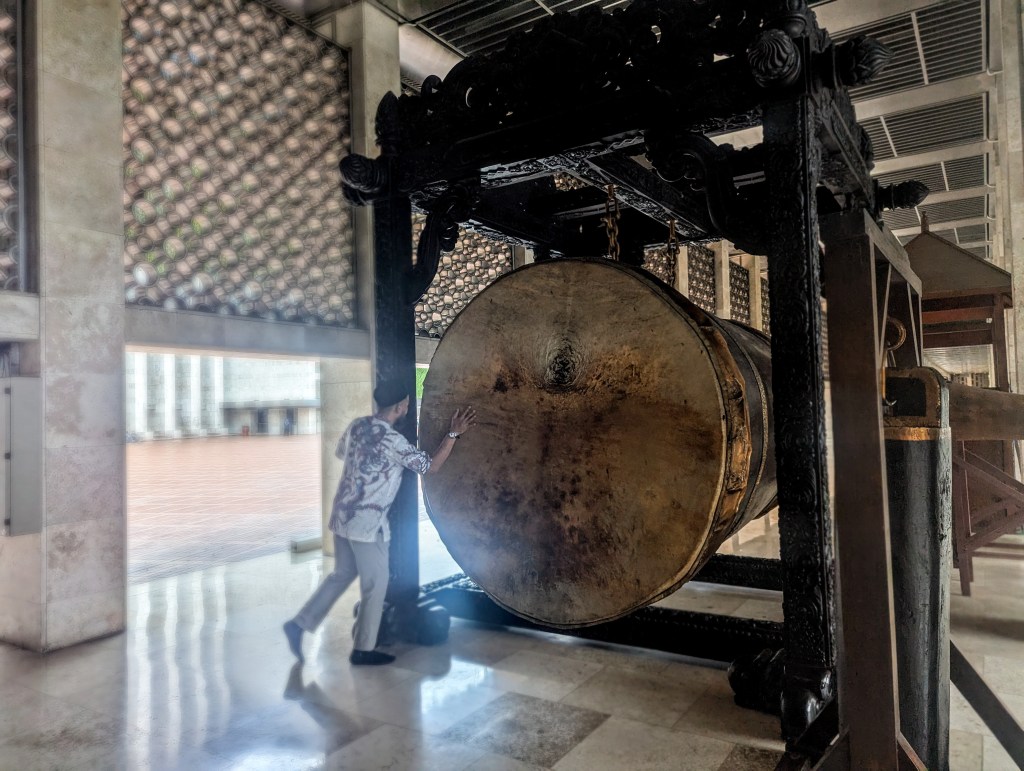
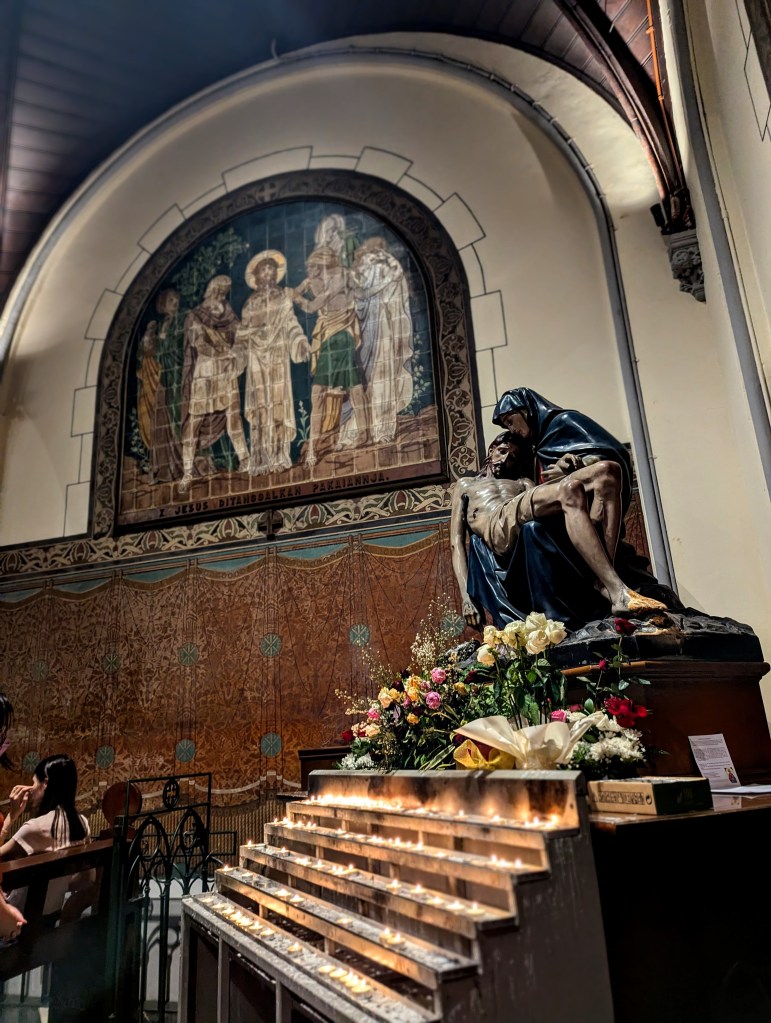
Last but not least, we saw the church and the mosque – both taking around 15-17 years to be built, right in front one another on purpose – to signify the peace in which different religions co-exist in Indonesia. For VIP guests like Barrack Obama, who grew up in Indonesia (and got bullied at school for being the only black kid), they constructed a special underground tunnel to the mosque. We did not see the tunnel (not VIP enough!) but saw the square inside where he gave the speech later on in his life.
The mosque can fit around 7000 people – and is one of the biggest (if not THE biggest after Mecca) mosque in the world. However, the crowds like this are only gathered twice a year for the two big Muslim celebrations. Not sure which ones… They also built the square outside the mosque for those who did not fit in. Thoughtfully, the floor of the square was constructed from red and yellow square bricks, depicting a place for each individual to put their mat and pray.
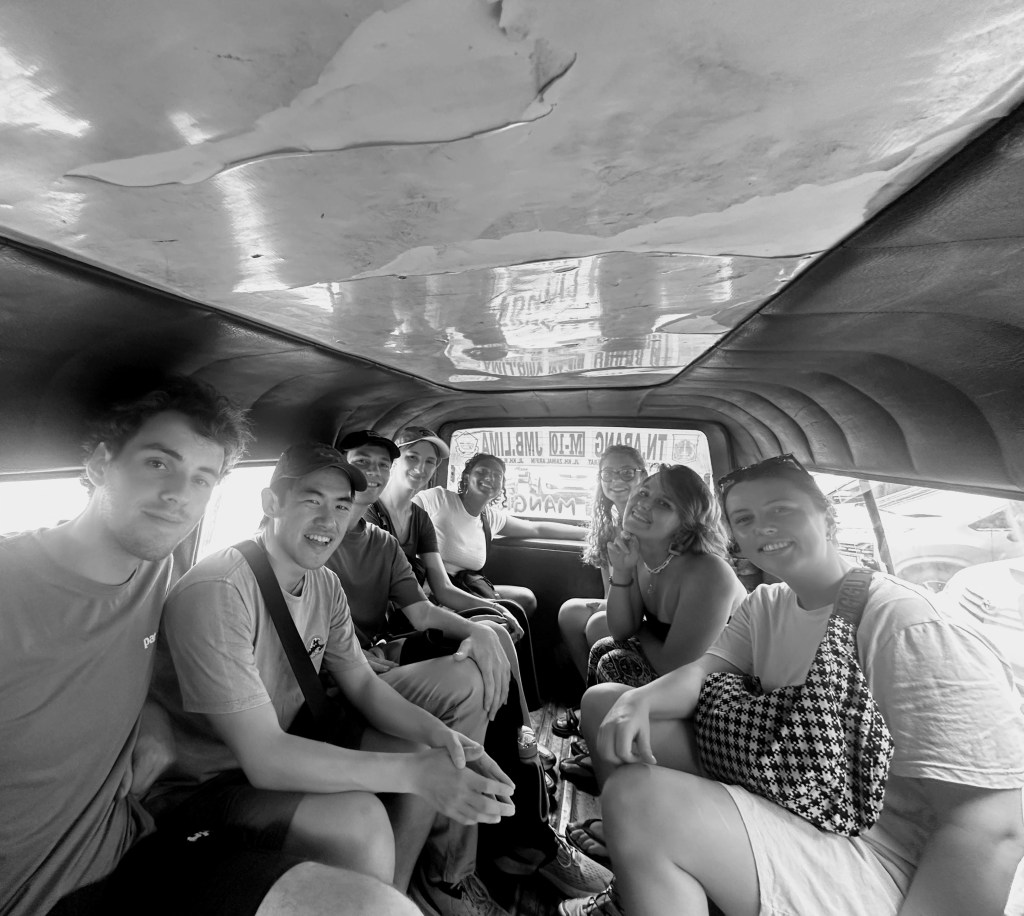
We ended up going back to the meeting point – the hostel where Fazs stayed, together with Fazs himself and another Dutch guy from the tourist group. The cherry on the pie was when Fazs suggested we wait inside the tourist information centre for our Grab, as he once got robbed while waiting for his taxi outside. A homeless man saw he was leading a group of tourists, so when they were all gone he threatened Fazs with a knife and made him give away all the earned money.
Other than this small, unimportant anecdote, Indonesia is a very safe country. I love it.
 romashos.blog